MultiChoice’s sport juggernaut


The sale of exclusive sports broadcasting rights often excludes many South Africans from accessing certain matches, yet stakeholders argue that it is a necessity – and MultiChoice is reaping the rewards.
Stakeholders from both the broadcasting and sporting sectors believe the additional revenue generated from these sales sustains South African sports, ensuring their continued growth and global competitiveness.
“Selling rights exclusively maximises the income to sports bodies, and without this income, sport in South Africa cannot be sustainable,” MultiChoice told MyBroadband.
According to the company, this revenue supports competitive player salaries, international tours, player base growth, and infrastructure maintenance.
The South African Rugby Union (SARU) echoed this sentiment, noting that roughly half of its revenue from broadcasting rights funds men’s and women’s rugby.
“Removing exclusivity impacts the value of those rights, which in turn impacts the sport’s income, impacting the ability of the sport to deliver world-class performance, affecting the sport’s attractiveness to broadcasters,” a SARU spokesperson explained. “It’s a downward spiral.”
MultiChoice’s dominance in the South African broadcasting market is a key factor in the revenue model’s success.
A research paper by David Martimort and Jerome Pouyet supports this, stating that allocating rights to a dominant firm maximises revenue.
This allows dominant firms like MultiChoice to increase their market power, charge premium prices, and, in turn, generate more revenue for sports bodies.
However, this exclusivity creates a dilemma in South Africa, where many citizens cannot afford premium access to sports events.
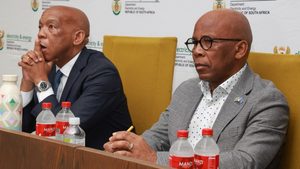
Recognizing this challenge, newly-appointed Sports Minister Gayton McKenzie negotiated a sub-licensing deal with MultiChoice to allow the SABC to broadcast key Springbok games for free.
“It is our task to make sure that we as government play our part in making sure our people also get to watch their national teams,” McKenzie said.

Despite the criticism of exclusivity, MultiChoice continues to demonstrate its pivotal role in promoting sports in South Africa and beyond.
Recently, the broadcaster reported a 3% growth in advertising revenue, driven by a robust sports schedule.
“True to its reputation as one of the world’s leading sports broadcasters, SuperSport delivered the most extensive Olympic Games broadcast globally during Paris 2024,” MultiChoice said.
This included 1,200 live events across 2,900 broadcast hours, resulting in a 20% increase in unique viewers compared to the Tokyo 2020 Olympics.
MultiChoice’s sports strategy extends beyond traditional broadcasting. Its DStv Access package, bolstered by tiering down major events like Euro 2024, saw increased reconnection rates.
The addition of La Liga football and other programming also contributed to subscriber growth. National events further bolstered viewership, with the Proteas’ journey to the ICC T20 Men’s World Cup final driving a 17% increase in viewership compared to 2022.
The broadcaster’s innovations include the SuperSport Schools app, which reached 1 million registered users in 2024 and delivered over 35,000 hours of content.
Documentaries like Chasing the Sun 2 also captured audiences, becoming SuperSport’s third most-viewed production.
In addition, initiatives like SuperSport Experiences offered DStv Premium subscribers early access to Springbok match tickets, showcasing the integration of content and subscriber engagement.
MultiChoice has also renewed broadcasting rights for major events, including the Premier Soccer League, La Liga, the FIFA World Cup, and World Athletics.
This ensures a steady stream of premium content for its platforms, including Showmax. The streaming service recently experimented with expanded sports offerings, incorporating events like the FA Cup Final and Euro 2024 matches.
Encouraged by the results, Showmax added the current Premier Soccer League season at no extra cost for subscribers.
While MultiChoice’s model underscores the importance of exclusive broadcasting rights in sustaining South African sports, the challenges of accessibility remain.
As stakeholders navigate this landscape, balancing revenue generation with broader access will be critical to ensuring sports continue to thrive while remaining inclusive for South Africans.




Comments