End of an era for Home Affairs in South Africa


South Africa’s Department of Home Affairs (DHA), under the leadership of Minister Leon Schreiber, is undergoing a significant transformation, driven by enhanced technical capability and private sector partnerships.
Schreiber believes addressing the challenges at Home Affairs will give South Africans hope that, if even the most broken parts of government can be fixed, the rest of the country can recover.
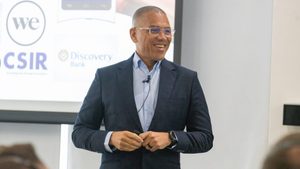
In the latest instalment of PSG’s Think Big Series, Schreiber explained that Home Affairs has three main functions – national security in terms of securing the borders, providing civic services, and enabling economic growth.
Since taking office, the DHA has prioritised progress in all three areas, with notable successes already recorded.
In terms of national security, the Border Management Authority, established in 2023, has made significant progress in ensuring South Africa’s borders are safer and better managed.
In the 2024/25 financial year, the DHA increased the number of illegal immigrants it deported to 46,898.
This is 18% more than the previous year’s 39,672. It is also the highest number of deportations carried out in at least five years, and triple the number conducted in recent years.
Regarding civic services, the DHA has ambitious plans to “end the queues” plaguing Home Affairs branches across the country by partnering with the private sector, particularly South Africa’s biggest banks.
In the medium term, the department plans to roll out Home Affairs services like Smart ID and passport renewals to 1,000 branches across the country.
This forms part of the department’s ‘Home Affairs @ home’ initiative, which is intended to lessen the strain on Home Affairs’ physical branches and modernise routine processes like ID and passport renewals.
Schreiber explained that the pilot version of the DHA’s partnership with banks, which made these services available in 30 bank branches, proved highly successful.
He said the biggest problem people found was that there were not enough booking slots, which made the department realise that the model it used was wrong.
Initially, this project attempted to “replicate” a smaller version of a Home Affairs branch inside banks, using the same technology and officials one would find in a DHA branch.
Now, the department’s expanded project will use the existing technology available in banks, like online verification, doing away with the original model.
The DHA also has ambitious plans to enable services like Smart ID and passport renewals on banking apps, which Schreiber believes will make the process even more convenient for South Africans.
Pulling all the economic levers

As with many of South Africa’s government departments, the DHA faces a significant funding problem for all of these plans. However, Schreiber said he also has a solution for this problem.
Schreiber’s answer to the DHA’s funding shortfalls comes down to the department’s third function – being an economic growth enabler.
The minister explained that, in a country like South Africa that struggles with sluggish growth and high unemployment, simply using a lack of funding as an excuse to maintain the status quo is not the right attitude.
Therefore, one of his main areas of focus is ensuring that Home Affairs is not only able to implement its ambitious plans, but also finance them without relying on additional funding from the national fiscus.
One way Schreiber’s administration plans to use Home Affairs’ resources more efficiently is by modernising and digitising certain department services.
For example, one of the DHA’s main focus areas is making visa applications for South Africa more tech-driven and straightforward.
Moving the process online and using technological advancements will make it easier and faster for people to apply for a visa to enter the country.
This is expected to boost tourism revenue and investment in areas like the film industry and address skills shortages in certain sectors.
In addition, digitising routine services like this will free up space for Home Affairs workers to focus on more important work, like going into underserved communities to document the many South Africans whose families have been left behind for far too long.
Another revenue stream the DHA has focused on is its online verification service to banks and other financial service institutions.
Since 2013, the department has provided third parties with this online verification service (OVS), connecting them to the National Population Register (NPR).
This allows registered third-party users to check their clients’ identities and other biographical information against the DHA’s database.
However, the old version of this service had several problems, with some users routinely experiencing a failure rate of over 50% on verification checks against the NPR.
This is the same problem Home Affairs branches faced, which led to the infamous “system offline” challenge that frustrated many South Africans.
Even in the case of successful verifications, response times often took hours, thereby defeating the purpose of real-time verification
In looking to address these issues, the DHA also found that the service was being offered at unsustainably low prices, which is part of the reason the department had not reinvested in improving the service sooner.
Fixing Home Affairs

Schreiber said fees as low as R0.15 per verification deprived the state of the resources required to maintain and enhance the NPR.
Therefore, when the new and improved service was rolled out, the DHA made the controversial decision to increase the fees for verifications.
The fee was increased from around R0.15 previously to R10 per single real-time verification check and R1 per field request for non-live batch verifications.
While some critics argued against this increase, Schreiber said the service has been immensely improved and is now able to perform in real time, with the failure rate reduced to below 1%.
In addition, this extra revenue will allow the DHA to roll out the service to more institutions and fund many of its other ambitious projects to improve South Africans’ experience with Home Affairs.
“This is where the story of Home Affairs is important for South Africa as a whole, beyond a particular department or party politics,” Schreiber said.
“It’s important that South Africans can see that things can get better, that even the most broken parts of the state can be fixed if people are there for the right reasons, if they actually care about fixing the problem.”
“If that department can modernise and embrace technological solutions and collaboration with other partners in society, and that makes your life better, then surely we can do the same in other parts of the state and in our country.”





Comments