Say goodbye to Home Affairs as you know it


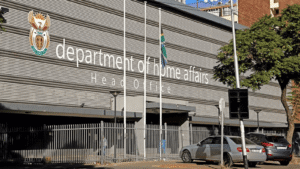
The Department of Home Affairs (DHA) is expanding its partnership with local banks, marking a significant milestone that will transform how South Africans interact with the department.
Over the past week, three banks, Capitec, FNB, and Standard Bank, have signed up for the new phase of the DHA’s partnership with local banks.
This new phase will see a pilot project in 30 bank branches expand to 1,000 branches across the country, with all partner banks able to offer Home Affairs services like Smart ID and passport renewals.
On Tuesday, 12 August, Home Affairs Minister Leon Schreiber outlined the journey his department has undertaken to make this goal happen.
“When I assumed office a little over one year ago, I made it clear that the apex priority of the DHA during my tenure would be to pursue digital transformation to deliver ‘Home Affairs @ home’,” he said.
“Under that vision, we would use technology to resolve – with urgency – the many problems that have plagued this department for years.”
“In the process, ‘Home Affairs @ home’ would become a way of life – a new culture that not only identifies problems, but works relentlessly to solve them through the technological solutions at our disposal.”
In the announcement that Capitec and FNB have signed up to this project, Schreiber said this marks “the beginning of the end for Home Affairs queues and the start of a new digital-first era in public service delivery”.
The minister said 12 August marked the most significant milestone to date on this reform journey, ushering in the most transformative reform Home Affairs has ever seen.
He explained that the department is remaking its long-standing partnership with a number of banks, the eHomeAffairs system, which has been in place for the past decade.
The DHA introduced the eHomeAffairs system in 2016. Since then, FNB, Standard Bank, Absa, Investec, Nedbank, and Discovery Bank have operated successful pilot sites.
This project was highly successful, but has been limited to 30 bank branches since its launch.
Now, the DHA is looking to expand this project, with a goal to expand these services to 1,000 bank branches by 2029, as part of its “Home Affairs@home” strategy.
Problems with the old model

Schreiber explained that one of the factors preventing the department from expanding this service was that the original model relied on the costly duplication of Home Affairs staff and hardware inside bank branches.
“As we are finding over and over again, the answer lay in an approach that sought to centralise, and that failed to unlock the power of digital transformation to decentralise access to include millions more people,” he said.
The minister explained that this meant Home Affairs essentially duplicated its hardware and officials inside bank branches.
Therefore, the DHA did not have nearly enough officials to scale up the project and removed Home Affairs officials from its own frontline offices.
At the same time, the banks that worked with the DHA over the past decade complained that Home Affairs’ Online Verification System (OVS) was too unreliable.
“When someone opens a bank account and puts their fingerprint on a scanner, they are checking against Home Affairs’ OVS to confirm that the information presented on their Green ID book or Smart ID is accurate,” Schreiber explained.
“This service confirms that you are who you say you are, forming a critical part of the foundation for all public and private sector services.”
“So, we also looked into this problem, and it turned out that more than 50% of verification requests sent through this service failed.”
The minister said this posed a security risk to the country and the financial sector, because it meant banks, insurers, and other financial institutions could not consistently verify identities.
In addition, it made many banks hesitant to provide Home Affairs services in more locations.
“We were not interested in simply replicating the ‘system offline’ challenge in bank branches,” the minister said.
“So, we set out to solve the problem by upgrading the OVS and mobilising the resources to maintain it into the future, by correcting the fee structure that had long robbed Home Affairs of the resources required for maintenance, which contributed to the collapse of the service in the first place.”
This resulted in the new OVS having an error rate of below 1% and returning reliable results in less than a second.
The ‘new’ Home Affairs

Schreiber explained that, after this improvement was made, the DHA reached out to nine major banks in South Africa, inviting them to sign up to the next phase of the partnership.
Now, instead of duplicating hardware and officials in bank branches, the DHA will use biometric technology to lay a pipeline that leverages the reach banks already have.
“These digital pipes will now extend into bank branches across the length and breadth of South Africa, and onto smartphone apps, with Home Affairs’ biometric verification securing the process from beginning to end,” the minister said.
“Simply put: instead of relying on a person to verify that you are who you say you are, with all the fraud risk that goes with it, we will now use our upgraded OVS to confirm your identity.”
Schreiber said that over the next few months, South Africans will reap the rewards of these efforts, which will expand Home Affairs services by a third.
“Once this service is stable, we will work together to enable South Africans to apply through their digital banking app, add the ability to apply for a passport, and introduce home delivery,” he said.
“The step we take today takes us down a road where South Africans will soon be able to apply for a new document and have it delivered directly to their doorstep, without ever leaving their house.”
The DHA also plans to modernise other critical services that Home Affairs provides to register births, marriages, and deaths and to make amendments.
“We want to digitalise, automate and enable remote access for all the services we provide,” Schreiber said.
“In the process, we are working to upskill our staff by rolling out digital literacy training to thousands of officials.”
He said these reforms will allow DHA officials to focus their time and attention on critical tasks that technology cannot do.
This includes more immigration law enforcement and going into underserved communities to document the many South Africans whose families have been left behind for far too long.
It will also play a critical role in reducing identity fraud in South Africa, as the DHA plans to phase out the use of Green ID books and replace them with Smart IDs that are less vulnerable to fraud.
The minister called on other banks and financial institutions to join Standard Bank, Capitec, and FNB in this project.
“If we demonstrate the necessary urgency, we will eliminate long queues at Home Affairs and free up the Department to focus on the complex and difficult work it still has to do to better enforce our immigration laws, and to document those South Africans who have been left behind for too long,” he said.
The DHA’s Medium-Term Development Plan, adopted by Cabinet, targets rolling this service out to one thousand bank branches by 2029.
“If we all work together with the necessary urgency, I don’t believe we need to wait that long to get to that number,” Schreiber said.
“By making Home Affairs better every day, we are demonstrating that even the department that is most often associated with failure can rapidly improve with the right focus, leadership and genuine teamwork.”
 Loading ...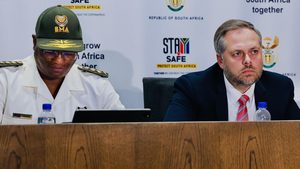



Comments