Big changes coming to unemployment data after Capitec founder criticism


Statistics South Africa (Stats SA) is changing the questionnaire it uses to collect the country’s employment data, with significant shifts expected in data related to the informal sector.
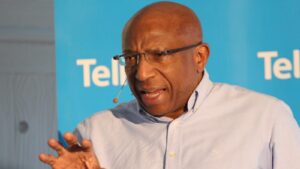
This comes after the country’s official statistical agency entered into discussions with Capitec founder and former CEO Gerrie Fourie earlier this year, following the chief executive’s criticism of a lack of data about the informal sector.
On Thursday, 7 August 2025, Stats SA explained that it is implementing an updated Quarterly Labour Force questionnaire based on the latest international standards.
The agency said this new questionnaire will improve the depiction of South Africa’s labour market and the world of work.
These changes were piloted in 2024 and will be implemented from the third quarter of 2025.
Here are some of the key changes that will be introduced –
- It redefines employment more narrowly compared to previous standards, as work done for pay or profit and mainly intended for others. This excludes people participating in subsistence agriculture and other own-use production work, who were previously considered employed
- It establishes the first international statistical definition of work, which refers to any activity performed by persons of any sex and age to produce goods or to provide services for use by others or for their own use.
- It presents a forms-of-work framework distinguishing five forms of work: own-use production work, employment, unpaid trainee work, volunteer work, and other work activities.
- It establishes a stricter definition of unemployment compared to previous standards. The relaxation of the job search criterion is no longer accepted, establishing that the unemployed are those who are not in employment, available for employment, or seeking employment.
- It introduces the concept of the potential labour force, comprised of persons outside the labour force who are available for employment but not seeking employment and those seeking but not available.
- It provides additional measures of labour underutilisation to complement the previously existing unemployment and time-related underemployment measures.
Stats SA believes the additional indicators will lead to a more comprehensive and detailed understanding of participation in paid and unpaid work and labour underutilisation. This will enable more targeted research and policymaking.
“The improved statistical depiction of people’s participation in the labour force and in different forms of work (both paid and unpaid) allows for deeper insights into the labour markets’ complexities, thus favouring analysis, research, and policymaking,” the agency explained.
The new questionnaire will also significantly impact how South Africans active in the country’s informal market are measured.
R750 billion goldmine

South Africa has a giant informal sector, with some estimates placing this economy’s value between R600 billion and R750 billion.
Fourie’s comments regarding this sector landed him in hot water earlier this year, as the former CEO argued that the country’s unemployment rate is grossly overestimated,
In the first quarter of 2025, Stats SA reported that South Africa’s official unemployment rate was 32.9%.
However, Fourie argued at a Capitec media day in June 2025 that this number should be far lower, as it does not account for South Africans who have businesses in the informal market.
Capitec is working hard to target this sector through its business, which it calls the ‘emerging market’, through its business banking services.
Fourie explained that these South Africans have businesses that operate similarly to companies in the formal market, but are overlooked by data collectors like Stats SA when compiling the country’s employment data.
He said the country’s unemployment rate is closer to 10% than the 33% figure Stats SA estimates when including emerging market businesses like spaza shops or backroom renters.
Fourie’s comments sparked a heated debate among various industry stakeholders around how South Africa’s unemployment rate is determined, with Statistician-General Risenga Maluleke defending Stats SA’s methodology.
Ultimately, Fourie and Maluleke found common ground, as the two parties met at the start of July.
At this engagement, Maluleke said Stats SA remained open to exploring the development of a statistical register for small-scale and informal businesses.
Stats SA explained that the new questionnaire it plans to use to collect employment data is likely to significantly change the country’s informal economy data.
Measuring the emerging market

Stats SA is adopting a standard for informal economy statistics that allows the measurement of informality for different employment statuses.
Now, when defining the informal sector, establishment size will no longer be the main criterion used.
“Conceptually: size (by using a threshold) is less clearly linked to the concept of informality as small enterprises might be registered or even pay tax etc,” the agency explained.
“Additionally, large enterprises might not be registered in the national business register or for tax purposes.”
Now, employers’ contribution to social insurance will be considered a prioritised criterion in the derivation and definition of informal and formal jobs for employees.
If contributions are made by the employer, then the job is defined as formal. Access to paid annual leave and paid sick leave are additional criteria that further support the operational definition.
The previous option of excluding agriculture from the informal sector has also been removed. Now, both agricultural and non-agricultural activities in the informal sector will be included.
“The adoption of this standard is likely to cause significant changes in the data,” Stats SA said.
However, it added that studies conducted by the International Labour Organisation in some countries that implemented this standard showed little change in informality statistics, with the exception of one or two countries.





Comments