It is crazy that 55,000 government employees earn over R1 million per year


Renowned political economist Moeletsi Mbeki said it is crazy that, in a country like South Africa, 55,000 government employees earn over R1 million per year.
Mbeki made this comment during an interview on State of the Nation, where he discussed South Africa’s political and economic landscape.
He bemoaned the fact that South African politicians and civil servants are paid exorbitant salaries while infrastructure across the country is collapsing.
Mbeki explained that instead of using the money to build new towns or railway tracks, the new ruling elite enrich themselves.
“They are not building new railway tracks; they are destroying them. Instead of creating new towns, there are shanti towns on the edge of every town and city,” he said.
“They are allowing the road, water, and electricity infrastructure to collapse while they tax the rest of the economy to pay themselves phenomenal salaries.”
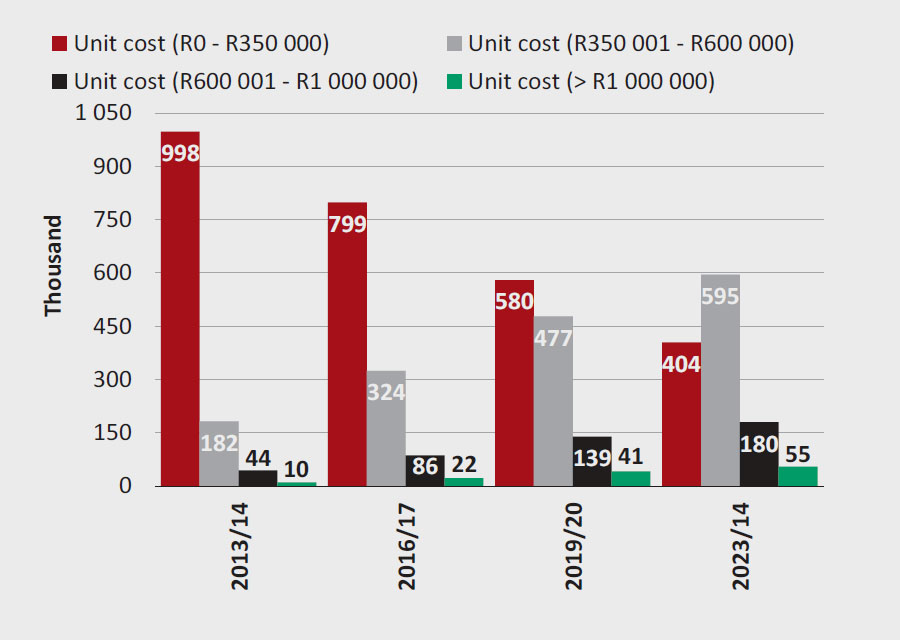
He highlighted that more than 55,000 civil servants and politicians earn above R1 million annually.
Mbeki was referring to the National Treasury’s 2023 Medium Term Budget Policy Statement, which provided a breakdown of the earnings range of public service employees.
The National Treasury revealed that 55,000 public servants earn over R1 million per year, up from only 10,000 a decade earlier.
The data further showed that 180,000 public servants earned between R600,000 and R1 million per year, up from 44,000 a decade ago.
The National Treasury said that a higher proportion of public-service employees have moved into higher-earning categories over time.
This is a direct result of the higher cost-of-living adjustment agreed on over the past years and pay progression policies.
The above-inflation salary increases for national and provincial employees have often been a point of contention during wage negotiations.
This is because these significant salary increases occurred during a period of weakening economic growth and fiscal constraints.
Even more concerning is that the high salaries are not aligned with productivity, as many institutions and local authorities are collapsing.
Mismanagement of state funds
Mbeki said South African salaries are inflated due to historical issues, and they should come down to make the country more competitive.
He explained that many of South Africa’s black middle class measure their standard of living against that of the white population.
To achieve this high standard of living, they rely on the state to provide them with the necessary salary to make it happen. However, this is unsustainable.
Mbeki said the reason for the high salaries among the white population stems from historical issues related to South Africa’s mining industry.
When diamonds and gold were discovered in South Africa, the native population, including the black Africans and white Afrikaners, lacked the necessary skills to mine.
They had to attract skills from Australia, the United Kingdom, and the United States to help them mine these resources.
However, the miners who were imported saw this as a hardship assignment. This means they demanded higher salaries than they would get in their own countries.
This is how the white standard of living in South Africa was created – by bringing white people from abroad into a hardship assignment.
This created artificially high salaries for the professional class in South Africa, which, in turn, created an artificially high white standard of living.
The high salaries were completely artificial and could only be maintained while South Africa had scarce minerals that nobody else had.
As the mining environment matured globally, South Africa lost its strong position on many of its resources, which changed the environment.
However, despite these significant changes in the mining sector, salaries in South Africa’s professional class remain inflated.
South African salaries must come down

Mbeki argued that South African salaries must come down to align with those from South Africa’s key competitors, including China, India, and other Asian countries.
“For us to effectively compete with the Chinese, our salary structure must be similar,” Mbeki said in the interview.
He explained that China produces millions of skilled professionals annually. This drives down the price of these skills. South Africa must do the same.
This will eliminate the heritage of the high standard of living of white people and make the economy more competitive.
Mbeki added that there are huge benefits to having a competitive economy compared to the uncompetitive economy South Africa currently has.
“We have to get rid of the white standard of living. This should not be done through redistribution, but rather by creating a huge pool of skills,” he said.






Comments