South Africa heading for serious trouble


South Africa’s ongoing tensions with the United States pose a major threat to the country’s economic recovery, with tariffs on goods exported to the world’s largest economy potentially shaving off nearly one percentage point of growth.
This is feedback from Old Mutual Wealth investment strategist Izak Odendaal, who outlined some of the potential consequences of the ongoing tensions between the United States and South Africa.
US President Trump has been critical of South Africa on several fronts, including for a case it brought before the International Court of Justice accusing Israel.
Trump, in an executive order, also halted foreign aid to the nation and declared that the US refugee system would give priority to Afrikaner “victims of unjust racial discrimination”.
Senior members of his administration have skipped Group of 20 meetings in South Africa, which is the current president of the grouping.
Earlier this month, Ebrahim Rasool, South Africa’s ambassador to the US, was expelled after he made comments on a webinar saying that Trump and his supporters were a “supremacist” movement”.
Odendaal said this tension has put South Africa’s membership in the African Growth and Opportunity Act (AGOA), which gives its exports preferential access to the US market, at risk.
Apart from this, it has certainly put South Africa on the Trump administration’s radar and with tariffs being threatened, it is unlikely the country will emerge unscathed.
If South Africa loses AGOA access and America levies tariffs on South African exports, the Reserve Bank estimates it could shave 0.2 percentage points off the growth rate.
If these tariffs were associated with a confidence shock, growth could be 0.7 percentage points lower.
The Reserve Bank has incorporated these factors into its most recent forecast for economic growth in South Africa, revising its expectation downward to 1.7% in 2025.
It added that the risks to economic growth remain firmly tilted towards the downside, meaning that the actual growth rate of the country is likely to be lower than forecast.

South Africa’s confidence crisis
The imposition of tariffs on South African goods will have a serious impact on confidence in the country, with the country already experiencing a confidence crisis.
However, the Government of National Unity (GNU) provides an opportunity for this picture to flip and for confidence in South Africa to be restored, leading to much better economic outcomes for the country.
This is feedback from Old Mutual chief economist Johann Els, who outlined his expectations for the South African economy earlier this year.
Els said that one of the most overlooked issues in South Africa is a lack of confidence in the local economy due to a deteriorating political environment.
The main driver of this deterioration is policy uncertainty and question marks around the country’s future, given some of the legislation enacted in the past decade.
There was not always a lack of confidence in South Africa, with the country experiencing strong economic growth in the early 2000s on the back of sound policy and good governance.
The combination of sound policy and good governance naturally engenders trust in the country, which Els said is vital for economic growth as it enables businesses and households to plan for the future and commit capital to fixed investments.
South Africa’s political climate has emerged as the biggest handbrake on the local economy, with its chilling effect on investment being greater than load-shedding or Transnet’s issues.
Standard Bank chief economist Goolam Ballim explained that the political climate in South Africa has been persistently bedevilling, with it being the root cause of many of the country’s challenges.
Standard Bank’s research indicates that the political climate is the number one reason businesses hesitate to invest in the local economy.
Ballim explained that over the past decade, company investments have largely been ‘subsistence investing’—capital allocated to keep the business running.
This is far from capital that is being invested to grow operations, employ more people, and generate more revenue.
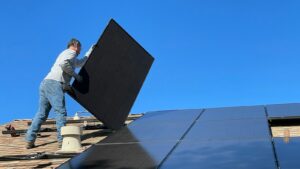
It is characterised by large sums invested in alternative energy sources, backup water systems, and increased security to keep the business open.
Increased political uncertainty results in businesses being hesitant to invest in South Africa and contributes to the country’s elevated risk premium.
In turn, a higher risk premium makes it harder for South African companies and the government to raise capital to fund investment as it pushes interest rates higher.



Comments