Corruption can crush government’s R940 billion infrastructure plan


The government’s plan to spend more than R940 billion on infrastructure over the next three years will require careful management of financial and operational risks.
The government’s track record of wasteful and corrupt expenditure could cause this plan to be derailed.
In his 2025 State of the Nation Address (SONA), President Cyril Ramaphosa said the government is undertaking massive investment in new infrastructure to achieve higher levels of economic growth.
This will be done while upgrading and maintaining South Africa’s existing infrastructure.
“We are developing innovative ways of funding infrastructure. We are engaging local and international financial institutions and investors to unlock R100 billion in infrastructure financing,” the president said.
“A project preparation bid window has been launched to fast-track investment readiness. This includes revised regulations for public-private partnerships, which will unlock private sector expertise and funds.”
He said the government will spend more than R940 billion on infrastructure over the next three years. This includes R375 billion in spending by state-owned companies.
The president said this funding will revitalise the country’s roads and bridges, build dams and waterways, modernise its ports and airports and power the economy.
South Africa’s economy desperately needs more infrastructure spending as gross fixed capital formation (GFCF) remains low, hindering economic growth.
GFCF, also known as “fixed investment”, is a key macroeconomic indicator that measures the value of new and existing fixed assets acquired by businesses, governments, and households.
These assets include equipment used in production processes, factories, offices, residential dwellings, roads, bridges, railways, utilities, and intellectual property like patents, copyrights, and trademarks.
TreasuryONE currency strategist Andre Cilliers attributes South Africa’s low economist growth partly to ongoing de-industrialisation and inadequate levels of fixed investment.
He said South Africa’s fixed investment makes up just 14.6% of GDP, compared to a typical 30% in healthier economies.
“This environment erodes confidence in the country’s ability to stimulate sustainable economic growth,” Cilliers said.
“The lack of capital project investments and a deteriorating state-owned enterprise (SOE) sector, highlighted by TotalEnergies’ exit from upstream petroleum projects, exacerbate this bleak outlook.”
Therefore, the government’s commitment to spending more on infrastructure is a welcome sight.
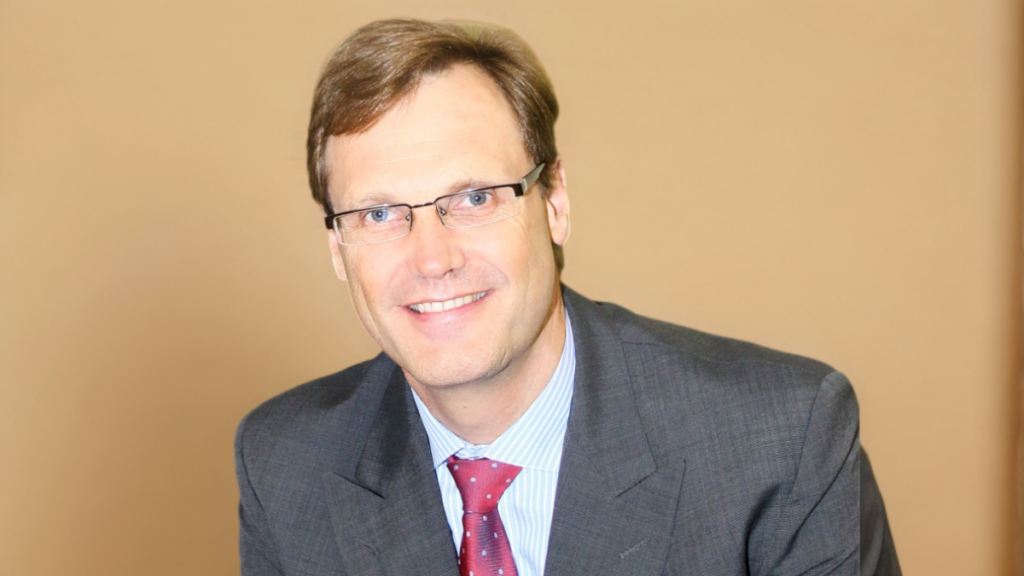
Riskonet Africa risk principal Volker von Widdern welcomed the government’s ambitious commitments. Riskonet is an internationally active consultancy firm in safety and risk management.
Von Widdern said a structured approach to risk management would be critical in ensuring that these promises translate into tangible, long-term benefits for the country.
“The president’s speech set an extensive agenda for economic recovery, infrastructure investment, energy security, and public sector reform,” he said.
“However, success will depend not just on visionary policy, but on how effectively risk is managed across sectors to avoid unintended consequences and implementation failures, particularly considering the high number of initiatives contained in the SONA.”
Von Widdern explained that economic growth plans and the drive to increase infrastructure investment will require careful management of financial and operational risks.
He said the president’s commitment to over R900 billion in infrastructure development and R100 billion for SME financing are crucial.
However, he warned that these projects often suffer from budget overruns, regulatory bottlenecks, and governance weaknesses that can slow down execution and erode investor confidence.
“There is an unfortunately high incidence of delayed and abandoned projects, all associated with wasteful and/or corrupt expenditure,” he said.
To mitigate this, Von Widdern suggested that South Africa adopt a public-private risk-sharing and reward-sharing framework.
This would ensure greater transparency, clear accountability structures, and robust oversight mechanisms to prevent inefficiencies and corruption in large-scale developments.
Regarding energy and water security in South Africa, Von Widdern acknowledged the progress made in stabilising the country’s electricity supply.
However, he warned that resilience in these sectors remains fragile, as demand from the mining industry remains low because of the capacity constraints at Transnet and the country’s harbours.
“The ongoing modernisation of Eskom and the expansion of renewable energy generation require not only financial backing but also strategic risk planning to safeguard against cyber threats, supply chain disruptions, and technical failures,” he said.
South Africa’s water infrastructure, another priority highlighted in the SONA, faces similar challenges.
“Infrastructure failure in the water sector is not just a logistical risk but a national security concern,” he said.
“We need long-term capacity planning associated with committed projects, predictive maintenance programs, real-time risk monitoring, and diversified investment models to protect these essential services from climate-related shocks and mismanagement.”



Comments