Government spent R381 million building a vaccine facility that is not finished 13 years later



South Africa’s Department of Agriculture has spent R341 million to build a vaccine production facility at Onderstepoort Biological Products (OBP), which is still not complete 13 years after it was announced.
The project is nearly a decade behind schedule and has left South Africa unable to modernise its vaccine manufacturing capabilities.
As such, OBP has been unable to regain lost expert certifications and scale vaccine supply for South Africa’s agricultural industry.
Most recently, this left the country unable to contain, suppress, or manage the outbreak of foot-and-mouth disease (FMD) that ravaged cattle farmers.
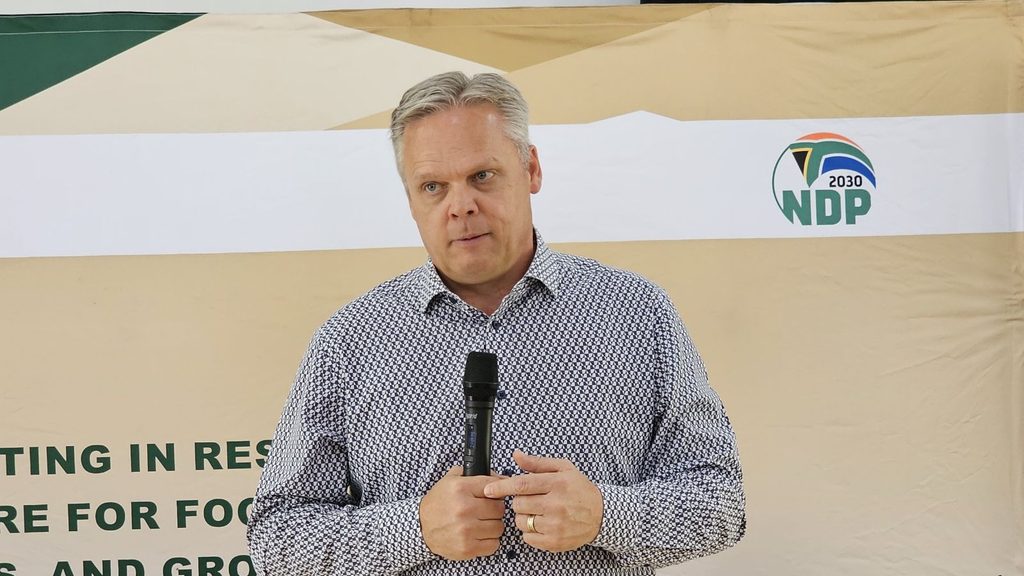
Agriculture Minister Willie Aucamp gave an update on the construction of a Good Manufacturing Practice-compliant (GMP) facility at OBP in response to questions in Parliament.
Aucamp has inherited the delayed project and is committed to completing it, with completion expected in 12 months.
After the facility is completed, Aucamp said it will take another two to three years to complete the testing and certification process.
OBP is a state-owned company based north of Pretoria with a mandate to prevent and control animal diseases by developing, manufacturing, and distributing veterinary vaccines.
Historically, this company has been highly effective and the primary supplier of critical vaccines for livestock and horses across South Africa and its neighbours.
It has targeted diseases ranging from African horse sickness and bluetongue, through to anthrax and lumpy skin disease.
At its peak, OBP manufactured 50 different viral and bacterial vaccines, helping South Africa’s agricultural sector compete in global markets.
However, the FMD crisis showed that today’s OBP is much less effective than its predecessors, as it was unable to help contain the disease.
The lack of vaccine manufacturing capacity and development undermined South Africa’s ability to contain, suppress, and manage outbreaks across the country.
Without a new GMP-compliant facility, South Africa had to halt local FMD vaccine production in the early 2000s.
As a result, South Africa experienced an FMD resurgence from 2021 to 2025, with no domestic commercial vaccine production.
The country had to rely on imports from Botswana and elsewhere to combat the disease and ultimately contain it.
This was not before cattle farmers were devastated by the spread of FMD, as vaccination could not be rolled out on the necessary scale to contain the disease.
A decade late: OBP’s new facility
The early 2000s sent an early warning to South Africa’s agricultural ministry and sector, with the advent of new global manufacturing standards.
Chief among these were the new GMP standards that facilities had to meet to be able to export vaccines and produce particular variants.
At the time, OBP was still using its original manufacturing facilities, many of which were decades old. These failed to comply with the new standards.
OBP’s facilities were characterised by ageing infrastructure, failing freeze-dryers, and manual processes that were susceptible to breakdown and production shortages.
The government unveiled a plan to tackle this issue in 2014, with the National Treasury and the Agriculture Department allocating R492 million to construct a new, state-of-the-art facility.
This facility would modernise the vaccine manufacturing process and enable rapid scaling of production in response to disease outbreaks.
The project was formally announced in the 2013/14 financial year and was expected to be completed by 2017.
Delays were almost immediate, with OBP asking for R1.2 billion to cover the full scope of manufacturing the facility. National Treasury allocated R492 million.
This delayed the start of construction, which was then plagued by severe contractor mismanagement and procurement irregularities.
Investigations later revealed that contracts were awarded under questionable circumstances to poor-performing entities.
In his response, Aucamp said the investigations found that the former CFO should be charged for transgressing the Public Finance Management Act.
It also recommended that this process include the company secretary and COO.
Aucamp said that OBP is also considering disciplining two of its employees for gross dishonesty, misconduct, negligence, and a breach of duties.
“All implicated employees resigned from OBP, and thus no action was taken. The matter has been referred to the Special Investigating Unit,” Aucamp said.
Login or register for unlimited free access.