Two men cost South Africa half a million jobs


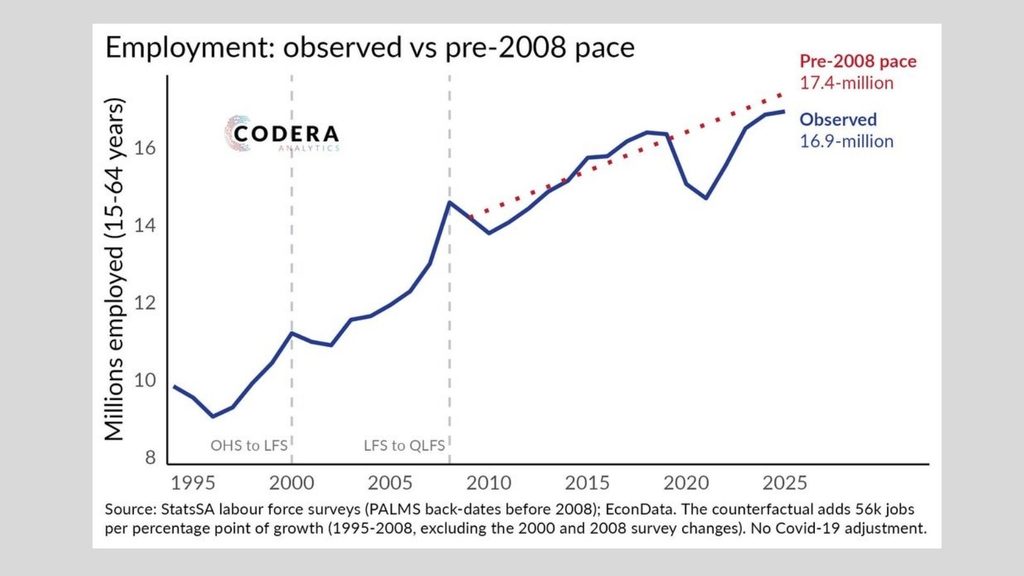
South Africa’s economy would have employed 500,000 more people if it had maintained its pre-2008 economic growth rate through to the present day.
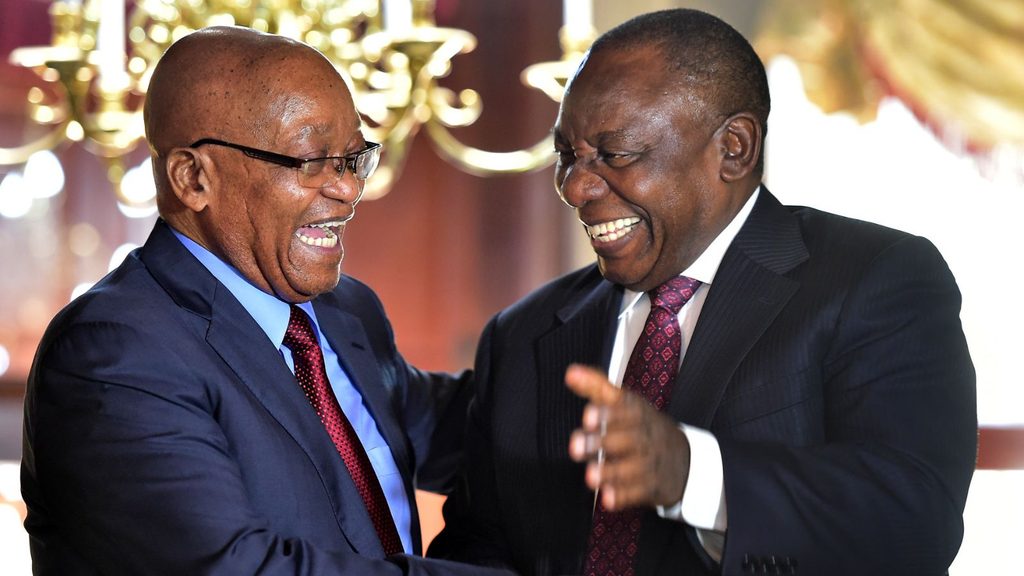
This means that had the administrations of President Jacob Zuma and President Cyril Ramaphosa maintained the economy’s momentum, half a million more South Africans would have jobs.
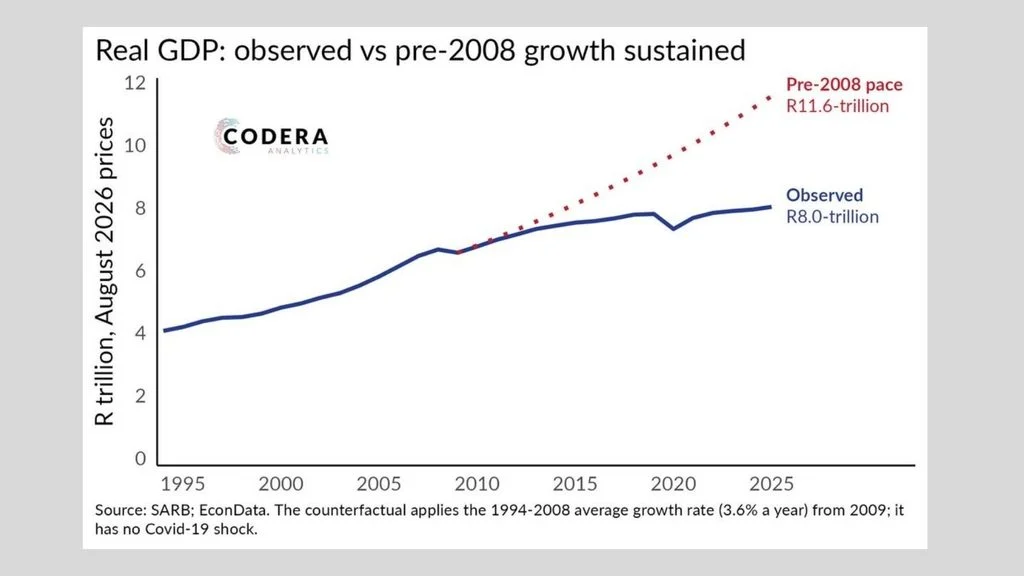
Apart from the job creation, South Africa’s economy would be R3.6 trillion larger, and the government’s budget deficit would be erased.
This was revealed in a series of analyses by Codera Analytics, which showed how important economic growth is for improving individuals’ quality of life.
Economic growth is closely tied to employment growth and improved financial outcomes for individuals. It also correlates with better service delivery and wage growth.
The ANC-led governments of the 1990s and 2000s were good at this and enjoyed the fruit of their labour in the form of resounding electoral success.
President Nelson Mandela’s administration in the immediate aftermath of apartheid stabilised the South African economy and ensured the country would avoid a financial crisis.
The Mandela administration stabilised the economy and achieved a steady growth rate of 2.7%. In contrast, annual growth was 0.2% between 1990 and 1994.
This created a platform from which faster economic growth could be pursued, which, fortunately, combined with a commodity boom, turbocharged South Africa’s economy.
Commodity prices surged in the late 1990s and early 2000s as China’s economy boomed and became increasingly hungry for raw materials.
President Thabo Mbeki’s administration capitalised on this boom to bolster state finances, narrowing the budget deficit and reducing South Africa’s debt burden.
Then-Finance Minister Trevor Manuel managed to run a full budget surplus in the 2007/ 08 financial year. This is still South Africa’s last overall surplus.
Mbeki’s implementation of Growth, Employment and Redistribution (GEAR) enhanced South Africa’s economic growth to an annual average of 4.1% during his two administrations.
Codera Analytics’ research shows that for every percentage point in economic growth, South Africa’s economy creates 60,000 jobs.
Thus, during Mbeki’s nine years as president, South Africa’s economy created 240,000 jobs per year for a total of 2.2 million jobs.
Things fall apart
The trend of improving economic outcomes from 1994 onwards ended abruptly when Zuma came to power in 2009.
By the end of his tenure in 2018, living standards had begun to decline across South Africa as the economy stagnated and service delivery collapsed.
Zuma’s presidency coincided with the aftermath of the Global Financial Crisis, which South Africa initially navigated very well.
While it avoided severe financial repercussions, the country suffered from falling commodity prices as economic growth slowed worldwide.
This negatively impacted government revenue and the local economy’s growth, beginning South Africa’s lost decade.
However, government policy and corruption exacerbated the impact on South Africa, with Zuma exploiting the country’s improved financial health to spend heavily.
Much of this spending went towards consumption in the form of salaries and not infrastructure investment, leading to poor economic outcomes.
The National Treasury is still struggling to reverse this trend as of today.
Declining infrastructure investment resulted in deteriorating service delivery, most notably increased load-shedding, and weak economic growth.
Running one budget deficit is not much of a problem. However, South Africa has run consecutive deficits for the past 18 years, leading to a buildup in debt.
This trend has accelerated under Ramaphosa, with South Africa’s economy averaging an annual economic growth rate of 1.1% since 2008.
The government continues to spend heavily, with very little to show for it in terms of faster economic growth or improved service delivery.
South Africa’s debt burden is projected to stabilise at 78% of GDP, near the levels where a country enters a debt spiral. The government spends R1.2 billion a day servicing this debt burden.
One of the biggest impacts of slower economic growth in South Africa is the lack of job creation, leaving 8.5 million working-age people unemployed.
The country’s economy is simply not growing fast enough to absorb new entrants to the workforce.
South Africa’s population grows at 1.2% per annum, and economic growth has averaged less than 1% for the past decade, inevitably resulting in a rising unemployment rate.
600,000 people enter South Africa’s workforce every year, while the economy creates fewer than 100,000 jobs. This creates a brutal reality where unemployment steadily rises every year.





Conversation
16 commentsThis paragraph deserves special mention:
“600,000 people enter South Africa’s workforce every year, while the economy creates fewer than 100,000 jobs. This creates a brutal reality where unemployment steadily rises every year.”
Once 600 000 people have applied for 100 000 jobs, 500 000 of them will remain unemployed.
Normal mortality reduces this imbalance a bit.
However, workforce numbers over last decade (under average GDP growth of about 0.8%) show SA is only growing unemployment at 2-3 times the rate we’re growing jobs!
This is by far greatest existential threat to our National Interest/Sovereignty ANC has yet come up with….few economists and none of the ruling party openly admit the disastrous implications of this humanitarian time-bomb.