United States warns expropriation without compensation will crush South Africa’s economy


The implementation of expropriation without compensation is a direct threat to investment in South Africa and will severely damage its economy.
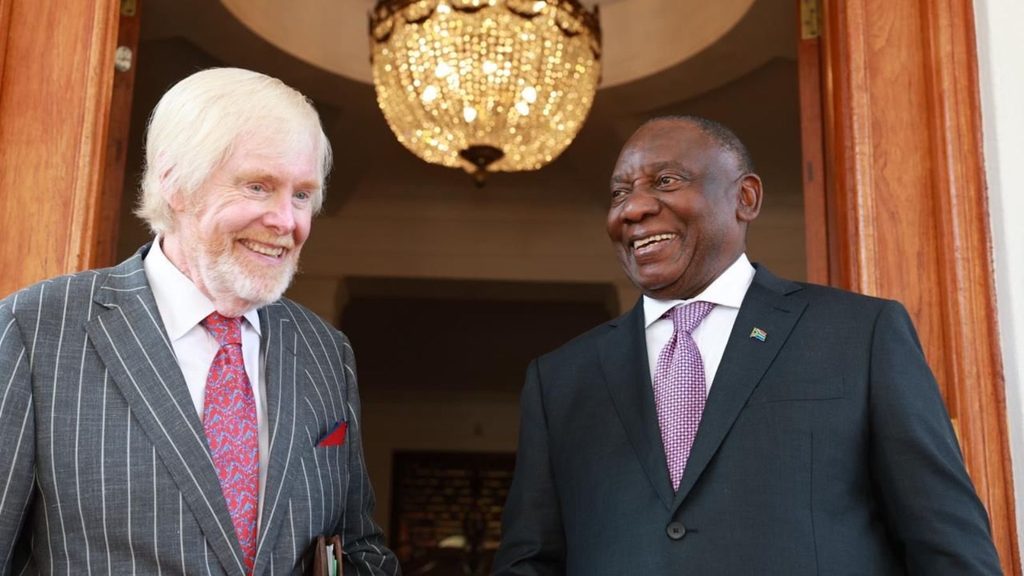
This is according to the United States Ambassador to South Africa, Leo Brent Bozell III, who told the SABC that Washington still wants the policy scrapped.
The issue of expropriation without compensation is one of the United States’ “Five Asks” that it wants addressed to improve relations between the two countries.
Bozell noted that the situation in South Africa is very complex, with the government divided over how to grow the economy and engage with global partners.
“I have learnt that there are those in the government who want to see the business community succeed,” Bozell said. “There are also those in the government who, frankly, do not want to see it succeed.”
The United States has put its five asks before the South African government for 18 months, with little response.
President Cyril Ramaphosa met with Bozell on 28 August and is reportedly drafting a response to his American counterpart on the Five Asks.
Ramaphosa has not provided a timeline for his formal response, given the delicacy of the situation. He said the discussion with Bozell was to recalibrate relations between the two countries.
Bozell, however, has made it clear that things need to change before relations between the two countries can be recalibrated and improved.
The ambassador said that the time for endless dialogue has run its course and that America is running out of patience with South Africa.
Bozell said the United States wants strong relations with South Africa, and its businesses want to invest in the country.
However, South Africa has failed to show that it wants the same and has made no meaningful progress on addressing America’s concerns.
“So far, it has shown it cares for neither. As a result, the consequences, as I’ve attempted time and again to express, are necessarily going to be severe,” he said.
Expropriation without compensation is a disaster
Bozell explained that not all consequences will take the form of sanctions or action by the United States government.
He said many of the policies outlined in the Five Asks are already negatively impacting South Africa’s economy and will continue to do so.
This is because they prevent investment from local and international investors, which the country desperately needs to fund its economic growth.
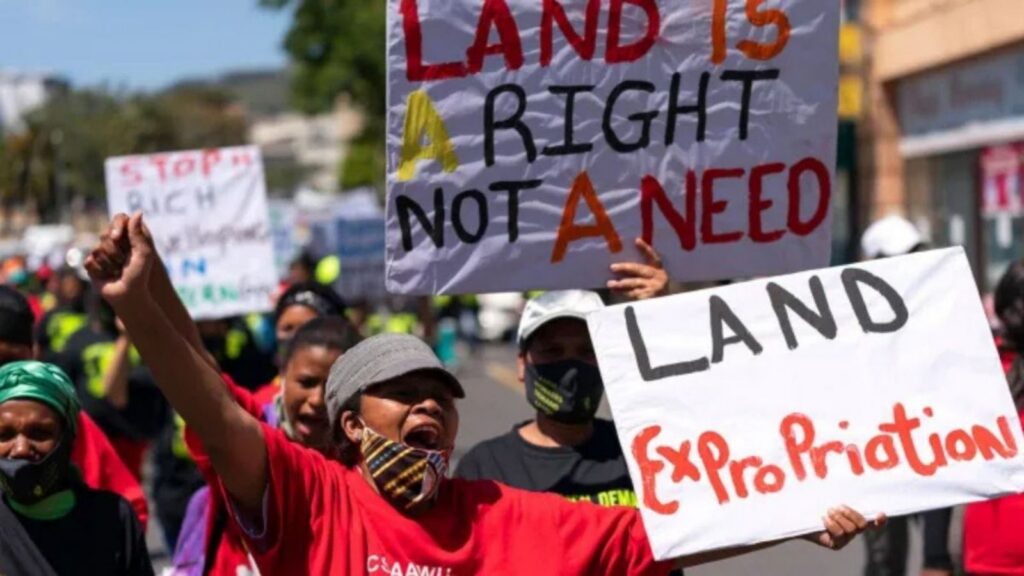
Expropriation without compensation was second on the list of the Five Asks and, Bozell argued, the most economically damaging.
“The expropriation without compensation issue is important to us. It would be a direct threat to investment in your country,” Bozell said.
“We have a similar piece of legislation in America, but in our country, you have to justify the expropriation and then pay a fair market price for the property.”
South Africa’s Expropriation Act provides scope for the state to expropriate property with nil compensation in particular circumstances.
Bozell said this creates fear and uncertainty for investors that their investment in a property, factory, or a South African business may be expropriated down the line for nil compensation.
This could eliminate any return on investment, making South Africa an unattractive place to invest capital in long-term projects or businesses.
Bozell said the United States has decided to take expropriation without compensation off the active negotiating table until South Africa’s judiciary rules on it.
There is an expectation that the judiciary will rule expropriation without compensation unconstitutional, thereby voiding one of the Five Asks.
“Now, if the courts were to rule otherwise, the United States is going to say that this will have a chilling effect on investments in your country,” Bozell said.
“That is because there is a rich history of this around the world where countries have had that program and then, for various reasons, nationalised corporations.”
“As I speak to people across the divide, people believe that the courts are going to rule it unconstitutional and that’s going to be the end of it, so we left that one alone.”






Comments