State-owned company chairman’s salary increased from R1.4 million to R2.7 million in a year


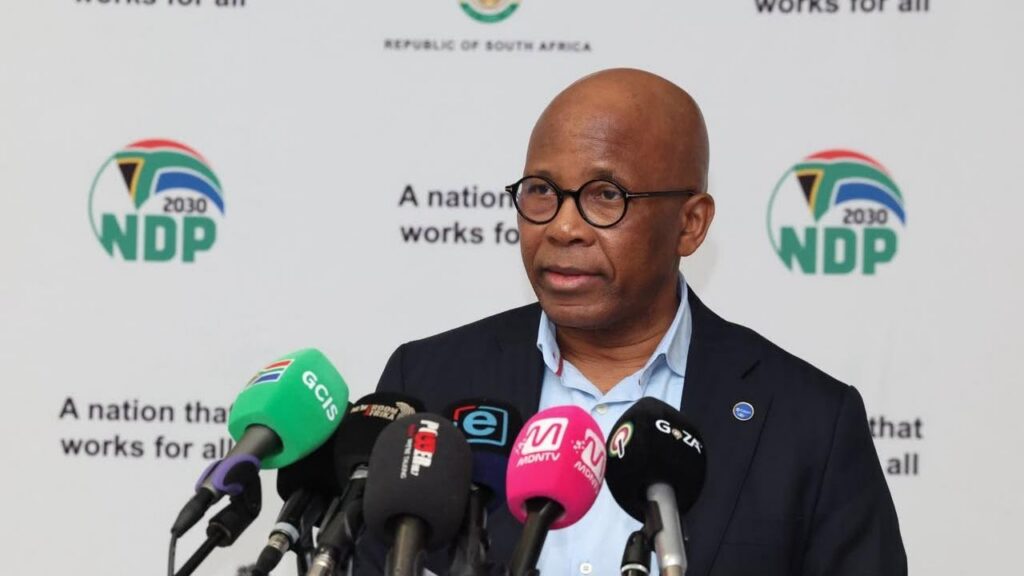
OUTA CEO Wayne Duvenage said that board chairpersons of state institutions, who only provide oversight without operational work, can earn up to R3 million per year.
This, he said, was preposterous, as it was similar to the salary of a CEO of a large company, which carries a much higher workload.
Duvenage shared his views during an interview with Mike Sham on the State of the Nation podcast about South Africa’s government institutions.
“Many people are paid exorbitant board fees. We’ve seen board chairpersons earning R3 million a year,” he said.
“That is what a CEO of a large company earns. However, they are just chairing. They get overly involved and call excessive meetings just to get paid more.”
Duvenage said that OUTA has a project examining board remuneration and the inconsistencies in it.
“Some board members are earning up to R20,000 a day. A full day’s fee gets paid out even for a brief three-hour meeting,” he said.
“On top of that, the board members claim stipends, travel expenses, and other perks. It’s being heavily abused.”
He added that there are also many cases where board members have conflicts of interest and where they benefit far beyond just their board fees.
“Their private companies start receiving bursary grants from the companies which they chair, they get flown overseas, or they’re given tablets and laptops,” Duvenage said.
“As a director, those are basic tools of the trade. You’re expected to bring your own equipment, not demand that the entity buy you a computer.”
Eskom non-executive director’s payments

Newsday examined the remuneration of chairpersons at state-owned enterprises, and Eskom stood out for its high payments.
Eskom’s latest annual report showed that the board payments increased from R10.6 million in 2024 to R22.4 million in 2025.
Eskom chairman Mteto Nyati’s remuneration increased from R1.4 million in 2024 to R2.7 million in 2025.
Other non-executive directors also enjoyed significant increases. Leslie Mkhabela’s remuneration, for example, increased from R823,000 to R1.8 million.
The lowest-paid non-executive director on the Eskom board was paid R1.775 million, and 5 of the 11 members were paid more than R2 million.
Notably, the Eskom board and its committees held fewer meetings in 2025 than in 2024. In 2025, it held 78 meetings, significantly lower than the 94 in 2024.
The power utility said that the 78 meetings exceeded the number of meetings approved by the shareholders.
“The significant number of ad hoc meetings attended without remuneration reflects the commitment of the board and its committees,” it said.
This, it said, was needed to adequately address governance requirements and respond to heightened governance demands.
It added that the year-on-year increase in non-executive director remuneration reflected the change in the remuneration structure applied in the 2025 financial year.
Eskom explained that this new remuneration structure aligned directors’ fees with actual work performed.
Eskom non-executive director payments breakdown
| R’000 | 2025 | 2024 |
| Current directors | R22,396,000 | R10,576,000 |
| Mteto Nyati (chairman) | R2,724,000 | R1,358,000 |
| Leslie Mkhabela | R1,832,000 | R823,000 |
| Fathima Gany | R2,352,000 | R1,081,000 |
| Lwazi Goqwana | R1,775,000 | R754,000 |
| Clive le Roux | R2,237,000 | R1,061,000 |
| Ayanda Mafuleka | R1,832,000 | R820,000 |
| Dr Tsakani Mthombeni | R1,832,000 | R849,000 |
| Bheki Ntshalintshali | R1,775,000 | R873,000 |
| Tryphosa Ramano | R2,006,000 | R1,018,000 |
| Dr Busisiwe Vilakazi | R1,832,000 | R881,000 |
| Dr Claudelle von Eck | R2,199,000 | R1,058,000 |


Comments