The multibillion-rand grant meant to last for six months is still here six years later


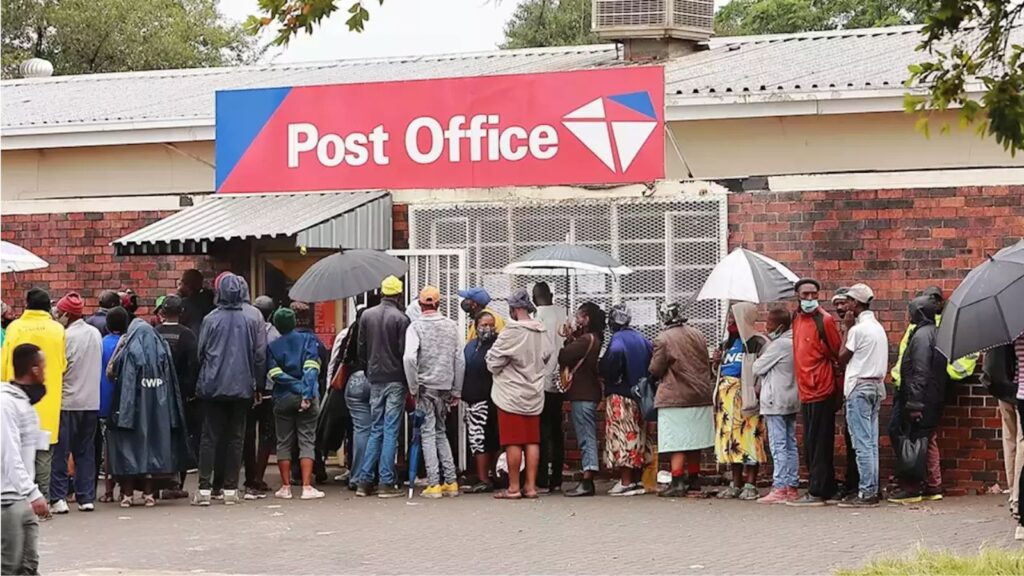
South Africa’s Covid Social Relief of Distress Grant (SRD) was introduced in 2020 as a six-month, temporary relief measure for struggling households.
However, it is still here six years later and will now be used as the blueprint for a Basic Income Support (BIS) Grant.
The Department of Social Development (DSD) recently provided the Select Committee on Social Services with a progress report on its efforts to develop a BIS Grant.
In this presentation, the DSD explained that the SRD provision was introduced in 2020 to assist working-age adults who found themselves in dire straits during the Covid-19 lockdown.
“Although initially introduced as a short-term measure for six months, it was later extended annually in various iterations due to its success in addressing poverty,” the department said.
The SRD Grant has been extended every year since 2020, and was even raised to R370 per month in 2024, up from R350 previously.
The DSD’s claim that the SRD Grant has helped address poverty in South Africa was supported by the department’s Rapid Assessment Study.
This research showed that the SRD Grant is mainly used by poor families to buy basic necessities, like food, electricity, clothing, and transport, “all of which support local economies”.
“Further research by multiple independent researchers also found the SRD to be well targeted and successful in reducing hunger, poverty, and inequality while also enabling the participation of beneficiaries in job search and other economic activity,” the DSD said.
This success led the DSD to begin developing a BIS Grant for South Africa, which will be modelled on the SRD provision.
In doing so, the government hopes to introduce a provision that provides a more permanent form of income support.
However, there is one problem – unless significant changes are made, South Africa’s poor fiscal health means that it can scarcely afford the SRD Grant, much less a permanent form of it.
Dawie Roodt on social grants

Efficient Group chief economist Dawie Roodt told Daily Investor that South Africa simply does not have the fiscal space to introduce additional spending for something like a BIS Grant.
He said South Africa needs to spend less, not more, as the state’s fiscus has been weakened by years of inadequate economic growth and mismanagement under a weak government.
However, at the same time, he said social grants play a very important role in South Africa.
Roodt explained that grants provide a critical safety net for poor South Africans, who are suffering amid the country’s weak economic growth and sky-high unemployment rate.
Therefore, Roodt believes there could be a place for a BIS Grant in South Africa, though it will require a complete overhaul of the country’s existing grant system.
Currently, the government offers eight different social grants, including the SRD, child support, old persons’, disability, foster child, care dependency, and war veteran’s grants.
According to Roodt, this has led to a highly fragmented and administratively burdensome social support system, especially if public health and other services are taken into account.
Thus, he believes it would make sense to consolidate all of these grants and social support services into one provision, like a BIS Grant.
This would likely work out cheaper for the state and be less administratively cumbersome to maintain.
Roodt said this could take the form of an ID card, which qualifying individuals could use to access state services like free basic electricity and public healthcare, and receive their BIS provision.
However, he added that the government will need to decide who receives this grant, as there are two approaches to a BIS provision.
The first could see every South African citizen receiving the grant, regardless of income level or any other criteria.
The second approach would be more similar to the SRD Grant, where there are specific criteria recipients must meet to qualify, normally based on income, age, employment status, and so forth.
The cost of the SRD Grant

Since the SRD Grant was introduced in 2020, it has cost the fiscus an estimated R187.99 billion.
When it was first introduced, the government estimated that there would be between 700,000 and 8 million beneficiaries. The National Treasury estimated the cost at R17.89 billion for the 2020/21 fiscal year.
At the time, since the grant was still new, it was unclear how many people would qualify and apply for the grant.
In South Africa’s Budget for the 2021/22 fiscal year, the Treasury allocated only R2.1 billion for the grant, enough to fund a short-term extension until April 2021.
However, the grant was extended for another 12 months, and the Treasury allocated R44 billion to it in 2022/23, though this was later revised to R29.1 billion.
This year, the number of beneficiaries of the grant reached 7.97 million, with the government implementing improved means testing.
By 2023/24, the number of beneficiaries was projected to rise to 8.49 million, and the grant was allocated R36.1 billion in that year’s budget, which was later revised down to R33.89 billion.
In 2025/26, the government began cracking down on grant recipients, tightening compliance and reviewing millions of bank and credit bureau accounts.
This led to the cancellation of 34,661 grants and the rollout of biometric verification for all new applicants.
In the 2026/27 Budget, the Treasury allocated an additional R36.4 billion to extend the grant until 31 March 2027, with medium-term estimates projecting the final cost to reach R36.89 billion.
 Loading ...





Comments