Private companies keep South Africa alive


The private sector, through its large-scale intervention to fill the gap left by deteriorating government service delivery, is keeping South Africa’s economy alive.
As the state retreats from key network industries, such as electricity and logistics, the private sector is increasingly filling the gap.
This is also happening at a local level, with South African households and businesses stepping in to support service delivery in small towns around the country.
While this is positive for the country’s economy, it may also lead to the ‘Balkanisation’ of South Africa, with functioning nodes or bubbles isolated from broader decline.
This is feedback from political analyst Frans Cronje, who explained that private alternatives to state services are the only things keeping the local economy functioning.
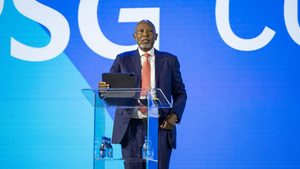
Speaking at a State of the Nation event, Cronje told the audience that the private sector cannot replace the state – it can only mitigate the consequences of state failure.
“Wherever the state retreats or starts to fail, what you see happening at a greater and greater scale is macro-level private entry to mitigate the consequences,” Cronje said.
“So, for example, when rail started to fail, road freight stepped in to pick up the difference. It does not solve the problem, but it mitigates the consequences.”
This is mimicked across sectors, with private companies investing heavily in alternative energy sources to reduce reliance on Eskom and exposure to rising electricity prices.
More broadly, private schools have replaced state-run counterparts, and private security companies have taken over parts of the police’s functions.
“This makes us quite unique as a post-colonial emerging market, because moments of real trouble do not force the evacuation of the bulk of the capital base and entrepreneurs,” Cronje said.
“They would rather stay in enclaves or citadels within the country. They are kept here.”
This is coupled with other factors that make South Africa relatively attractive to investors and well-equipped for much faster economic growth.
These factors include the fact that the majority of voters are centrist, that the electoral system works, that fiscal prudence is maintained, and that much of the capital base stays in the country.
“If you apply time to that, it becomes very difficult to know whether the outcome is for us to crash or take off because the hand of cards we have are quite easy to play to success,” Cronje said.
What South Africa needs to do

While South Africa has favourable cards, its politicians often do not play them to achieve faster economic growth and development.
Instead, the country’s history over the past 30 years has been marked by repeated missteps and own goals that hobbled economic growth.
Cronje believes South Africa can relatively easily and quickly achieve much faster economic growth of around 4% per annum.
This would require relatively simple, popular decisions by politicians and would result in lower unemployment and higher living standards for South Africans.
“If we want to lift the economic rate to 4% and above, then the country has to close the fixed investment gap and lift it by at least 10 percentage points to 25% of GDP,” Cronje said.
“It is not difficult. We are not trying to do something that no other country has ever done. All we are trying to do is what almost every emerging economy has done.”
Cronje’s first recommendation is to be pragmatic about the country’s energy transition, with the focus on energy security rather than emissions.
“This will run into opposition from the global green lobby and the Europeans, but it will not face opposition from the Trump administration,” he said.
“All South Africa needs to say is that, ‘In our unique situation, with a young democracy, let us transition to clean energy on our own terms.’ Do not put pressure on South Africa to back off from coal.”
The second recommendation is more challenging to implement, with Cronje calling on the state to avoid taxing capital on arrival through Black Economic Empowerment requirements and other regulations.
“If a firm wishes to commit to South Africa, no matter the size, and build plants and equipment in the country, judge the empowerment responsibilities differently,” Cronje said.
“The real building blocks of empowerment are fixed investment, tax payments, employment opportunities, and exports.”
“Just tweak the approach to empowerment to make it clear to companies that those are the metrics we want to count, and not just narrow racial criteria.”
Finally, Cronje said South Africa needs to reassure investors that property rights remain protected.
“There is no policy in South Africa called the Land Expropriation Act. There is a piece of expropriation policy that allows the seizure of any fixed or movable asset without market-related compensation,” Cronje explained.
“That needs to be tweaked, to say that in the event of expropriation, the primary issue to be considered by a court is market value.”
Cronje said that in a free and open economy, it is just and equitable that owners get market value for assets that are expropriated.




Comments