Moment of truth for NHI in South Africa


The Constitutional Court is set to hear one of the biggest challenges to the government’s National Health Insurance (NHI) scheme on 5 May 2026.
The Board of Healthcare Funders (BHF) will present its application challenging the constitutionality of the parliamentary process that led to the adoption of the NHI Act in 2024.
The BHF and the Premier of the Western Cape plan to argue that Parliament failed to comply with its constitutional obligation to facilitate meaningful public participation before passing the NHI Bill.
Therefore, the BHF wishes the court to declare the NHI Act invalid and set it aside.
“BHF’s case is not a challenge to the principle of universal health coverage,” the organisation explained in a press statement released on Monday, 4 May.
“The case is about whether or not Parliament complied with its constitutional duty to facilitate meaningful public participation before passing legislation that will fundamentally reshape the country’s health system.”
The government’s plan for universal healthcare has been controversial since its inception, with both the NHI Bill and the Act facing severe backlash and several ongoing legal challenges.
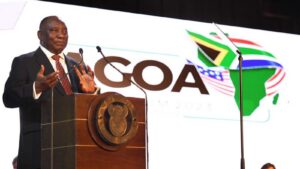
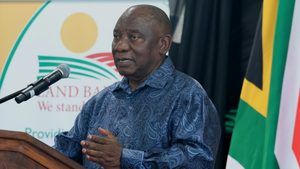
The BHF’s case before the Constitutional Court could prove decisive. President Cyril Ramaphosa has already undertaken not to promulgate any provisions of the NHI Act until the matter is heard and the court has delivered its judgment.
In the notice announcing this undertaking, the Office of the State Attorney said it is to ensure orderly legal conduct and to avoid overlapping or parallel court proceedings.
The NHI Act currently faces several court cases, including some presidential assent challenges, though these will be postponed until the Constitutional Court resolves the BHF’s case.
Governance expert Professor Alex van den Heever previously explained that the challenges in the Constitutional Court have a strong legal basis and are likely to succeed.
However, even if they don’t, he said the NHI is unlikely to ever become a reality in its current form.
“A large part of the argument against the NHI itself is that it does not actually propose feasible reforms. And so, in effect, nothing will happen even if there is an attempt to take the Act forward,” he said.
“There is likely to be an endless series of largely immaterial reforms going forward.”
The BHF’s argument

The BHF plans to argue that the public participation process was materially inadequate because Parliament and the public were not provided with sufficient information to properly assess the Bill’s implications.
This includes the legislation’s proposed basket of services, funding model, operational design and implementation framework.
“Without this information, meaningful engagement and subsequent decision-making were impossible, and thus Parliament was not placed in a position to properly test whether the legislation would achieve its stated objectives,” the organisation claimed.
It explained that, since the public was not provided with sufficient information, it was unable to participate meaningfully in a debate about the Bill.
“Accordingly, the Bill was adopted without a clear understanding of its financial implications or its likely impact on advancing access to healthcare,” it said.
“In these circumstances, there remains significant uncertainty as to how the scheme will function in practice and whether it will achieve its intended objective of achieving universal healthcare in South Africa.”
The organisation said legislation of this magnitude has far-reaching implications for patients, healthcare professionals, medical schemes, employers, taxpayers and the broader health system.
Therefore, it should be developed through a process that is transparent, properly informed and responsive to the substantive concerns raised by the public and affected stakeholders.
“It should not be reduced to whether the public supports the objectives of the legislation, but rather how the legislation should be crafted to meet the objectives of universal healthcare,” it said.
“In our submission to the Constitutional Court, we argue that the process effectively became a ‘tick-box exercise’ by members of Parliament, rather than a genuine engagement with input from the public.”
“Where participation is reduced to form over substance, it undermines both the law and the legitimacy of the democratic system it seeks to create.”




Comments