PSA attacks Dawie Roodt about ‘true state capture in South Africa’ comments


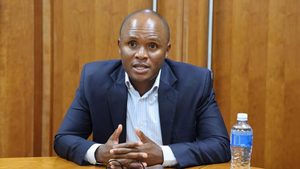
Award-winning economist Dawie Roodt said the true state capture in South Africa is the civil service and tenderpreneurs draining the national budget.
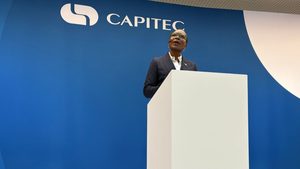
Roodt shared his views about South Africa’s financial challenges during a speech at the 2026 BizNews Conference in Hermanus.
He delivered a scathing critique of public servants in South Africa, characterizing them as a parasitic force that is bankrupting the country.
Roodt argued that the average civil servant is paid more than R50,000 per month, which is far more than the value they provide.
“South Africa has 1.2 million civil servants, excluding state-owned enterprises and local authorities,” he said.
“The salary bill of civil servants is a third of state expenditure. The civil servants get, not earn, around 13% of South Africa’s economy.”
He added that they are significantly overpaid relative to the value they provide, which is why he says they get salaries instead of earning them.
Another concern for Roodt is the policy of cadre deployment, which leads to widespread incompetence.
He explained that individuals are appointed based on their loyalty to the ANC rather than their ability to do the job.
This, in turn, has resulted in increased mismanagement and corruption at the national government level, local authorities, and state-owned enterprises.
He bemoaned that leaders at state-owned enterprises, such as Eskom and Transnet, earn millions while they struggle to deliver on their mandates.
Roodt warned that the parasitic state is choking growth. Unless there is an intervention, South Africa faces further increases in unemployment and poverty.
He called for a political shift toward a state that actually serves the people rather than serving itself.
Public Servants Association of South Africa slates Roodt

The Public Servants Association of South Africa (PSA) slated Roodt’s comments, calling them extremely concerning.
“These statements are unfounded and highly offensive to the hundreds of thousands of hardworking public servants who serve citizens with dedication,” it said.
“The PSA strongly rejects these remarks. To label all public servants and describe them as parasitic or state capturers is a dangerous generalisation.”
It said Roodt’s comments demonstrate a lack of understanding of the realities under which public servants perform their duties.
“These include difficult conditions, with limited resources, and enormous pressure to deliver essential services,” it said.
“Public servants are not the enemy of the public. They are the people who serve the public.”
“They are the nurses in hospitals, teachers in schools, police officers on the streets, and administrative staff who ensure that government institutions continue to function.”
The PSA also strongly objected to the claim that public servants are overpaid. “This assertion is not grounded in reality,” it said.
“Public servants also have financial obligations to support their families, paying loans, and coping with rising living costs like all South Africans.”
It said that with rising inflation and increasing costs of basic necessities, it is entirely reasonable for workers to expect fair and acceptable salary increases.
It added that Roodt’s assumptions regarding the average salary of public servants are far removed from the truth.
“Policy debates should be based on facts and credible data, not on loose assumptions and populist statements,” it said.
It explained that salaries and benefits in the public service are not determined by individuals or commentators.
Instead, it is done through formal collective bargaining processes where trade unions have the legitimate mandate to negotiate on behalf of their members.
“Public servants are at the core of service delivery in South Africa. They deserve respect, not unfounded malicious accusations,” the PSA said.


Comments