The United States’ true message to South Africa


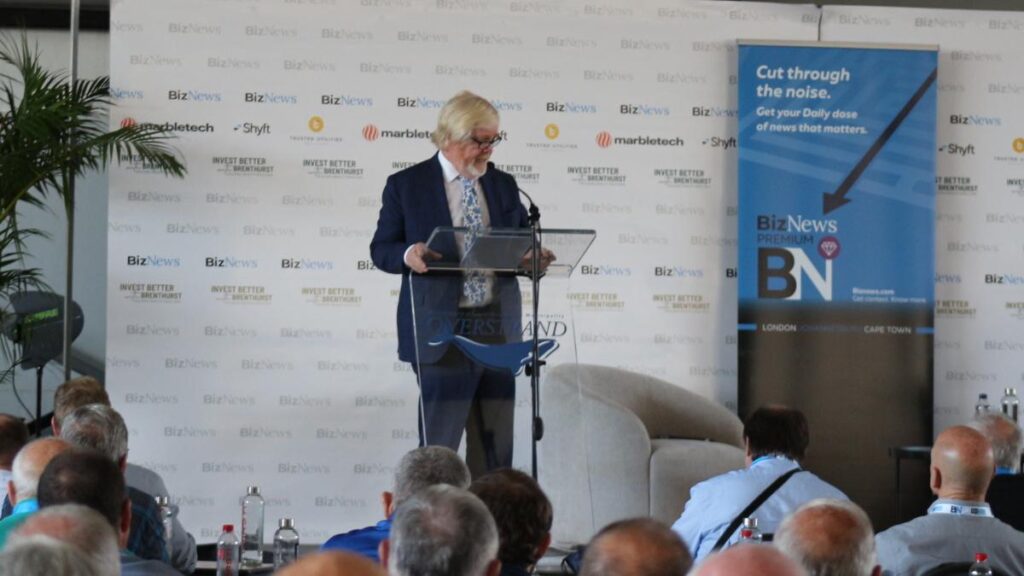
The United States’ Ambassador to the Republic of South Africa, Leo Brent Bozell III, extended a hand of friendship to the country in his first public speech.
Bozell delivered this speech at the 2026 BizNews Conference in Hermanus on 10 March 2026, in which he outlined the United States’ position.
He described a vision for the bilateral relationship between the United States and South Africa rooted in reciprocity and commercial diplomacy.
He said over 500 American companies operate in South Africa, employing more than 250,000 local citizens. He wanted to double this number.
However, he was honest about the concerns from American firms that prevent them from investing in South Africa.
He listed five areas where progress should be straightforward and would benefit South Africa and the United States –
- Protecting rural communities from violence
- Condemning rhetoric that incites hatred or glorifies violence
- Ensuring that expropriation policies include clear and fair compensation standards
- Expanding digital and critical minerals cooperation
- Ending mandatory surrender of ownership or control of corporate decision-making as a cost of doing business
Bozell added that the Trump administration was worried about South Africa’s growing engagement with some of America’s adversaries.
He explained that common ground was harder to sustain when alignments drift toward regimes that do not share democratic principles.
He was optimistic that the United States and South Africa could overcome the challenges and strained relationship to benefit both countries.
Bozell said the relationship will thrive when both nations align their shared interests around growth, opportunity, and security.
The South African government attacks Leo Brent Bozell III

Despite the positive message of cooperation between the United States and South Africa, the government focused on the negative.
In a question-and-answer session after his speech, Bozell said he believed the ‘Kill the Boer’ chant is hate speech.
“I am sorry, I don’t care what your courts say, it is hate speech,” he said. This echoed the view of many South Africans.
He later clarified that it was his personal view that ‘Kill the Boer’ constitutes hate speech. However, he said the United States government respects the independence and findings of South Africa’s judiciary.
South Africa was quick to act, issuing a diplomatic protest to the new US Ambassador to Pretoria over his recent criticism of the government.
The Department of International Relations and Cooperation conveyed the démarche to Bozell. Foreign Minister Ronald Lamola confirmed the move.
“We have called in the ambassador of the United States, Ambassador Bozell, to explain his undiplomatic remarks,” Lamola said at a media briefing.
“We reiterate that broad-based Black economic empowerment is not reverse racism, as regrettably insinuated by the ambassador,” Lamola said.
“It is a fundamental instrument designed to address the structural imbalances of South Africa’s unique history.”
“As we cannot tell President Trump how to deal with localisation in the US, he also can’t tell us how to deal with our domestic issues of sovereignty.”
ANC Secretary-General Fikile Mbalula also responded, saying South Africa’s international-relations policy will not be dictated to by anyone else.
What Leo Brent Bozell III really told South Africa
The back-and-forth between South Africa and the United States, and the emotive issues like ‘Kill the Boer’, have diluted Bozell’s true message.
The text below is Bozell’s full speech at the 2026 Biznews Conference in Hermanus on 10 March 2026.
U.S. MISSION SOUTH AFRICA
Ambassador Bozell
Remarks at BizNews Conference
Hermanus, South Africa, 10 March 2026
“Thank you, Alec. And thank you to the BizNews community for the warm invitation and for convening such an extraordinary gathering of leaders, investors, and engaged citizens.
It is an honor to join you here in Hermanus so early in my tenure as the United States Ambassador to the Republic of South Africa.
Though I have only recently arrived, I have already begun to experience the richness and complexity of this remarkable country. I have traveled beyond Pretoria to Johannesburg, Durban, Cape Town, and now Hermanus. I have met with government officials, business leaders, and local communities. I have visited the Apartheid Museum and District Six Museum.
Those are not mere tourist stops. They are places that remind you that South Africa’s history is lived memory — sacrifice, struggle, resilience, and unfinished work.
At the same time, I have been struck by something equally powerful: the dynamism of this country. Its entrepreneurs. Its innovators. Its young people. Its deep reservoir of talent, ambition, and confidence.
South Africa is a nation of immense potential, immense complexity, and immense importance — not only to this continent, but to the world.
In the weeks and months ahead, I look forward to engaging with a wide range of South Africans in government, in civil society, and in the business community. Many of those voices are in this room today.
Listening will be essential. But so will clarity.
Let me speak plainly about the moment we are in and about some of the business challenges I see in the bilateral relationship.
The United States values partnership with South Africa. This country is Africa’s largest economy and is the largest U.S. trade and investment partner in Sub-Saharan Africa. More than 500 American companies operate here, employing over 250,000 South Africans and contributing meaningfully to economic growth.
That is real partnership — but partnership must be rooted in reciprocity.
President Trump has been clear about our concerns. These concerns are not merely rhetorical. They involve the business environment, rural safety, the Expropriation Act, and South Africa’s growing engagement with some of America’s adversaries.
These issues shape investor confidence. They shape strategic trust. And they shape the trajectory of our bilateral relationship.
When businesses believe their property rights may be uncertain, when policy frameworks create unpredictability instead of clarity, and when strategic alignments appear to drift toward regimes that do not share our democratic principles — common ground becomes harder to sustain.
Honest partners must be able to say this out loud.
President Trump’s America First policy means that I am here to advance the security, prosperity, and values of the American people. That is my duty.
But America First does not mean America alone. It means that where cooperation advances our interests and benefits our partners, we pursue it energetically.
This is where I see real opportunity. Let me highlight what is already working.
This year alone has been filled with milestones that demonstrate the depth and momentum of the U.S.-South Africa commercial relationship.
Visa launched its first-ever data center in Africa in Johannesburg — a R1 billion investment over the next three years. That is not symbolic. That is infrastructure. That is long-term commitment to strengthening South Africa’s digital payments ecosystem and positioning this country as a leader in financial innovation.
Google Cloud has opened its first African cloud region in Johannesburg as part of its R16 billion investment in Africa’s digital transformation. That means advanced cloud services, AI capabilities, and machine learning tools are now available to South African enterprises enabling them to compete globally.
Microsoft is investing an additional R5 billion by 2027 to expand cloud and AI infrastructure here, building on this more than R16 billion already invested. And Microsoft is helping to skill one million South Africans, ensuring that local talent is positioned for the digital economy of the future.
Amazon is another great American tech company that is not only expanding its presence in South Africa, with thousands of jobs and new facilities, but also providing much-needed skills training at its AWS Skills Center in Cape Town, the first international facility of its kind outside of the United States.
These are not isolated announcements. They are proof that American companies bring capital, high standards, cutting-edge technology, workforce development, and long-term commitment.
This is what commercial diplomacy looks like in action, and this is precisely the kind of partnership we want to expand.
A healthy economic relationship, however, is never one-sided. The strongest partnerships are built on investment and opportunity flowing in both directions.
Just as American companies are investing in South Africa’s growth and innovation, we are eager for South African businesses and entrepreneurs to explore opportunities in the United States.
That is why I am pleased to announce the SelectUSA Investment Accelerator — a new initiative designed to streamline access to U.S. markets for major investors. I encourage any interested business leaders to contact my team constructively with policymakers to craft solutions that expand opportunity and encourage entrepreneurship, the business community can help build an economy that attracts investment, creates jobs, and delivers lasting prosperity for all South Africans. If those conditions are in place, I believe South Africa can unlock an extraordinary level of economic dynamism.
South Africa has the talent, the infrastructure, the financial sophistication, and the entrepreneurial energy to be an even stronger engine of growth for this continent, in partnership with the United States.
My focus will be clear. To advance policies that benefit the American people. To expand commercial diplomacy. To deepen fair and reciprocal trade. And to engage South Africa candidly — respectfully, but candidly — about areas of disagreement.
If we can align our shared interests around growth, opportunity, and security, then both of our nations will prosper. That is the partnership I hope to build.
And then what? We are proud of the 500 American companies there are here. But we’re not satisfied. Why not 1,000? We are pleased we’ve created jobs for 250,000 South Africans, but we’re not done. Why not double that number as well?
That’s how Americans think. Nothing is beyond the pale. We want partners who also dream great dreams, and that is South Africa’s signature. Let us do all in our power to make this relationship thrive. Thank you.”




Comments