Homeless people direct traffic in South Africa’s richest city


Traffic lights in Johannesburg are out so regularly that it has become commonplace for homeless people to direct traffic in the hope of getting tips.
The phenomenon of homeless people and vagrants directing traffic at dysfunctional intersections started as a spontaneous community service.
When traffic lights failed due to load-shedding, technical faults, or vandalism, homeless individuals often stepped into the intersection to direct traffic.
This helped with the traffic flow and, in return, many grateful motorists tipped the homeless people for their service.
However, as the situation evolved and load-shedding disappeared, the many illegal pointsmen began damaging traffic lights to keep getting tips.
The problem of some people intentionally sabotaging or tampering with traffic light controller boxes to keep the lights off became a challenge.
The authorities and road safety experts have also issued stern warnings regarding these unofficial traffic controllers.
Under the National Road Traffic Act, only trained and authorised peace officers in uniform can legally direct traffic.
If an accident occurs while you are following the directions of an unauthorised person, the City of Johannesburg will not be held liable.
South African insurance companies have also weighed in, saying motorists cannot claim “the homeless man told me to go” as a legal defence for a collision.
However, big insurers like OUTsurance and King Price generally still cover accidents at these intersections if the driver exercised due care.
This means that even if an informal pointsman at a broken traffic light signals a driver to go, they must still check all directions as if it were a four-way stop.
The City of Johannesburg takes action

Johannesburg Metro Police Department (JMPD) spokesperson Xolani Fihla said informal pointsmen are both illegal and dangerous.
He highlighted that only trained JMPD officers or authorised peace officers have the legal authority to direct traffic.
If an accident occurs while following an unauthorised person’s signals, the city and insurers may not be held liable.
The City of Johannesburg said these individuals lack formal training in traffic flow management, which increases the risk of collisions at complex intersections.
The JMPD also raised concerns that individuals intentionally vandalise traffic light controller boxes.
Two years ago, the City’s MMC for Public Safety, Mgcini Tshwaku, announced a formal program to address the issue.
Rather than just removing the homeless individuals, the city decided to formalise the role through a ‘Points Officials’ programme. The city appointed 200 JMPD Traffic Points Officials to assist in improving urban traffic flow
“This initiative strategically addresses the challenges of load-shedding and ineffective traffic lights,” Tshwaku said.
“The deployment of Traffic Points Officials is a proactive measure aimed at reducing traffic disruptions and enhancing the travel experience for residents and visitors alike.”
Thswaku vowed that the City of Johannesburg’s traffic would only be controlled by trained individuals employed by the JMPD.
“Under the JMPD’s guidance, we assure you that there will be strict oversight and accountability for our Points Officials’ work,” he said.
“Our focus is to ensure that traffic control in the city is in the hands of trained, authorised professionals from this point forward.”
Daily Investor visits Johannesburg, and not much has changed
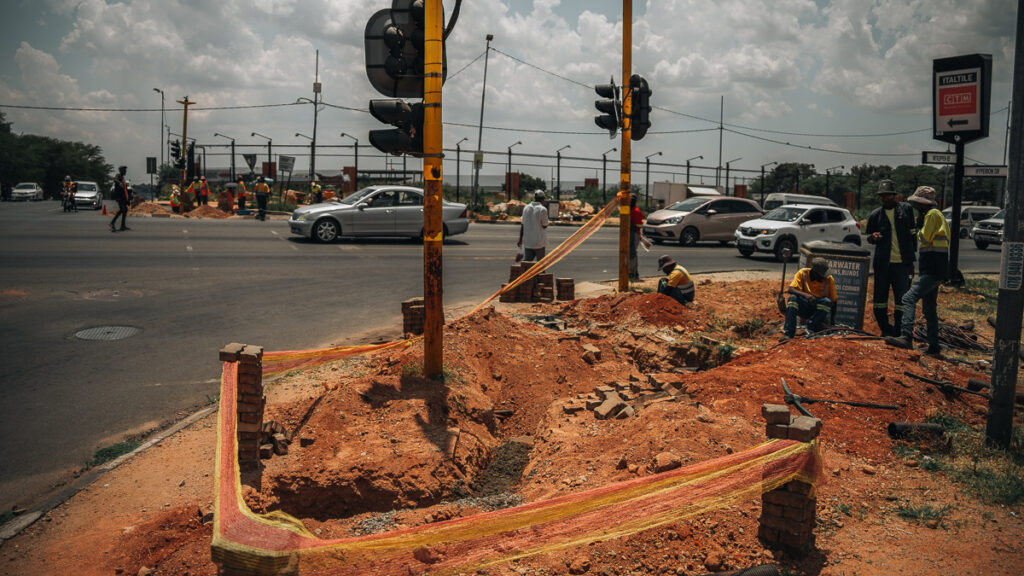
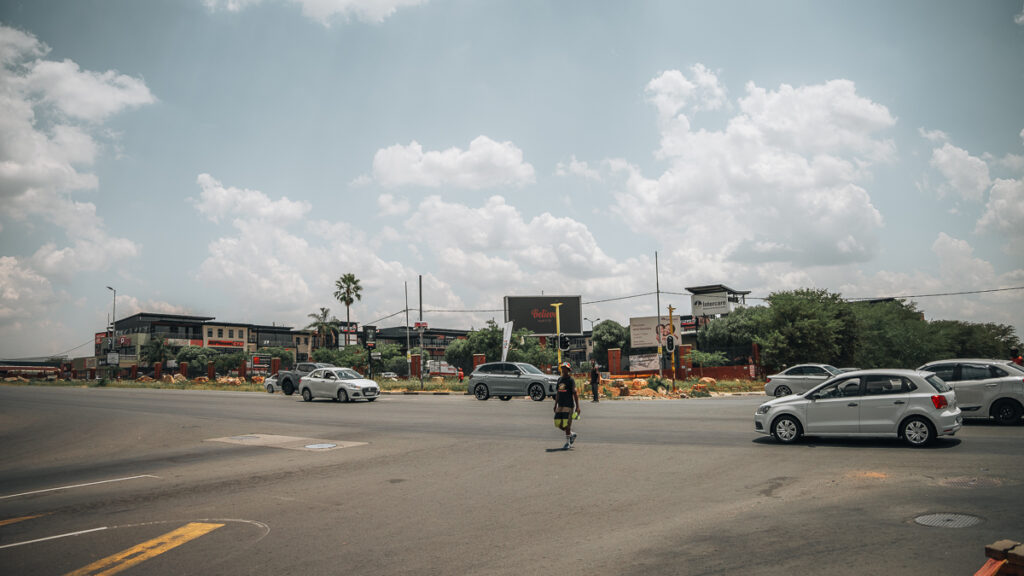
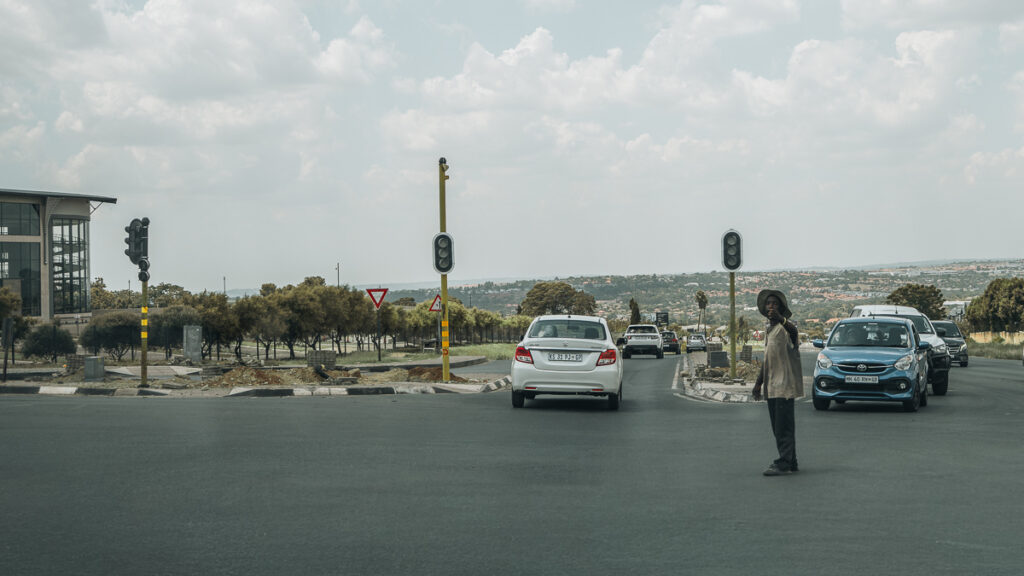
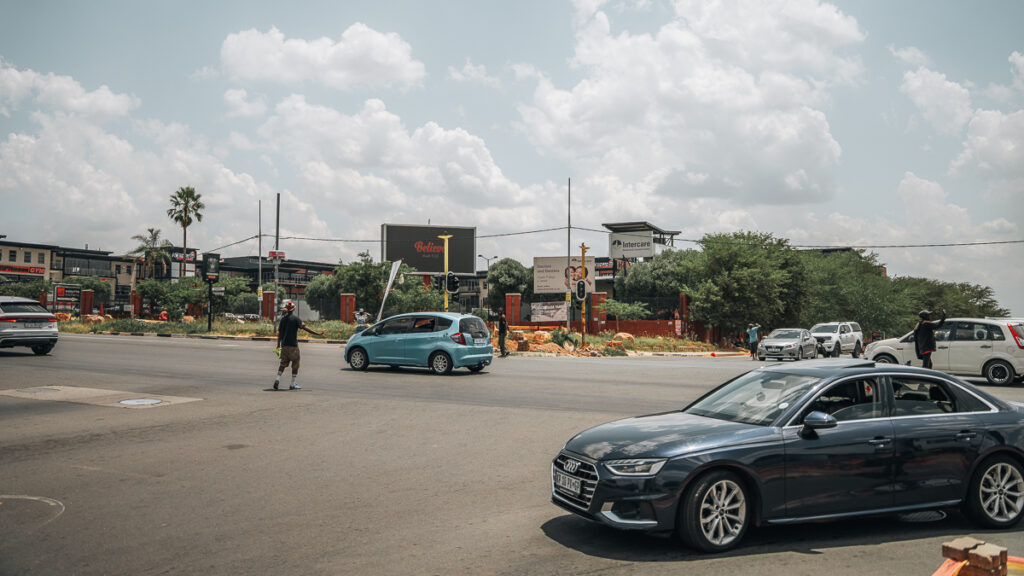
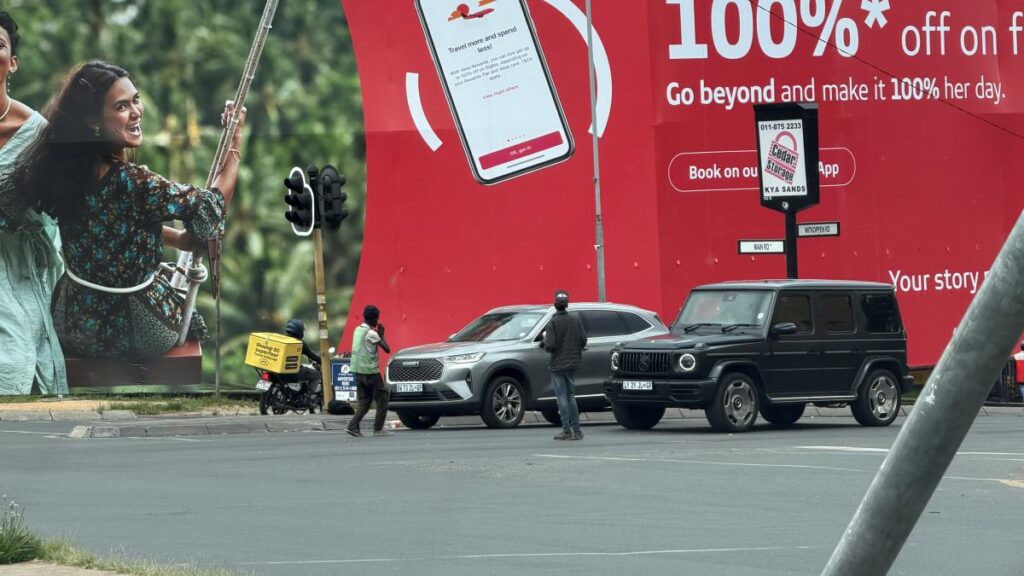
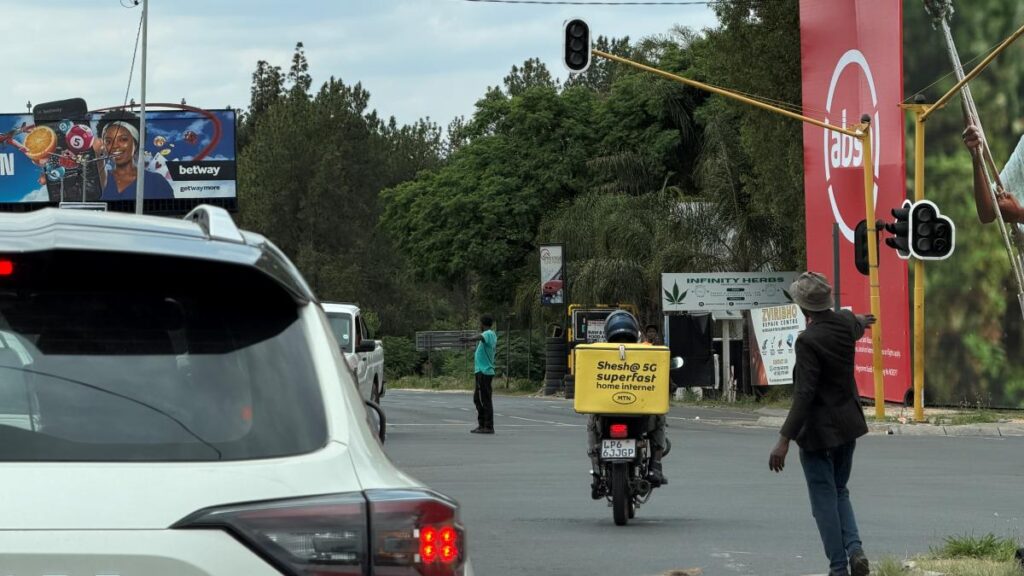
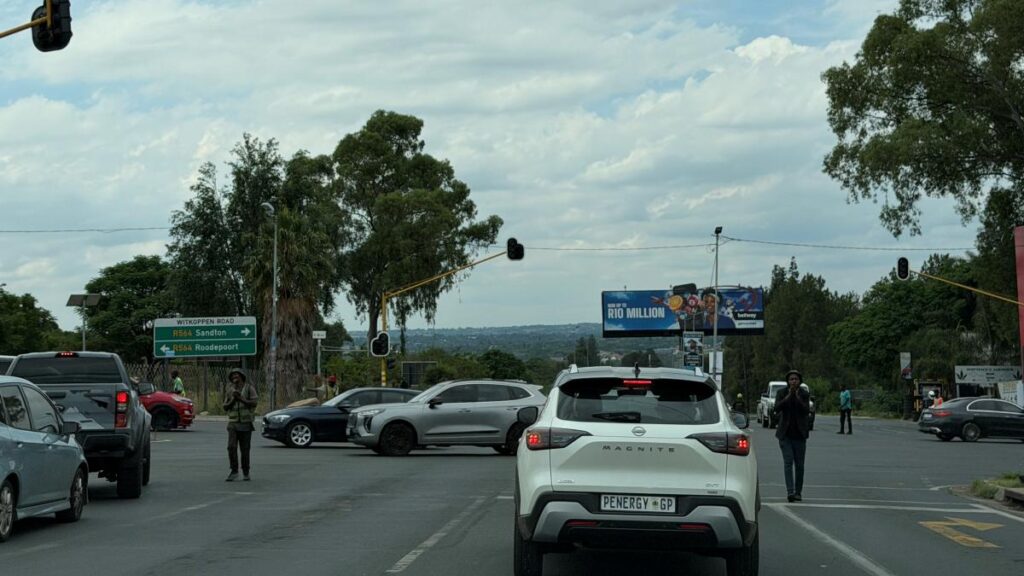
Daily Investor visited Johannesburg at the end of 2025 and the start of 2026 and found numerous intersections where homeless people directed traffic.
The city was plagued by malfunctioning traffic lights. In most routes, there were a few traffic lights which were out.
Motorists typically treated the dysfunctional traffic lights as four-way stops. However, at a few, homeless people were directing traffic.
During our visits, we did not encounter JMPD Traffic Points Officials. They may have been stationed at other traffic lights due to the sheer number of problematic crossings.
What was clear was that dysfunctional traffic lights remain a significant problem in the City of Johannesburg.
This aligns with the statements from the DA’s Gauteng Spokesperson for Roads and Logistics, Nicole Van Dyk.
She said 44% of Gauteng’s provincial traffic lights are not functioning, putting the lives of road users in danger.
“Broken traffic lights lead to road accidents and deaths. Having functional traffic lights is non-negotiable,” she said.
Johannesburg traffic lights


Comments