Billionaire Christo Wiese’s warning to the South African government


Retail billionaire Christo Wiese said South Africa should “know its place” amid fraught ties with the US and be “very diplomatic” in its approach to Washington.
“We are a small country and to keep poking the bear cannot be a good strategy,” Wiese said in an interview on the Sizwe Mpofu-Walsh Xperience published Sunday.
“There is no real animosity toward South Africa. So hopefully it will be a passing phase.”
The US openly opposed South Africa’s Group of 20 presidency, adding to President Donald Trump’s accusations that Pretoria is conducting a genocide against White Afrikaners and expropriating land.
There are an average of 70 murders daily, mostly of Black citizens. And while unlawful land invasions by individuals take place, the state itself has never seized property.
With growing tensions between Pretoria and Washington, the Trump administration earlier this year imposed 30% tariffs on select South African exports — the steepest in sub-Saharan Africa — further straining relations between the two nations.
Pretoria hasn’t had an ambassador in the US capital for most of this year since Ebrahim Rasool was expelled over critical remarks about Trump.
Special envoy Mcebisi Jonas hasn’t received a visa to travel to the US since his appointment by President Cyril Ramaphosa.
The US will eventually see regime change and “things will become more favorable for us,” Wiese said. “At the same time, I must say that some of our policy initiatives in this country need to be criticized by people who have a different view of how we should go about making this country what it should be. Criticism is fair.”
Wiese — a serial investor who steered the expansion of top African clothing retailer Pepkor and the continent’s largest grocer, Shoprite — said the country’s government had “failed basically,” singling out the police, judiciary and prosecuting authority as the worst examples.
He called Ramaphosa’s presidency “a disappointment,” saying that while he has high regard for the leader, he doesn’t favor the South African system where the National Assembly elects a president.
An arrangement “where a president can be recalled at any time by seven or eight people that don’t bear the ultimate responsibility of running the country is wrong,” he said. “I’m beginning to move also in favor of the president being elected directly.”
Years of electricity shortages, state corruption, political uncertainty and surging living costs have deterred investment and curbed economic growth, with gross domestic product expanding by an average of less than 1% annually over the past decade.
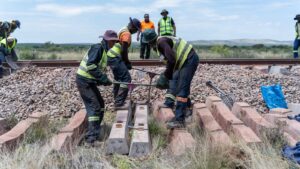
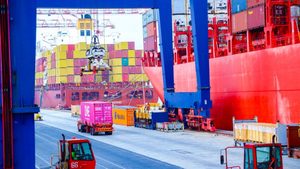
Power supply has stabilised, and the government is moving to reverse years of graft, theft, and vandalism at state-owned ports and rail operator Transnet, which has become a major drag on the economy as coal and iron-ore exports fell to multi-decade lows.
In August, Pretoria shortlisted 11 private companies to operate on the national freight-rail network from April next year in a bid to ease logistics bottlenecks.
Wiese said less state involvement could unlock investment in the economy.
“I firmly believe that if government would get out of the way, this country can turn on a tickey,” he said, referring to small-denomination coins used before the rand’s introduction in 1961. “A year from now, you won’t recognize it.”


Comments