One reason why university graduates cannot find a job in South Africa


South African university graduates are increasingly struggling to find employment in the country’s economy as it continues to stagnate and create insufficient jobs to absorb new entrants.
While much of the blame is placed on the economy and its lack of growth, these graduates are also increasingly leaving university with the wrong skills.
The growing mismatch between the skills produced at South African universities and what the labour market demands is a key driver of graduate unemployment.
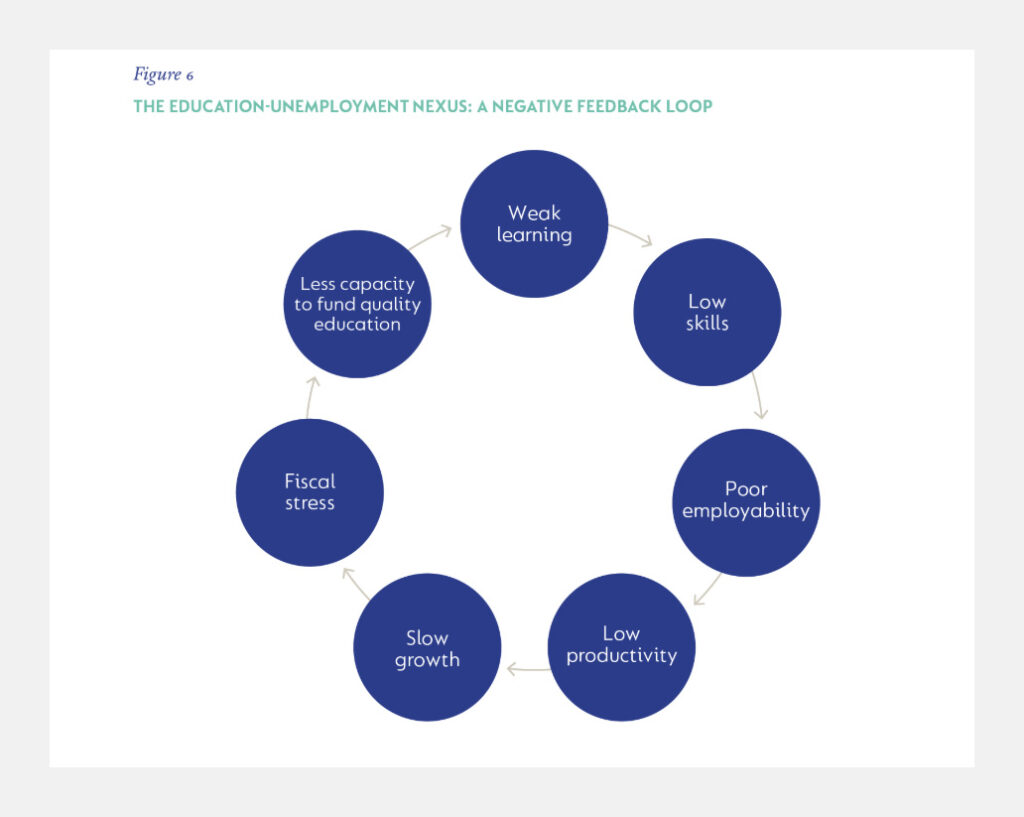
It also creates a vicious cycle, whereby the productivity of South Africa’s labour force steadily declines, limiting economic growth.
This, in turn, puts constraints on the government’s revenue, with low economic growth translating into lacklustre tax collections.
As a result, the state has less money to allocate towards funding quality education, resulting in worse outcomes and labour productivity.
Coronation’s economics unit pointed to this as a major reason for South Africa’s stagnant economy and rising unemployment over the past decade.
It explained that economies can only really grow in three ways – adding effectively to capital stock, productively absorbing more people into the labour market, and combining these two things in more productive ways.
This productivity growth ensures a long-term increase in economic activity and enables an economy to grow at a rate greater than its potential labour and capital would otherwise facilitate.
In effect, productivity growth enables more output to be created from the same capital and labour resources, creating a virtuous cycle.
Coronation explained that over the past decade, the labour component of the equation has shrunk as unemployment has risen significantly.
More worryingly, productivity collapsed, which creates severe challenges for a modern economy, ranging from slow growth to financial crises.
This has been a consistent drag on South Africa’s economic growth over the past decade, with no signs of a beneficial reversal.
Wrong skills
Graduate employment in South Africa has steadily risen over the past decade to reach 12.2% in the second quarter of 2025.
This means that over one in ten individuals who attended university have failed to find a job, with many struggling for years.
South Africa’s long-term unemployment has gradually worsened in lockstep, with the share of individuals out of work for more than a year rising from 63.9% in 2015 to 76.6% in 2025.
Earlier this year, the Organisation for Economic Co-operation and Development (OECD) outlined some of the main reasons behind South Africa’s high unemployment rate.
It pointed squarely to a widening mismatch between the skills produced by the country’s education and those demanded by the labour market.
The organisation said the labour market in South Africa is characterised by persistent mismatches between workers’ qualifications, fields of study, and the jobs available in the economy.
This highlights a shortage of skilled and semi-skilled workers in the country, which ultimately constrains long-term economic growth.
The OECD said this reflects severe inadequacies in technical and vocational education programmes alongside training initiatives.
These offerings have declined substantially in South Africa due to mismanagement and underinvestment in technikons and vocational training institutions. The organisation said this reflects severe inadequacies in these institutions’ programmes.
This is part of a broader issue in South Africa’s higher education sector – its failure to align its programmes with the skills the labour market demands.
The OECD also called for more teachers and university lecturers with real-world industry experience and greater use of internships to better prepare students for the demands of the job market.
It also noted that the enrollment rates in higher education are low, with graduation rates also suffering due to a lack of infrastructure and investment.
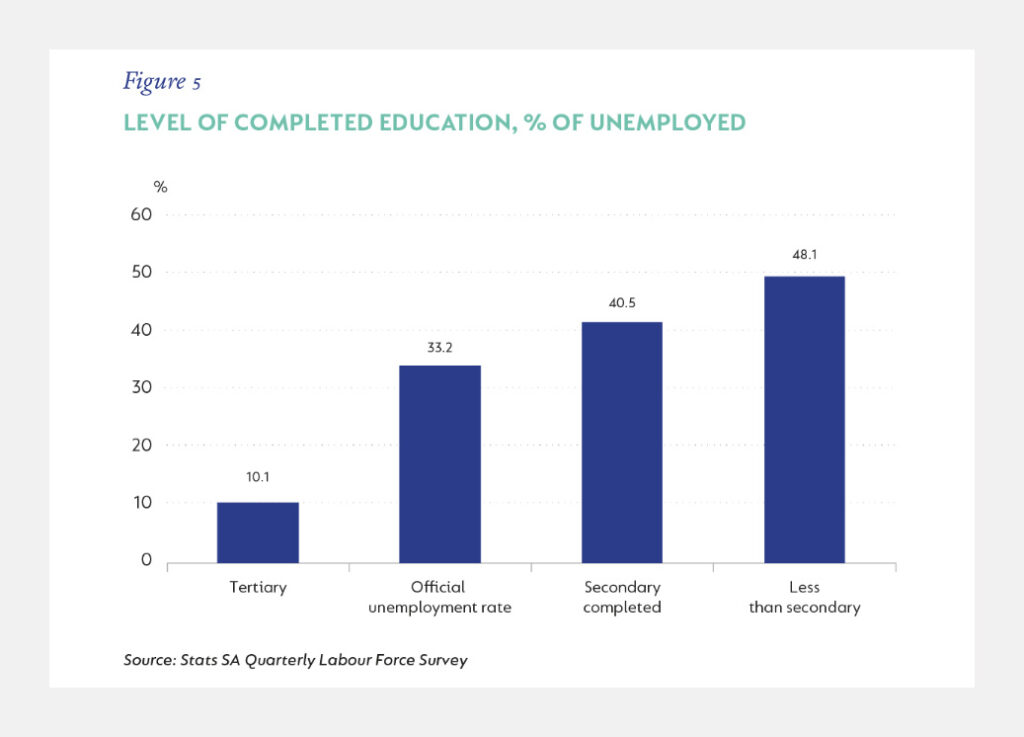
This does not mean that having a university degree is not vital for employment in South Africa, with graduates having a 25% greater chance of employment.






Comments