The two most important companies in South Africa going from zero to hero


The operational performance of Eskom and Transnet has stabilised in recent years, with the utilities beginning to show signs of substantial improvement.
This marks a dramatic turnaround from just a few years ago, when both Eskom and Transnet were in steady decline and dragging South Africa’s economy down with them.
The electricity and logistics sectors have been the focus of significant reform projects to open them up to private players and reduce the country’s reliance on just two entities to provide critical services.
While this reform has yielded positive results so far, progress appears to have slowed as the low-hanging fruit has been taken.
This slowdown has the potential to limit the private sector’s investment in South Africa’s economy, hampering economic growth.
Old Mutual Investment Group portfolio manager John Orford said the momentum seen in the turnaround of the two most crucial state-owned enterprises (SOEs) cannot be wasted.
Speaking at the asset manager’s latest Quarterly Update, Orford explained that reforms on this scale thrive on ‘quick’ wins.
These wins provide the impetus for continued reform and provide evidence that the policy change is yielding the desired results.
If these quick wins dry up, momentum may be lost, and those opposed to reforms that enable private players to participate in these sectors may reverse some of the gains.
In Eskom’s case, the reform agenda appears to have a momentum of its own, with crucial legislation passed, making it difficult to reverse any progress.
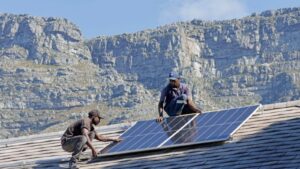
Furthermore, load-shedding appears to be something of the past, with Eskom’s improved performance and immense private-sector investment ensuring energy security.
This provides evidence and a template for future reform to occur, with it showing that deregulation and increased private participation can yield positive results in a short space of time.
Similar reforms are taking place at Transnet, albeit at a much slower pace. The logistics sector is also set to be opened up to private players in the coming years.
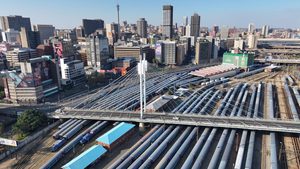
Transnet will concession out some of its key rail corridors and various port terminals to private operators, increasing investment in infrastructure and equipment to drive better outcomes.
The graphs below, courtesy of Orford and Old Mutual, show the improved performance of Eskom and Transnet following their post-pandemic lows.

Not fast enough
These reforms, while yielding strong results, are not happening fast enough to attract sufficient levels of investment to generate faster economic growth.
In particular, not enough investment is occurring to reach 3% economic growth, which will begin to address South Africa’s unemployment crisis.
Significantly greater investment in fixed assets, such as land, machinery, equipment, and infrastructure, is needed to boost the local economy.
The ongoing reforms to increase private participation in key sectors of the economy are vital to encouraging companies to invest more heavily in South Africa.
However, Orford explained that these reforms are moving painfully slow outside of the electricity sector, with much quicker implementation needed to raise investment levels.
Private investment has become increasingly important in South Africa due to the deterioration of the state’s balance sheet following a decade and a half of financial mismanagement.
Put simply, the government and state-owned enterprises do not have access to the capital required to invest sufficiently to drive economic growth.
Gross fixed capital formation (GFCF) is seen as a proxy for fixed investment, which remains poor in South Africa and declined to 15% as a share of GDP in 2024.
This is half of the level seen in 1976 and is far below the levels seen in South Africa’s faster-growing emerging market peers.
Fixed investment levels are a key driver of economic growth. As a result, with GFCF declining as a share of GDP, South Africa’s economy has stagnated, averaging 0.8% annual growth over the past decade.
Over the past 15 years, South Africa’s government has preferred to spend a greater share of its money on consumption, particularly salaries, rather than infrastructure and fixed assets.
This resulted in deteriorating infrastructure, creating the country’s myriad of crises from load-shedding to water shortages and logistics bottlenecks.
It also severely weakened the state’s balance sheet, putting it in a position where its only option is to deregulate and turn to the private sector for investment.



Comments