The two small towns carrying South Africa’s economy


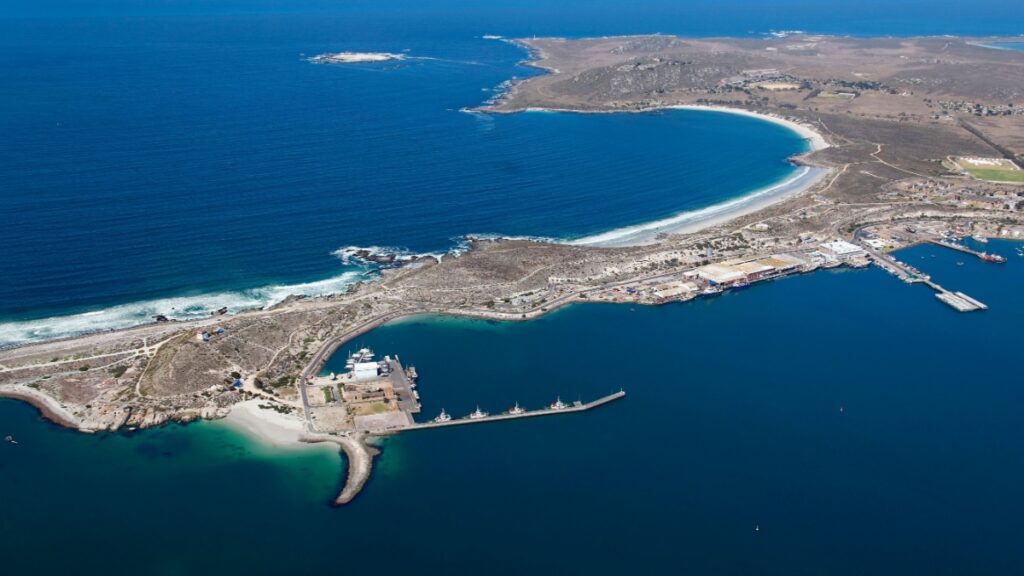
The ports of Richards Bay and Saldanha Bay handle over 80% of South Africa’s cargo, making them vital hubs in the country’s logistics network and economy.
These two ports are largely involved in the export of bulk commodities, with Richards Bay being one of the leading coal export terminals in the world and Saldanha Bay responsible for a large share of South Africa’s iron ore exports.
Much of the focus of Transnet’s collapse and attempts at rescue have focused on infrastructure elsewhere, particularly the ports in Durban and Cape Town and specific rail corridors.
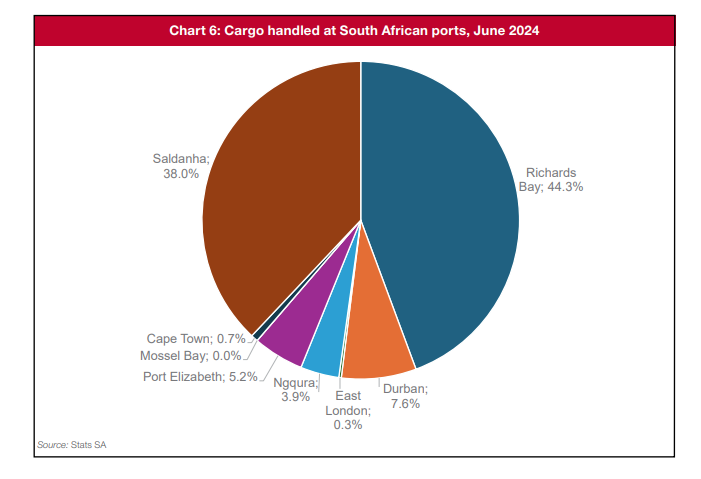
While important, data from Stats SA shows that Durban and Cape Town only move a combined 8.3% of the total cargo handled at local ports.
In contrast, Richards Bay and Saldanha Bay handle 44.3% and 38% of all cargo at South African ports, respectively.
Some of this dynamic can be attributed to the declining performance of the Durban and Cape Town ports, with both being among the worst-performing in the world.
The latest edition of the Container Port Performance Index (CPPI), compiled by the World Bank and S&P Global Ratings, showed some improvement at South Africa’s ports.
However, Durban found itself ranked as the worst-performing container terminal in the world due to its long wait time, inefficiency in offloading, and a lack of modern equipment.
This is a far cry from the government’s ambitions to make Durban the most efficient port in Africa and among the best in the world.
While much attention is rightly focused on improving operations at Durban’s container terminal, among other things, Richards Bay and Saldanha Bay are just as important, if not more so, to South Africa’s economy.
As the two main ports through which South Africa’s valuable commodities are exported, these small towns play a crucial role in sustaining over 240,000 mining jobs that are linked directly to exports.
Apart from employment, these exports are vital to the country’s foreign exchange earnings, balance of payments, and economic growth.
The sale of these commodities is also a crucial part of South Africa’s fiscus, with the tax revenue generated often being a major factor in the government’s financial health.
The graphic below, courtesy of the Centre for Risk Analysis in its latest infrastructure review, shows the breakdown of the cargo handled at South African ports.
Richards Bay
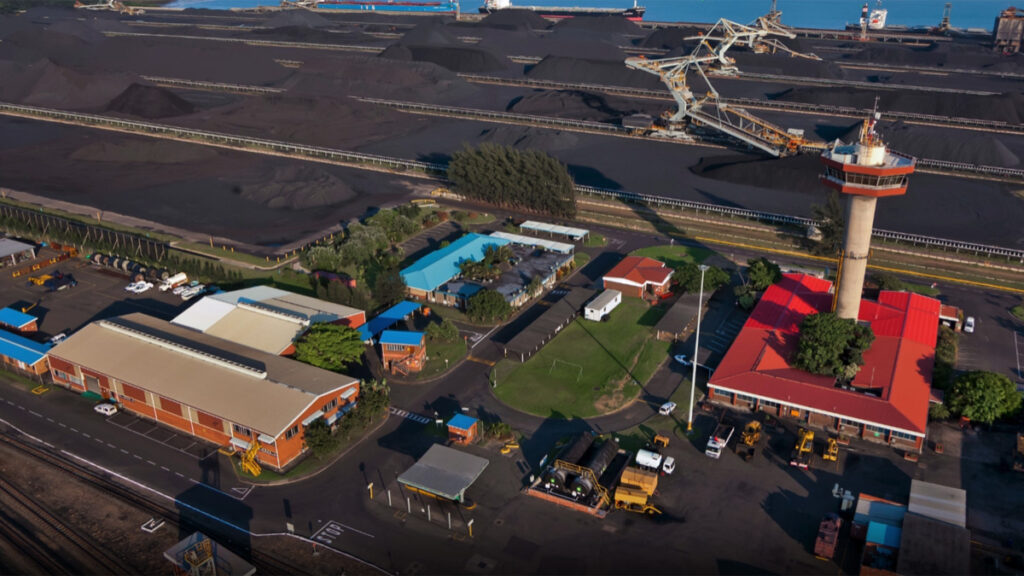
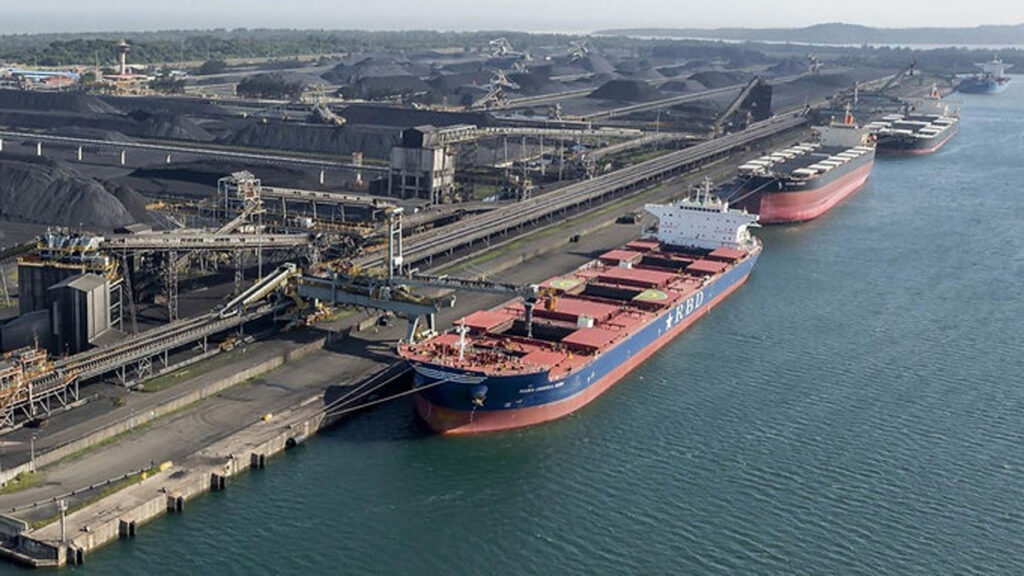
Richards Bay is one of South Africa’s busiest ports and primarily responsible for the bulk export of coal through its terminal, which is the largest export facility of its kind in Africa.
Although originally built to handle only coal exports, the port has become South Africa’s premier bulk export facility, handling other commodities in addition to coal.
The idea for another port near Durban goes back well over a century, when the Natal Colony government decided that Richards Bay would be a better choice than St Lucia.
This idea would remain just that for over 70 years, with various studies being undertaken to analyse the feasibility of an additional port near Durban.
Richards Bay is naturally a good harbour, having a protected bay that could be relatively easily deepened, and the ability to integrate it into the existing railway infrastructure.
In 1972, the government proposed building a harbour in Richards Bay, and a contract was awarded to a European consortium for its construction.
It also began investing heavily to upgrade the existing railways from Mpumalanga, the site of the largest coal mines in South Africa, to Richards Bay.
Richards Bay Coal Terminal (RBCT) was opened in 1976 with an initial capacity of 12 million tonnes per annum, which has since grown to 91 million tonnes per annum.
The port rapidly expanded and now boasts a quay 2.2 kilometres long with six berths and four shiploaders. It also has a storage capacity of 8.2 million tonnes of coal.
RBCT gained a reputation for efficiency and reliability, setting a new world record in 2006 by loading and exporting 409,809 tonnes of coal in 24 hours.
The terminal has partnerships with some of South Africa’s largest miners, including Thungela, Sasol, Glencore, Exxaro, Seriti, and Patrice Motsepe’s African Rainbow Minerals.



Saldanha Bay
By coincidence, Saldanha Bay began operating in the same year as Richards Bay, with its first exports of iron ore heading to the Middle East in 1976.
As the largest deep-water port in the Southern Hemisphere, Saldanha Bay is ideally suited for the export of bulk commodities.
The port remains Africa’s largest iron ore exporter, with the Sishen-Saldanha railway corridor, the longest heavy haul rail line at 861 kilometres, transporting the commodity from mines deep within the Northern Cape.
As with Richards Bay, it has progressively diversified its export capacity, with its Iron Ore Terminal complemented by a smaller Multi-Purpose Terminal.
Saldanha Bay has an extensive history as a port, with it first being discovered in 1601 by Dutch explorer Van Spillbergen.
However, it would take over three centuries for a modern port to be developed at Saldanha as feasibility studies only began in 1969.
Construction started in 1973 and was quickly completed, with the first iron ore export leaving the terminal in September 1976.
Private customers began with iron ore exports in the 1980s, using the terminal to export raw iron ore before the Saldanha Steel Mill came into operation in 1998. A sign of South Africa’s deindustrialisation, the steel mill was decommissioned in 2020.
Transnet estimates that over 1.1 billion tonnes of iron ore have been exported through the terminal since its completion, with around 25 vessels loaded every month.
The company says the operation is highly capital-intensive due to how far the mines are from the port and the fact that the terminal operates 24/7 every day, only pausing on Labour Day, Christmas and New Year’s.
Apart from iron ore, Saldanha Bay has become increasingly viewed as ideal for the expansion of South Africa’s oil and gas industry due to its natural depth.
Its Multi-Purpose Terminal has also become increasingly important for the export of manganese, with two of its berths dedicated to vessels carrying this commodity. Its other two berths service all breakbulk cargo and other bulk commodities.
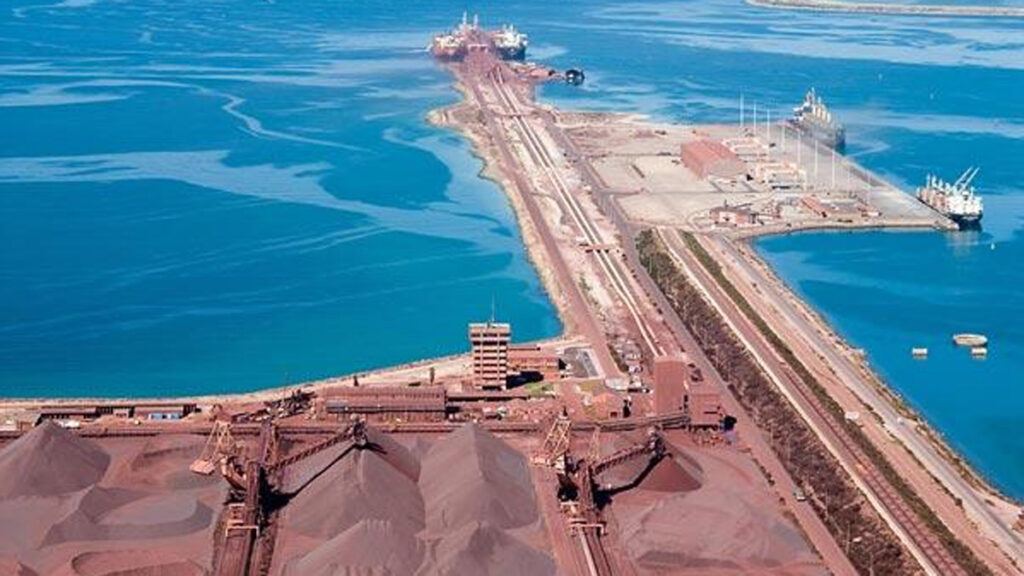
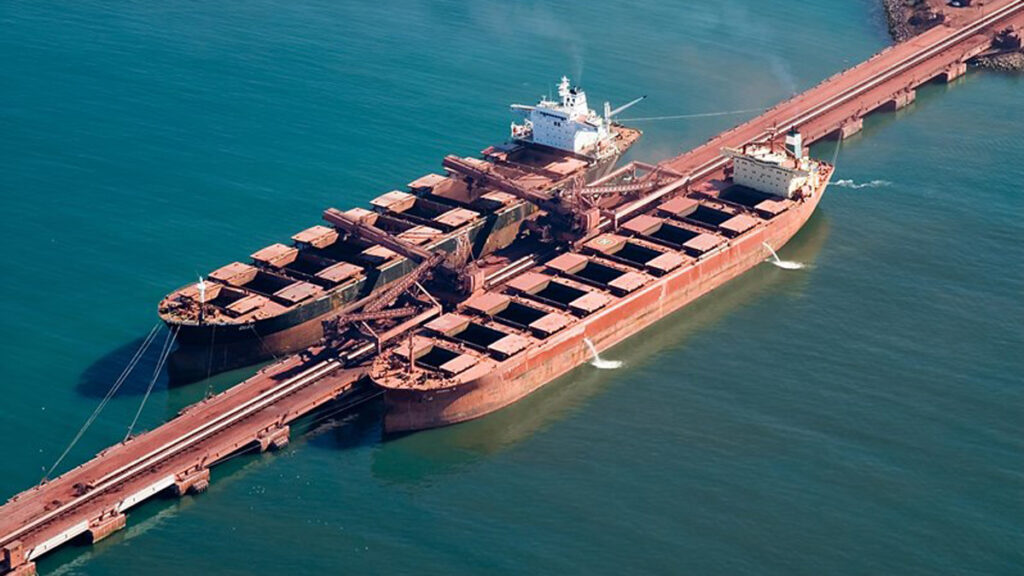
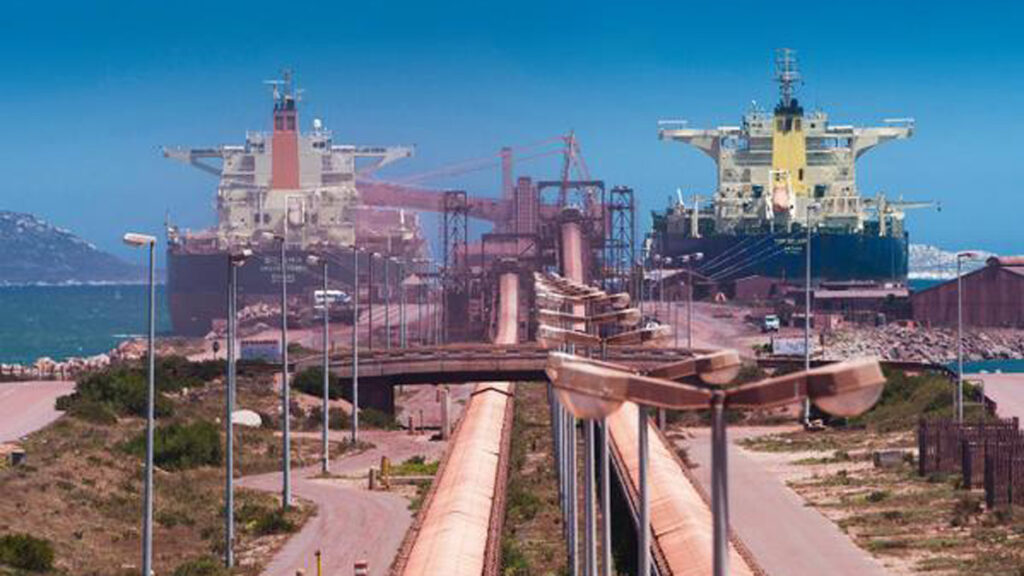
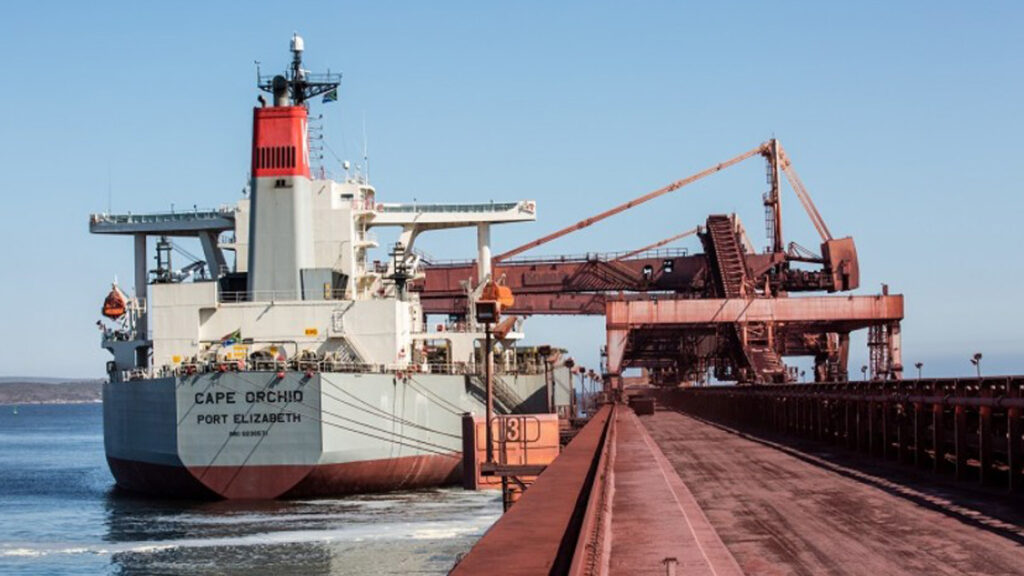
The images below are of Saldanha Bay and its impressive iron ore export terminal, which includes an offshore supply base completed in 2016.

 Loading ...


Comments