Transnet going from zero to hero


Transnet’s operational performance has improved remarkably over the past year, with the ports and rail utility significantly reducing the average handling time at harbours across South Africa and increasing its rail tonnage.
While still far off its lofty targets, this does indicate that Transnet’s decline has bottomed out and that it is not firmly on the path to recovery.
Coupled with its operational improvements is the opening up of particular rail corridors and port terminals to private players, which is set to boost investment and improve outcomes.
This progress was outlined in the latest Business for South Africa (B4SA) briefing on the progress made through the government’s partnership with big business to tackle the binding constraints on South Africa’s economy.
These efforts have been focused on South Africa’s energy sector, alongside logistics, crime and corruption, and youth unemployment.
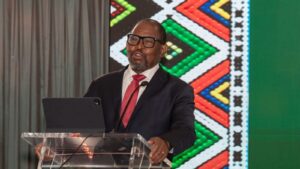
As part of the update from B4SA, Transnet’s improving operational performance was outlined by Toyota South Africa Motors CEO Andrew Kirby.
Kirby explained that the logistics sector experienced a low point in 2023, prompting significant invtervention from the government and big business to improve the sector’s efficiency.
In the 2022/2023 financial year, Transnet only managed to transport 149 million tonnes of cargo on its railways, down from 226 million tonnes in 2018.
Apart from the dismal performance of Transnet’s railways, the average handling time to discharge cargo at its ports was 21 days.
On average, the queues of trucks at South Africa’s border posts were 19 kilometres, with only 1,500 trucks processed daily.
Transnet was characterised by mismanagement, a lack of leadership, and widespread vandalism and corruption.
“This low point spurred us on to collaborate with Transnet, and in the last two and a half years, there has been a marked improvement, not just in performance but also in the working relationship,” Kirby said.
Transnet implemented a formal Recovery Plan, backed by new leadership and a R51 billion government guarantee facility. This marked a clear pivot from crisis management to structural reform.
Since then, the results have been clear, with Transnet’s rail volumes beginning to recover and its port efficiency improving.
“Over time, with investment in infrastructure, improvements in maintenance, and creating a performance culture at South Africa’s ports, they have reduced the handling time to just two days,” Kirby said.
Rail volumes have recovered to 171 million tonnes, up 15% from mid-2023, due to a significant reduction in vandalism of infrastructure and investment in new equipment.
Truck border queues have been reduced from an average of 19 kilometres to just three, and over 1,700 trucks are being processed daily.
Private participation

Crucially, Transnet’s improved operational performance has been coupled with increased private-sector participation.
This participation will come in the form of the concessioning of key rail corridors and port terminals, with private companies lining up to invest in new equipment and operate Transnet’s existing infrastructure.
Kirby said that the significant progress in reforming the logistics sector has probably been the most dramatic over the past two years.
In 2023, Transnet lacked a clear roadmap to enabling private-sector participation and there was active resistance to reform from the prior leadership team.
Fast forward two years and there are now 11 slot application for new rail operators and Transnet has rebuilt direct relationships with its largest clients.
This marks a dramatic improvement, with more private participation set to come in future at the country’s ports and other key rail corridors.
“The area around reforms is probably the most dramatic, with no clear roadmap and resistance to an aligned view on the fact that the operations for Transnet should be separated from who owns the assets and who operates on them,” Kirby said.
“That is largely what has led to this very important milestone of the 11 applications for these access slots to rail that were announced. These are now going through an adjudication process, with the first slots awarded at the beginning of next year.”
The sale of rail slots to third-party operators, establishing a Private Sector Participation (PSP) office to engage with the private sector, and appointing an independent Infrastructure Manager are early steps towards a hybrid model.
These reforms are expected to translate into increased investment in the sector from private companies, with improved efficiency and volumes set to follow.
This is expected to create a virtuous cycle, with improved performance attracting further investment from the private sector.
 Loading ...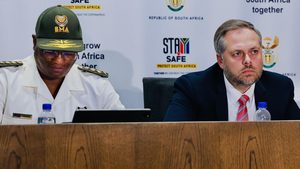

Comments