South Africa can’t afford to lose Spar


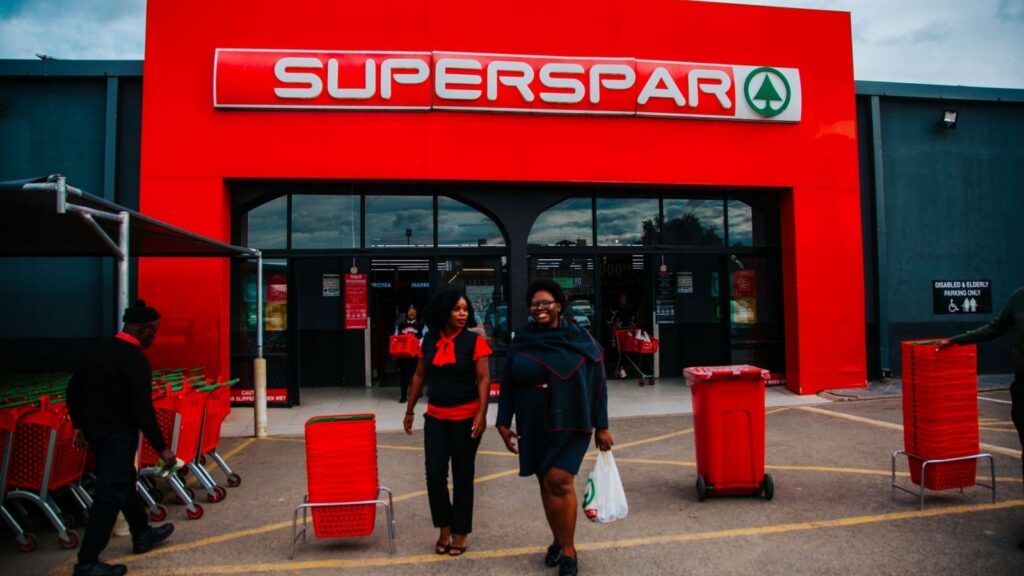
A successful turnaround at Spar is critical to preserving thousands of jobs and ensuring competition in South Africa’s already concentrated food retail sector.
This is the view shared by Anchor Capital investment analyst Stephan Erasmus in an interview with The Money Show.
Erasmus explained that Spar finds itself in a precarious position where it cannot afford any more missteps.
Spar has made many such mistakes over the past few years, including its botched SAP software implementation and getting into disputes with its franchisees.
These and other missteps have left Spar with a weak balance sheet, declining retailer loyalty, and struggling South African operations.
The loss of franchisee trust has put Spar into a particularly difficult position, as the retailer is highly dependent on their loyalty due to its wholesale model.
Unlike South Africa’s other major retailers, Spar operates on a wholesale model whereby it sells stock to independent store owners, as opposed to running its own corporate-owned stores.
Erasmus explained that this means there is a symbiotic relationship between Spar and the Spar Guild, which represents its independent retail outlets.
“If Spar’s winning, then the Guild’s winning, and the independent retailers are winning,” he said.
“There is broad alignment on what the ultimate best outcome is for both parties, so they’re both incentivised to get this right.”
However, Spar has not gotten it right in recent years, which has seen its relationship with the Guild become fractured.
This shows up in Spar’s bottom line, as the company relies on independent retailers to buy the majority of their goods through Spar.
However, retailer loyalty, measured through the percentage of their total goods that retailers purchase from Spar, has declined from 83% in 2022 to 78% now.
“Ultimately, I think if you solve the relationship at the top and everybody’s agreed on where they’re going, that number can tick up,” Erasmus said.
“But I don’t think there’s a heck of a lot of time. These things do require urgent action.”
Spar needs to be turned around

While many of Spar’s challenges are self-inflicted, Erasmus said the market cannot afford to lose the retailer.
“I obviously don’t have a crystal ball as to whether it completely gets sorted out and everything’s perfect, but I would think that it’s in both parties’ interest to fix this problem,” he said.
The first reason for this is that Spar is a major employer, both at the corporate level and when considering its independent retailers.
In its 2025 Annual Report, Spar revealed that it directly employs 6,778 permanent employees across its corporate offices and distribution centres.
This encompasses its Irish and Southern Africa operations, with the latter employing 4,657 people.
The second reason Erasmus gave was that Spar is still one of South Africa’s major listed food retailers.
With only four major players – Spar, Pick n Pay, Shoprite, and Woolworths – this market is already highly concentrated.
“I think it’s in the general interest to keep competition, as much as I think competition hasn’t been as high as it should have been in the food retail space,” he said.
“Losing another retailer arguably would not be great for markets.”
“I think if anybody can fix it, then they should seriously consider that, and ultimately find scrum in the same direction.”
While he does not believe a turnaround will be easy, Erasmus said Spar can win half the battle by winning back the Guild’s trust.
One way to do this is to appoint a board chair who has the Guild’s trust and the required retail experience to oversee a turnaround of this nature.
A major point of contention between Spar and the Guild was its previous chairman, Mike Bosman, who resigned in August 2026.
According to Erasmus, the Guild did not believe that Spar’s previous board had the required experience to lead a turnaround.
Now, the retailer has the opportunity to install someone who does meet the Guild’s criteria, which would go a long way in restoring trust and relations.






Comments