One decision that saved Shoprite from serious financial pain


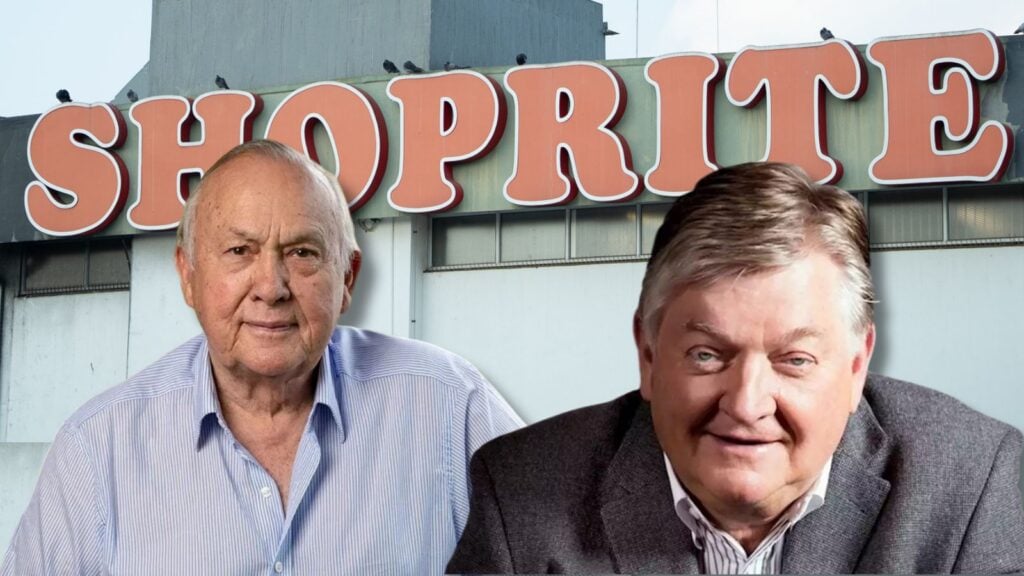
The decision to keep Shoprite as a separate entity rather than wrap it into Steinhoff with Pepkor saved the retailer from significant financial pain.
This decision was made on the advice of long-time Shoprite CEO Whitey Basson, who had built the retailer along with chairman Christo Wiese.
At the time of the proposed merger, Shoprite was comfortably the largest food retailer in South Africa, while Pepkor was the biggest in the clothing segment.
Wiese explained to the Economic Club of Stellenbosch that he wanted to put his business interests into Steinhoff to internationalise this growth.
Despite having enough voting power with his shares in Shoprite, he decided not to reverse the company into Steinhoff as he did with Pepkor.
“Whitey didn’t say no, but he did not like the idea. He could not stop the deal. I had the controlling shares in Shoprite,” Wiese said.
“But Whitey never liked the idea because he never liked Markus Jooste. He was very, very critical of Jooste’s lifestyle.”
Wiese explained that Jooste lived an extravagant life, but it was not clear whether it was beyond his means, given his handsome salary at Steinhoff.
“Whitey did not like Jooste one bit, and he did not like the way Jooste did things. None of us suspected Jooste was crooked,” Wiese said.
The two retail giants remain friends to this day despite their disagreement over the potential sale of Shoprite to Steinhoff.
“I said to him after Steinhoff’s collapse, ‘Yes Whitey, you were a better judge of character than me’,” Wiese recalled.
The eventual decision not to put Wiese’s stake in Shoprite into Steinhoff alongside Pepkor saved him significant financial pain.
Wiese lost an estimated R60 billion of his wealth in the collapse of Steinhoff, and 50 years of work building Pepkor was undone in a single month.
Had Shoprite been caught up in the collapse, Wiese would have lost billions more, and the retailer itself would have experienced some financial pain.
Although given the strength of the business, it would have survived in a similar fashion to Pepkor, which is now worth over R80 billion on the JSE and has over 6,000 stores.
Why Whitey doubted Jooste

Basson has explained his side of the story extensively in interviews since retiring as Shoprite CEO, with his dislike of Jooste being clear.
Together, Basson and Wiese had taken Shoprite from a small, local retailer with seven stores to over 1,000 by the time Steinhoff collapsed.
For Basson, this came with enormous weight and responsibility in the form of employees and shareholders. It had also shown that Shoprite could grow by itself.
“The original deal would have been like the Pepkor deal. We would have sold all of our shares to Steinhoff and taken Steinhoff shares in turn,” Basson explained.
“I said, ‘Over my dead body. This deal will not happen. I have lots of people I am responsible for, and I am dead against it. I tried to stop the deal with all the means at my disposal.’”
An alternative deal was then proposed, whereby only Wiese and the Public Investment Corporation (PIC) would sell their shares to Steinhoff, and Shoprite would remain listed separately.
Basson also refused this deal outright, saying that he would not want to work with a board that he was uncomfortable with.
“If this deal went through, Steinhoff with Jooste as the CEO would have effectively called the shots down to Shoprite. I was not comfortable with that,” Basson said.
Another aspect of Steinhoff’s board that Basson did not like was that it was largely made up of accountants rather than retailers.
“The board members did not have experience in retail. The structure is wrong for retail companies. I was uncomfortable when I looked at that,” Basson said.
Basson also explained that he struggled to understand Steinhoff’s finances when the merger was first presented.
“I could find no financial figures, and I had two people working on it for me, who could prove to me it was a good investment. So, I was never going to invest in it,” Basson said.
“The return on equity was calculated for me and compared to the cost of debt. The cost of debt ended up being higher, and that is not a good investment.”
“I just said, ‘The sums don’t work out. It should be the other way around. I will not touch this.’”





Comments