End of petrol stations in South Africa as you know them


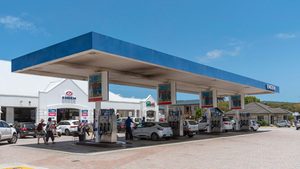
South Africa’s petrol station forecourts are rapidly evolving into a hub of retail activity as fuel sales decline and interest in convenience stores soars.
Forecourt retail is estimated to be worth over R33 billion in South Africa, with the number of convenience stores at petrol stations surging by 69% in the past five years.
This is despite fuel sales steadily declining in South Africa, amid shifts in mobility, technology, and consumer behaviour.
As a result of this, petrol station forecourts have become immensely valuable pieces of real estate, national retail franchising manager at Nedbank Commercial Banking Karen Keylock said.
“The traditional retail fuel model was built on a single core category – fuel. Today, that model is being reshaped by a convergence of forces,” Keylock said.
This includes fuel-efficient vehicles, hybrid work patterns, economic pressure on consumers, e-hailing services, improved public transport, last-mile delivery, cheaper domestic flights, and the gradual entry of electric vehicles.
While fuel’s dominance as a profit driver is declining, these trends are unlocking new opportunities for forecourt owners to benefit.
Add-on categories, such as convenience retail, are becoming main categories and changing customer missions are redefining the purpose of the forecourt.
Keylock said the shift is already well underway in South Africa, driven in part by the pandemic, which made proximity the dominant factor.
This is what makes petrol station forecourts so attractive as retail centres, as it enables retailers to get close to their customers due to their distribution.
While fuel sales volumes fell by 6.3% over the past year, the number of forecourts jumped by 10%.
FreshStop, through its partnership with Caltex/Astron Energy, is dominant in this space, with over 330 stores and 126 Seattle Coffee outlets.
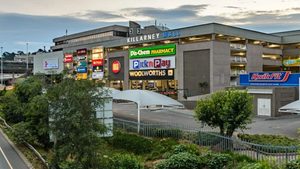
JSE-listed retailers were late to the party, but are not coming in strong. Shoprite through OK Foods, Pick n Pay, Woolworths, and SPAR have aggressively expanded their offerings in recent years.
Trade Intelligence estimates that 849 forecourts host branded retail stores, a 26% increase over five years. At over 330 stores, FreshStop has over a third of the market.
Research shows that forecourt shoppers prefer supermarket-branded stores over fuel-branded ones for their familiarity and quality.
Retail revolution

South African forecourts are now rightly focusing much more intensely on retail, with these offerings overtaking the historic driver of foot traffic, which was fuel.
This is perhaps best seen in the rise of ultra-luxury forecourts, such as Pantry by Marble and Relish, where the retail experience dominates the forecourt.
Outside of ultra-luxury, the retail centre is also becoming increasingly important, with it being the main driver of profit and foot traffic.
Keylock noted that the fastest-growing categories on sale at petrol stations by value and volume include energy drinks, mineral water, flavoured mineral water and snacks such as chips, while the top-selling items are soft drinks, cigarettes, and bread.
FreshStop has largely driven this diversification in recent years, with it being one of the first retailers to partner with a fuel brand in 2009.
Prior to its launch, garage convenience stores were dominated by the bare necessities and were owned by the fuel brands themselves.
FreshSotp incorporated more fresh food items and a wider range of long-life goods. It also introduced coffee counters and ready-to-eat food items to South African forecourts.
While its mainstay is offering fresh, healthy food in a convenience format, FreshStop has not abandoned the established ‘five Cs’ of petrol station retail – chocolate, coffee, carbonated soft drinks, chips, and cigarettes.
FreshStop also kicked off another key trend – the localisation of particular stores to suit the demands of the consumers in that area.
Keylock said that, today, hybrid routines and e-commerce have established new habits, considerably expanding consumer choice and intensifying competition for foot traffic.
For forecourt owners, this means that understanding local customer dynamics is no longer optional – it is vital for sustainable growth.
This expansion has also been coupled with a rise in partners, with FreshStop’s deal with Caltex/Astron being the most noticeable.
Pick n Pay has hitched its wagon to bp petrol stations in South Africa and has rapidly grown its footprint across the country.
Woolworths’ Foodstop brand is present in many Engen garages. However, unlike other Woolworths stores, these are all franchisee-owned.
SPAR has partnered its express brand with Shell, despite the Anglo-Dutch petroleum giant having its own convenience offering under the Shell Select brand.
Shoprite-owned OK Express has partnerships with Puma and TotalEnergies. Its stores are also becoming more prominent in Sasol petrol stations around the country as the historic retail brand reinvents itself.




Comments