Two small towns building the most houses in South Africa


KwaZulu-Natal’s iLembe district, home to fast-growing coastal towns like Ballito and Salt Rock, recorded the highest residential property increase in South Africa.
This is according to Lightstone, which reported that South Africa added just over 150,000 new residential properties over the last five years in the over-R500,000 property segment.
This represents a 4.7% increase and brought properties in this segment to just under 3.3 million units. Lightstone excluded Unclassified, Township, and Affordable areas, as well as sales below R500,000, from consideration.
This was done because of the prevalence of subsidised transfers, transactions not aligned with market value and a backlog in property registrations, within this category.
Gauteng and the Western Cape accounted for just under 73% of the additional volumes. The Western Cape recorded the highest growth rate as a percentage of stock in the country at 6.2%, well above the national average of 4.7%.
Gauteng’s growth rate of 4.9% was slightly ahead of the national average. Mpumalanga and the North West provinces also experienced above-average growth of between 5.5% and 6%.
The other five provinces, KwaZulu-Natal, Eastern Cape, Northern Cape, Free State and Limpopo, were below the national average.
“The country’s top five municipal districts included three from the Western Cape,” said Lightstone’s managing executive of real estate, Hayley Ivins-Downes.
However, notably, KwaZulu-Natal’s iLembe district – which encompasses Ballito and Salt Rock – ranked first. Limpopo’s Capricorn district, which includes Polokwane, placed third.
“Despite iLembe leading the rankings, KwaZulu-Natal’s overall growth rate remained relatively modest at 2.9%, while Limpopo’s growth only slightly outperformed the national average.”
Although most of the stock volumes were added in Mid-Value (46,000) and High Value (65,000) areas, the percentage growth was highest in Luxury (6.1%) and Super Luxury (5.8%).
The higher development activity levels in the premium price bands mirror churn activity in higher-value properties in 2025. The growth rate in the Mid-Value areas (at 1.4 million, the segment with the most properties) was the lowest.
This is possibly because the stock in that market was deemed sufficient by developers, or because growth had been constrained by other factors, such as tough economic conditions.
If it were the latter, Lightstone said they would expect pressure on supply to grow as economic circumstances improve.
The highest growth rate was seen in cities and non-urban areas, the areas outside of existing town boundaries, which happens as the towns crawl outwards.
Interestingly, the growth in small towns, in terms of volume and growth rate, exceeded that of large towns, suggesting that semigration continued as people opted for quieter lifestyles.
Top growth districts
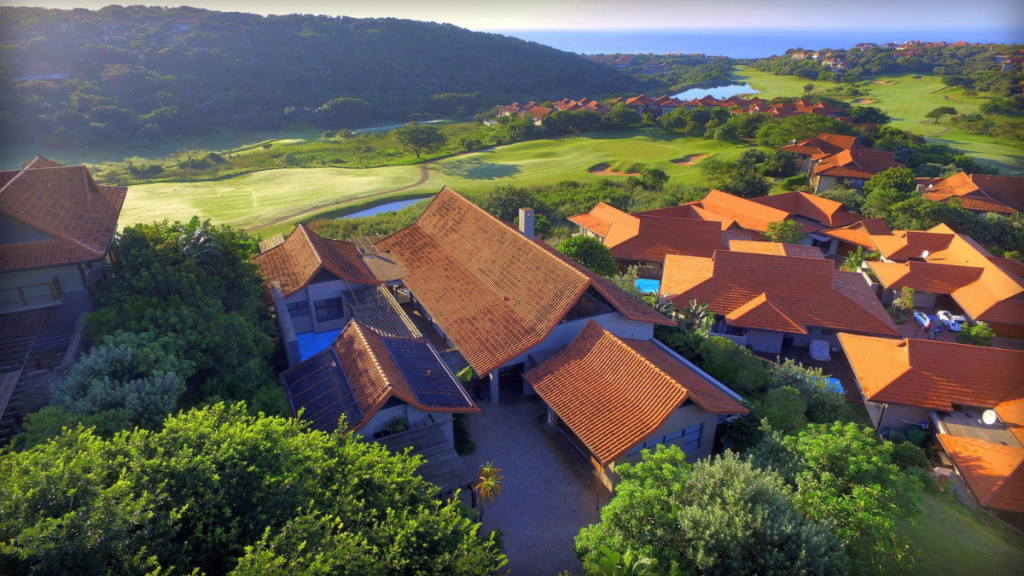
iLembe (KwaZulu-Natal), Cape Winelands (Western Cape), Capricorn (Limpopo), Eden, and Western Coast (both Western Cape) recorded the highest growth rates.
iLembe is home to many of KwaZulu-Natal’s premium towns, including Ballito (17% growth) and Salt Rock (20% growth).
It is also home to residential developments such as Zimbali Estate, Simbithi Eco Estate and Dunkirk Estate, and KwaDukuza, previously known as Stanger.
While some registered properties in the new estates were vacant land, the district’s growth rate was nevertheless impressive.
In part, Salt Rock and Ballito benefited from the northward push up the coast from Durban, with their proximity to King Shaka International Airport an obvious advantage.
The Cape Winelands includes Franschhoek, Paarl, Robertson and Montagu across its southern reaches, and stretches up to the Koue Bokkeveld Mountain catchment and the Tankwa Karoo National Park in the north.
Stellenbosch, Paarl, and surrounding areas contributed most to the growth in the Winelands, while Worcester, Ceres and Montagu recorded minimal growth.
Other Winelands regions, such as Franschhoek, Wellington and Robertson, grew at around the national average.
Polokwane, the capital of Capricorn, grew by 9%, with the average value of new properties slightly lower than that of the existing properties.
One of five municipal districts in Limpopo, Capricorn, is home to more than 1.3 million residents and is named after the Tropic of Capricorn, which runs through the district.

 Loading ...





Comments