The billionaire who made the template for BEE in South Africa


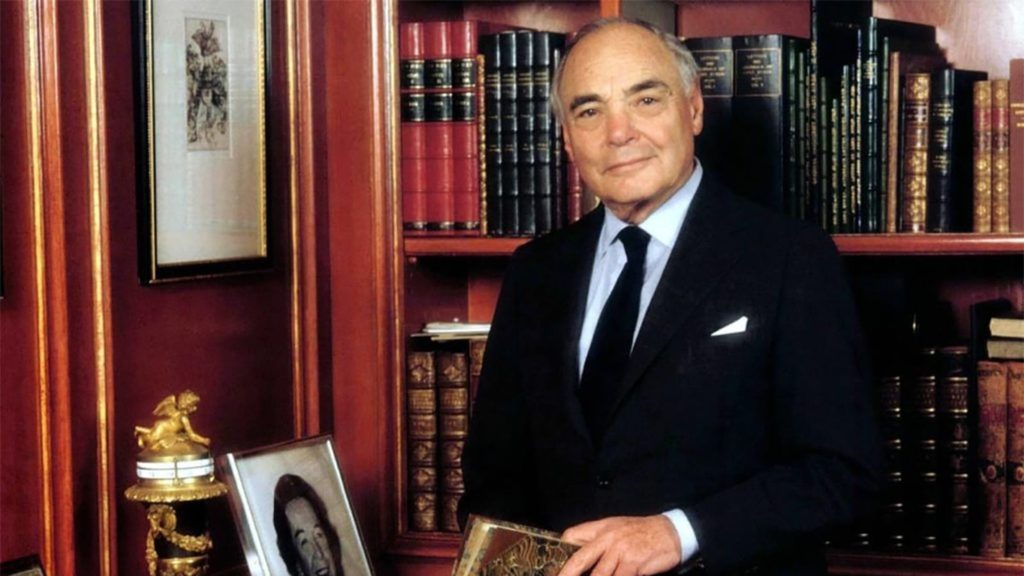
Harry Oppenheimer led Anglo American to create the template for most future Black Economic Empowerment (BEE) transactions.
The template created by Anglo involved the inclusion of individuals with close ties to senior ANC leaders in the transformation deals to appease the government.
This was because Oppenheimer wanted to keep Anglo American intact and avoid what had happened to many of its peers in the 1990s.
Mining historian Jade Davenport explained in her book, Digging Deep, that the 1990s were a period of significant change for the mining industry.
South Africa’s mining industry was dominated by five companies in 1994: Anglovaal, Gold Fields, Gencor, Rand Mines, and Anglo American.
Many of these companies do not exist today due to the democratic government’s enforcement of competition regulations, their inability to adapt to a globalised economy, and their fear of an ANC-led state.
This fear, Davenport explained, led many of these companies to effectively unbundle their assets and sell them off in anticipation of an ANC-led government.
The government-in-waiting made its intentions clear regarding the South African mining industry, particularly Anglo.
While it had walked back from outright nationalisation, it still sought to break up the apartheid-era monopolies that dominated the local economy.
Davenport explained that the break-up of these businesses was also partly due to external competition and shareholder demands.
South Africa’s miners were protected from external competition thanks to the isolation of the local economy during apartheid.
These companies were also prevented from investing significantly outside of South Africa to prevent capital from flooding out of the economy.
This created unsustainable businesses in a global economy, with Anglo, for example, having investments ranging from mining to car dealerships to beer brewers.
Davenport said the operational structure of the mining industry in 1994 was identical to that of 1948 and was highly inefficient and unsophisticated.
While competitive pressures led to the natural breakup of these businesses, the incoming ANC’s agenda would fundamentally change how South Africa’s mining giants operated.
Black empowerment before BEE

Watching the breakup of Gencor, which no longer exists, Anglo’s management team and Oppenheimer realised that it had to do something different to protect its commercial interests.
This led the company to pursue avenues where it could greatly increase the participation of black South Africans in Anglo’s commercial success.
Well before the formal implementation of BEE in 2003, Anglo sought to align the personal interests of senior ANC members with its commercial success.
In doing so, it thought it could avoid having to voluntarily unbundle its assets, becoming a shell of itself, and prevent aggressive antitrust action from the incoming government.
Davenport said Oppenheimer was also a genuine believer in empowering black South Africans, warning of the consequences of being ruled by people with no stake in the economy’s success.
Thus, Anglo led the charge in asset transfers to black entrepreneurs in the 1990s, both to protect its commercial interests and partly on principle.
Under the banner of black economic empowerment, before it became policy, they began unbundling underperforming and non-core assets.
These assets were transferred to a group of black entrepreneurs who sought to rival the Oppenheimer and Menell dynasties’ success.
“Celebrated publicly, these deals served to purge high-risk, low-return liabilities from the conglomerates’ ledgers,” Davenport said.
“This enabled the mining houses to concentrate their resources on the most profitable core businesses while securing the goodwill of the emerging political and economic elite.”
The unbundling did create genuinely successful businessmen in some cases, among them Patrice Motsepe, who acquired gold mines unbundled by AngloGold in the 1990s.
Davenport said the deal that set the tone for the industry was Anglo’s unbundling of Johannesburg Consolidated Investments (JCI) to the black-owned African Mining Group.
This company was headed by Mzi Khumalo, who enjoyed loose ties to the ANC’s leadership and Thabo Mbeki in particular.
“Each of the principal mining houses followed suit, voluntarily brokering BEE deals that facilitated the rise of a handful of black mining magnates,” Davenport said.
Davenport explained that the form of empowerment pioneered by Anglo ultimately laid the foundation for what became BEE as we know it today.
This framework has resulted in a small percentage of black South Africans benefiting from mining. Assets were transferred to a handful of individuals, entrenching a narrow elite.





Comments