Dark clouds gather over South Africa’s most important industry


South Africa’s mining industry has warned that its global competitiveness is being steadily eroded by significant increases in the prices of basic services, particularly electricity and water.
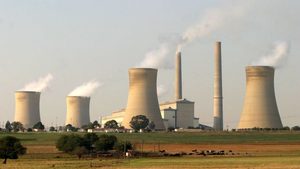
The country’s mines and their associated processing facilities are South Africa’s largest consumers of electricity and water, making them very sensitive to price increases.
These increases over the past 15 years have been above inflation, significantly raising the cost of operating a mine in South Africa.
The rising costs negatively impact the investment case for miners to invest in South Africa and make local mines less profitable than their global peers.
Minerals Council South Africa economist Andre Lourens explained that this reality is currently being masked by elevated prices for precious metals and other commodities.
During periods of high prices, these costs can be relatively easy to cover, and mines are highly profitable. However, when the cycle turns, these high prices bite and may push mining companies to downscale their operations or shut down entirely.
The Minerals Council said electricity prices have risen by 16% year-on-year, water has surged by 12%, and labour costs are up by 6%, warning that once the commodity boom is over, these costs will remain.
“Electricity and water are essential for mining operations. You cannot run a mine without them. You cannot switch the power off, and you cannot work without water,” Lourens told 702.
The prices for these basic services have risen significantly, even attracting the attention of the Reserve Bank, which has repeatedly said they present a substantial threat to lower inflation and interest rates.
“For mining, you will see that the price of these services is rising by around three times the rate of inflation in South Africa,” Lourens explained.
“Even if our members, the mining industry, budget for three times the rate of inflation for increases in water and electricity, it still is not enough.”
Lourens said these price increases are eroding the competitiveness of the South African mining industry, making it less attractive for investment.
“Of course, the fact that load-shedding has abated has been offset by the fact that electricity is so expensive. So overall, it is not good for profitability and sustainability,” he said.
Surrounded by challenges

South Africa’s mining industry is facing one of the most difficult operating environments in its history, with rising prices for basic services being coupled with rampant illegal mining, policy uncertainty, and difficult labour relations.
These challenges have seen South Africa’s mining industry fall from being the envy of the world three decades ago to being ranked among the ten worst jurisdictions to operate in.
This decline has been steady, with mining output falling by around 0.4% per annum since 1994, and little to no new exploration has occurred for the past 20 years.
Modern Corporate Solutions mining analyst Peter Major said this decline is largely due to policy and regulatory uncertainty under the ANC government.
Major explained that the ANC-led governments since 1994 have not continued with regulations and legislation that were conducive to exploration and expansion.
Instead, its focus has been on transforming the sector by imposing increasingly onerous regulations on miners, resulting in output stagnating and minimal investment.
“We have fallen from 650 tonnes of gold produced a year, which we sustained for decades, down to 90 tonnes per year,” Major said.
While the country has mined out a significant share of its total gold reserves, there is still plenty left in the ground. With record gold prices, extracting this additional gold is economically viable.
“We still have half the world’s gold reserves in this country. Anybody should be asking, ‘Who managed this? Who oversaw this? Who implemented this disaster?’.”
South Africa is also producing less coal now than it was three decades ago. A similar story has played out regarding iron ore.
“We were a leviathan in 1980. Nobody could beat us. Anglo American was the largest investor in the United States. The Americans were terrified of us,” Major said.
“You are seeing what happened in Zambia and in Zimbabwe now happening in South Africa. It has not turned around. It is still going down.”
Policy and regulatory uncertainty have been coupled with a significant rise in illegal mining, with this subsector estimated to cost the local economy R60 billion in lost economic value every year.
PwC estimates that there are over 6,000 abandoned mines in South Africa, with substantial losses of R7 billion being first reported in 2017.
In the financial services firm’s latest SA Mine report for 2025, it said illegal mining is a persistent and escalating concern in South Africa.
The industry’s impact is becoming increasingly widespread, threatening the well-being of communities near mining operations and posing serious risks to the operational safety of legitimate mining operations.
As a result, legitimate mines have to increase their spending on safety and security, making them less profitable and competitive.
PwC said the issue is extremely difficult to address through traditional methods of law enforcement due to its dispersion across South Africa and the desperation of individuals involved.
“At its core, illegal mining is a symptom of deeper socio-economic challenges facing South Africa and its neighbouring countries,” the firm said.
This includes high unemployment, entrenched poverty, and lacklustre economic growth, which have fuelled a broader rise in criminality.
One relatively simple solution has been proposed, which is to make it easier to open and operate a mine in South Africa.
This would make it far easier to set up legitimate businesses that employ people and pay taxes to the South African government.


Comments