The men wasting South Africa’s biggest opportunity since 1994


South Africa’s government has failed to position the country to benefit from the increased demand for its mineral resources, with mining output flat and no new exploration occurring for 20 years.
While the country still benefits from commodity booms, it is not to the same extent that it used to, as mining companies have preferred to invest elsewhere over the past two decades.
This failure is becoming increasingly acute, with over 500,000 mining jobs lost since 1994 despite elevated commodity prices and a rich mineral bounty.
South Africa is also failing to benefit from the United States’ increased willingness to invest in new mining projects, particularly for critical minerals and rare earths, as well as China’s continued demand for resources.
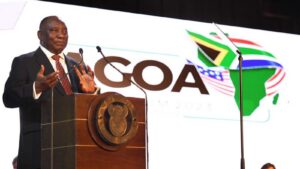
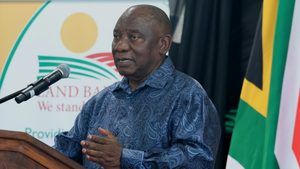
This is largely due to the inability of President Cyril Ramaphosa and Minister Gwede Mantashe to address the industry’s concerns and improve relations with the world’s richest economies.
Modern Corporate Solutions mining analyst Peter Major explained to BizNews that this is one of the biggest opportunities the country has had to revive its mining industry, but it is wasting it.
Major explained that increased interest from the world’s two largest economies in mineral resources and supply chains should have driven a mining boom in South Africa.
Companies from around the world should be pumping money into the country to export its minerals to these economies, but they haven’t due to onerous regulations and a poor operating environment.
This could result in thousands of new jobs and billions in export earnings for South Africa, with a revival of the country’s mining industry likely to herald a return to faster economic growth.
“Get with the programme, guys. We have 33% unemployment. We have no economic growth. But, we have all the minerals that the world wants, let’s do something about it,” Major urged.
“We have the two richest countries in the world that would love to be friends with us. What a great position to be in, and we act like we are in a bad position.”
Major said South Africa should leverage this increased attention to attract investment into the country and resurrect its mining sector.
However, for this to occur, Major explained that major changes would have to happen at a government level to make the country more attractive for investment and conducive to business.
“We are only in a bad position because we have got the wrong bus driver. We have a busload of good people and a busload of great assets, but we have the same driver we have had for the past 30 years,” Major said.
South Africa’s mining sector has gone from being one of the best jurisdictions to operate in globally to ranking among the ten worst.
Companies have been hesitant to invest in opening new mines or expanding and extending existing operations, resulting in over 6,000 abandoned mines in the country.
Major said this has resulted in hundreds of billions of rands in lost export earnings and much more in lost economic activity.
Opportunities lost and ignored

The South African government has failed to address the concerns raised by mining companies over the past three decades, with it doubling down on destructive policies.
Major explained that the worst possible scenario for a mining company is an uncertain policy environment, with stability vital for any investment.
A mine typically takes 17 years to develop from exploration to full capacity. This means that mining bosses need extreme certainty about the future operating environment in a country before investing.
This is something South Africa has not had, with repeated threats of nationalisation, increasingly onerous regulations, and transformation policies making it difficult to operate in the country.
Apart from that, labour relations in the country are notoriously tense, presenting another volatile unknown into the equation.
These concerns are not new, with mining companies bringing them to the government’s attention on a repeated basis since 1994. However, very little has been done about it.
This has resulted in there being no exploration for new mineral deposits in South Africa, despite the rich bounty, and the collapse of the junior mining system to fund new companies.
As a result, mining output in South Africa has been flat for two decades, with billions in potential earnings and hundreds of thousands of jobs being lost.
Major put the blame for this squarely at the government’s feet, pointing specifically to Ramaphosa and Mantashe.
“We were a leviathan in 1980. Nobody could beat us. Anglo American was the largest investor in the United States. The Americans were terrified of us,” Major said.
“You are seeing what happened in Zambia and in Zimbabwe now happening in South Africa. It has not turned around. It is still going down.”
Major said Mantashe missed yet another opportunity at the recent Joburg Mining Indaba to address the concerns of the industry.
“I remember telling people around me, ‘This guy has a big opportunity’. People remember what you say last and what you do last, the most,” Major said.
“He had a chance to go up there at the end of the Indaba, and he can be a hero. He does not have to do much, and we would forget, ignore, and pretend so much of this past decade did not happen.”
However, this opportunity, like with many others, was not taken by Mantashe, with no fresh ideas to revive the once-powerful industry in South Africa.
“He just ignored the entire panel before him, which outlined all of the challenges the mining industry is facing in South Africa,” Major said.
“It is very disappointing. It is almost like he does not want to be remembered or he wants to be remembered poorly.”
“That was the perfect opportunity for Gwede to rise to the occasion, instead of totally ignoring it and those people who were making a really good contribution.”
“It would have been so easy to rise to the occasion and show some concern for the 450,000 gold miners that he and Cyril have helped to lay off and for probably another 100,000 miners in other sectors that have been laid off unnecessarily. But, he does not seem to care about those people.”



Comments