Stay calm and stay invested


An analysis of the United States and South African equity market returns shows why it is good advice to remain invested and stay calm during downturns.
Historically, equities have outperformed most other asset classes, including bonds, cash, and property, over long periods.
Investors benefit from the growth of the companies they are invested in through share price increases and dividends.
However, due to the higher risk associated with equities, investors can also expect higher volatility when investing in stocks.
It is quick and easy to buy and sell stocks, which means there can be significant market moves in days or even hours.
Bad news about a company can cause the stock to plummet. Conversely, good news can result in a big increase in the share price.
Many investors find these big swings difficult to handle. They often sell stocks during rapid declines, only to miss out on a quick rebound and further growth.
This is why most people should use a reliable asset manager or financial advisor to handle their investments, as they are less likely to make decisions that destroy value.
In a recent Vestact newsletter, founder and CEO Paul Theron highlighted the benefits of staying invested.
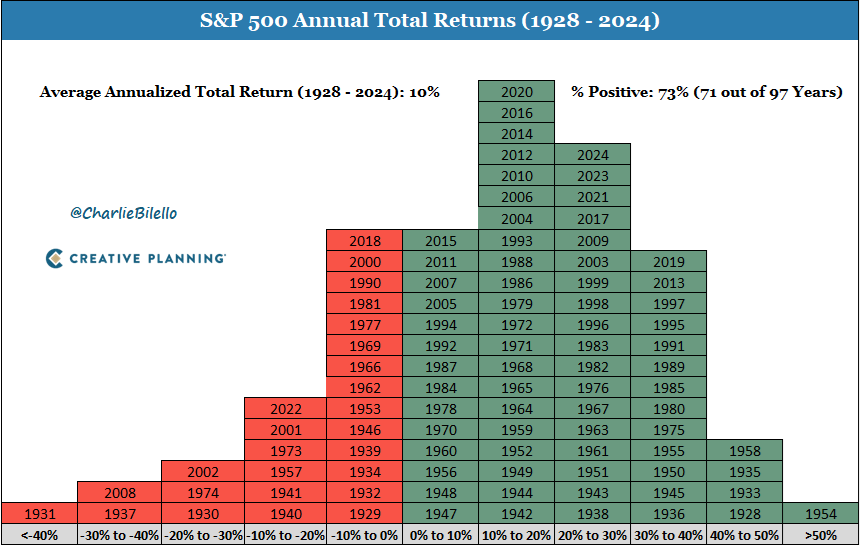
He cited a chart from Charlie Bilello, an award-winning author with a background that spans the global investing landscape.
It showed that the United States stock market’s average total return is around 10% per year, but it comes in lumpy, unpredictable bursts.
Bilello noted that over the last 97 years, returns were within 2% of that 10% average just four times. It’s a bit of a random walk, from year to year.
“You have to be invested for a good amount of time, say a decade at least, to be fairly sure of getting the average return. Then you’ll end up with positive, compounding gains,” Theron said.
“If you are unlucky and invest just before a bad patch, just stay calm and carry on.”
The graphic below, courtesy of Bilello, shows the S&P 500’s total annual returns between 1928 and 2024.
South Africa versus the United States from 1996 to 2024
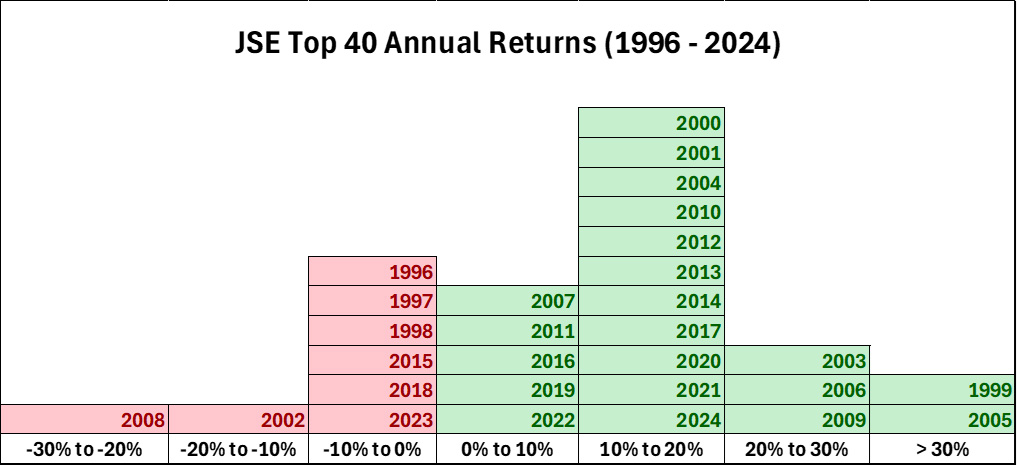
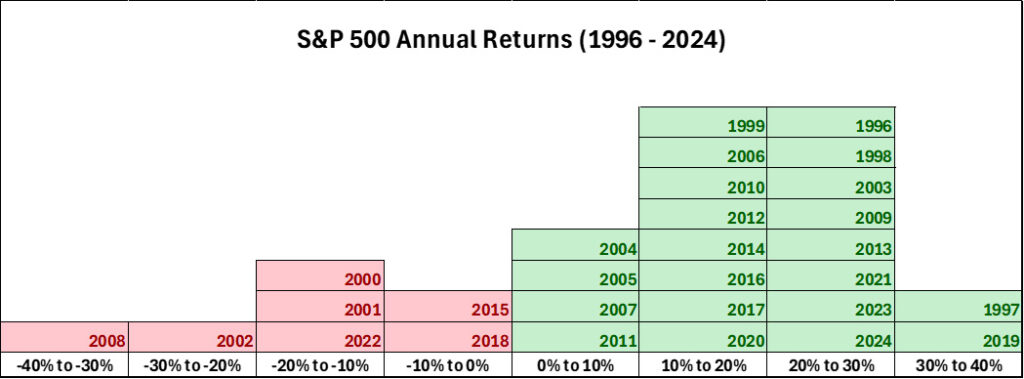
Daily Investor analysed the annual performance of the JSE Top 40 and the S&P 500 between 1996 and 2024, with similar results to those of Bilello.
Over the 29 years, the JSE Top 40 has had a negative return for eight years and a positive return for 21 years. This is a positive return ratio of 73%.
The S&P 500 performed even better, with a positive return ratio of 76% between 1996 and 2024. There were only seven years with a negative return.
This confirms Theron’s advice to stay invested in the stock market and ignore the short-term moves, which can derail your investment strategy.
The graphics below show the annual performance of the JSE Top 40 and the S&P 500 between 1996 and 2024.






Comments