Dangerous mistake by investors


DeVere Group CEO Nigel Green warned that investors are underestimating the scale and trajectory of the US dollar’s decline, which could have severe consequences for global portfolios, pricing and capital allocation.
Green, who heads deVere Group, one of the world’s leading independent financial institutions, explained that the US dollar has had its weakest start to a year since 2008.
The greenback is down more than 4% on the Dollar Index, as markets begin to digest interest rate cut expectations, a revival of protectionist trade policies, and rising geopolitical friction under US President Donald Trump’s administration.
Green warned that South Africans are underestimating the dollar’s decline in terms of value and its long-standing role as the world’s unrivalled reserve currency.
“We don’t believe this is a short-term wobble. It’s the opening phase of a steady but far-reaching shift,” Green said.
“Dollar supremacy isn’t vanishing overnight, but its era of unquestioned dominance is fading. This carries enormous consequences for global portfolios, pricing, and capital allocation.”
He said this decline is not a crash but rather an erosion of the dollar’s dominance. Another sign of this is that central banks worldwide are gradually unwinding their reliance on the dollar.
According to IMF data, the currency now accounts for just under 59% of global reserves, down from more than 70% at the start of the century.
“Part of this trend is structural, with emerging economies building out their financial systems. But increasingly, it’s a strategic shift,” Green said. “There’s growing discomfort with the idea of the dollar being used as a political instrument.”
He said investors must stop assuming the dollar will always rebound, adding that this view is dangerously outdated.
“The shift to dominant currency plurality is underway. Those clinging to the old model risk being blindsided,” he warned.
As capital begins to rotate into assets tied to other major currencies, governments, institutions, and global businesses will need to recalibrate.
Green added that investors who act early will be best placed to capitalise on the next phase of global finance.
Dollar alternatives
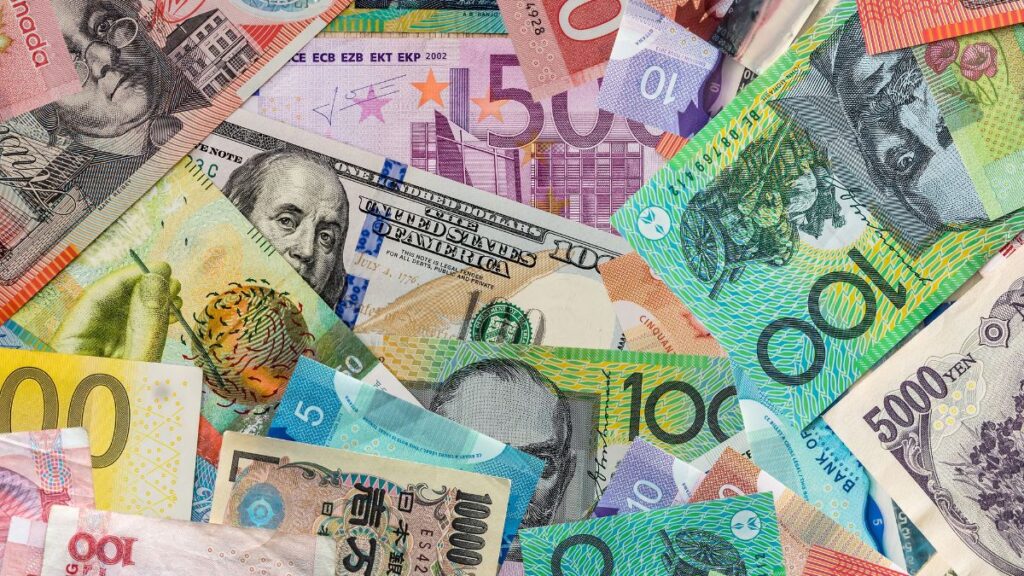
Green’s view has been partly supported by recent currency reactions to geopolitical uncertainty caused by the United States.
Earlier this year, Trump announced wide-ranging tariffs on several countries as part of his “America First” policy position.
While these tariffs have since been paused, they left the global trade environment far more uncertain and ignited an ongoing trade war with China.
Normally, the US dollar would have been the “no-brainer” safe-haven asset investors run to during these uncertain times.
However, Green pointed out that, during this time, several other currencies have emerged as clear alternatives to the US dollar.
For example, the euro has surged more than 4% against the dollar in the past fortnight alone, buoyed by Europe’s moves toward fiscal coordination, collective defence investment, and economic resilience.
“The euro is repositioning itself not just as a regional anchor, but as a serious global stabiliser,” Green explained.
“That doesn’t mean it will replace the dollar. Instead, it’ll be part of a broader mosaic of major currencies taking on more influence.”
Lower reliance on the dollar can also be seen across Asia, as Japan’s yen has found fresh strength on safe-haven flows.
The South Korean won shows renewed resilience, while China’s yuan continues climbing as Beijing signs cross-border trade agreements that sidestep the dollar entirely.
“We don’t think any single currency is about to take the dollar’s place,” Green explained.
“Instead, we expect a more fragmented system – one where influence is shared across a handful of credible currencies. This evolution is gradual, but it’s no less profound.”
At the same time, Green explained that policies that once would have supported the dollar are now feeding its weakness.
For example, the United States’ new tariffs have triggered a counterintuitive surge in the Canadian dollar and Mexican peso. Green said this signals that investors now see these measures as signs of instability rather than economic strength.
In addition, markets now expect the Federal Reserve to deliver up to three rate cuts by year-end, while many other countries are expected to keep their monetary policy more restrictive.
This would erode the yield premium that has long underpinned global appetite for dollar-denominated assets.
“This shrinking rate gap makes US debt less attractive. And when demand for Treasuries softens, so does demand for dollars,” Green said.
“While a softer dollar may temporarily lift exports and benefit US companies with foreign earnings, there are limits.”
This is because nearly half of the United States’ goods are imported. Therefore, a weaker currency means higher input prices, more inflation pressure, and greater strain on consumers.
“With America’s manufacturing base hollowed out, there’s no fast route to self-sufficiency,” Green warned.





Comments