Billionaire Bill Ackman’s five best investments


Superinvestor Bill Ackman has a reputation as one of the best value investors in the world, having consistently outperformed the market over the past 20 years.
Ackman is the founder and CEO of Pershing Square Capital Management, a hedge fund known for its high-profile investments and aggressive activism.
Born in New York City in 1966, Ackman graduated from Harvard College and Harvard Business School.
He began his career in finance at Goldman Sachs before launching his own hedge fund, Gotham Partners, in 1992.
Ackman is renowned for his outspoken nature and willingness to take on large corporations. He has been involved in several high-profile activist campaigns, including those against Herbalife, JC Penney, and Valeant Pharmaceuticals.
His investment approach often involves taking significant positions in companies and then publicly advocating for changes in their management or strategy.
Ackman’s net worth is estimated to be around $9 billion. He is known for his philanthropic activities, including his commitment to giving away a significant portion of his wealth to charitable causes.
Ackman is highly respected in investment circles. His investment strategy focuses on identifying companies with strong growth potential that are undervalued by the market.
He looks for companies with a competitive advantage, a strong management team, and a clear growth path.
Once he has identified a company he believes in, he takes an active approach to investing, using his influence as a shareholder to push for changes he believes will increase the company’s value.
This approach has been highly successful for Ackman, with many of his investments resulting in significant long-term returns.
Ackman’s portfolio is notably small, consisting of just a few carefully selected positions. He believes in investing only in companies that he has thoroughly researched and understands rather than simply diversifying his portfolio.
This approach allows him to maintain a deep understanding of the companies he invests in, giving him an edge over other investors who may be spread too thin.
Ackman’s best investments
Ackman has made many high-profile investments and has even had a bust-up with fellow billionaire Carl Icahn after publicly calling Herbalife a pyramid scheme and shorting the company.
However, many of Ackman’s best investments have gone unnoticed and have only been revealed during interviews.
His best investment may have begun before he started Pershing Square when Ackman grew sceptical of the mortgage-backed securities market.
In 2003, he began buying up credit default swaps and shorting the stock of one of the largest municipal bond insurers in the country as they were a counterparty to it.
Ackman steadily grew his short position in the Municipal Bond Insurance Association (MBIA) as the Great Financial Crisis (GFC) loomed.
In 2009, after the GFC caused MBIA’s debt ratings to plunge, Ackman exited his short for $1.4 billion, according to research firm FinChat.
Another of his best investments occurred during the GFC when Ackman bought $60 million worth of distressed shopping mall operator General Growth Properties.
After encouraging them to file bankruptcy and buy time with creditors, General Growth Properties sold assets & emerged from bankruptcy, turning Ackman’s $60M investment into $1.6 billion.
Ackman’s third-best investment is one he still holds to this day, and it is one of the best turnaround stories in recent American corporate history.
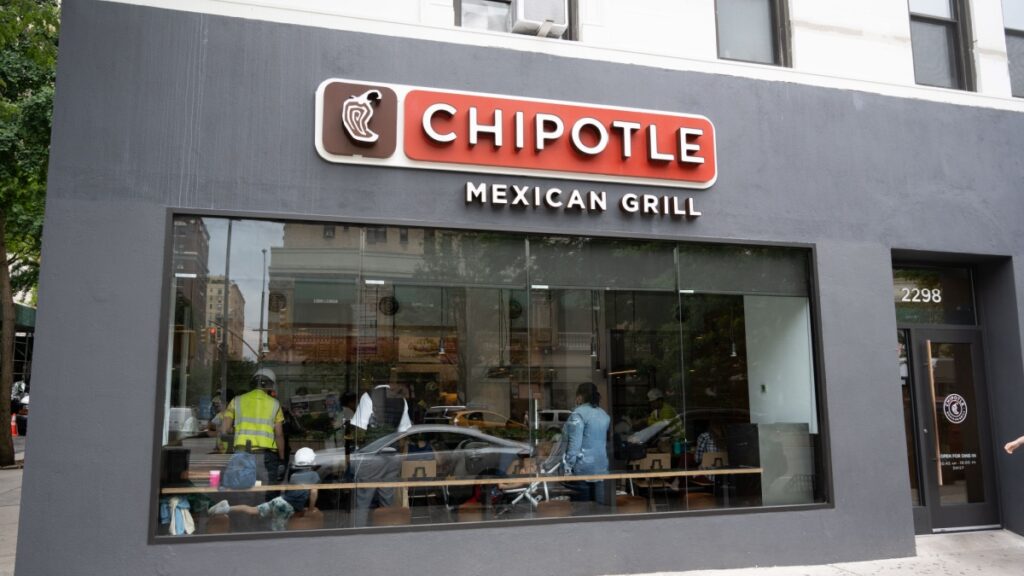
After Chipotle’s 2016 E.coli crisis, Ackman bought a $1.2 billion stake in the company and set about its recovery.
Securing two seats on the board, Chipotle brought in Brian Niccol, who successfully revived the brand.
Shares have climbed 600% since his initial purchase, and Chipotle has become one of the most profitable quick-service restaurant operators globally.
Another one of Ackman’s best investments took inspiration from the world of private equity, using a levered buyout to boost returns.
In 2018, Ackman invested in Lowe’s on the premise that they could narrow the performance gap with Home Depot, margins would improve, and a leveraged buyback program could help juice returns.
That’s exactly what happened, and Lowe jumped 175% from Pershing Square’s average cost.
In 2020, Ackman executed a similar strategy to the one he implemented during the GFC, buying up $27 million worth of credit default swaps on investment-grade bond indexes in early 2020.
This was effectively a bet that the global economy would grind to a halt due to the spread of Covid-19 – and it did.
When the pandemic spread, and fears worsened, Ackman’s swaps grew to ~$2.6 billion in value. This netted Pershing Square a ~100-fold return in a matter of months.




Comments