Allan Gray makes its debut on the JSE


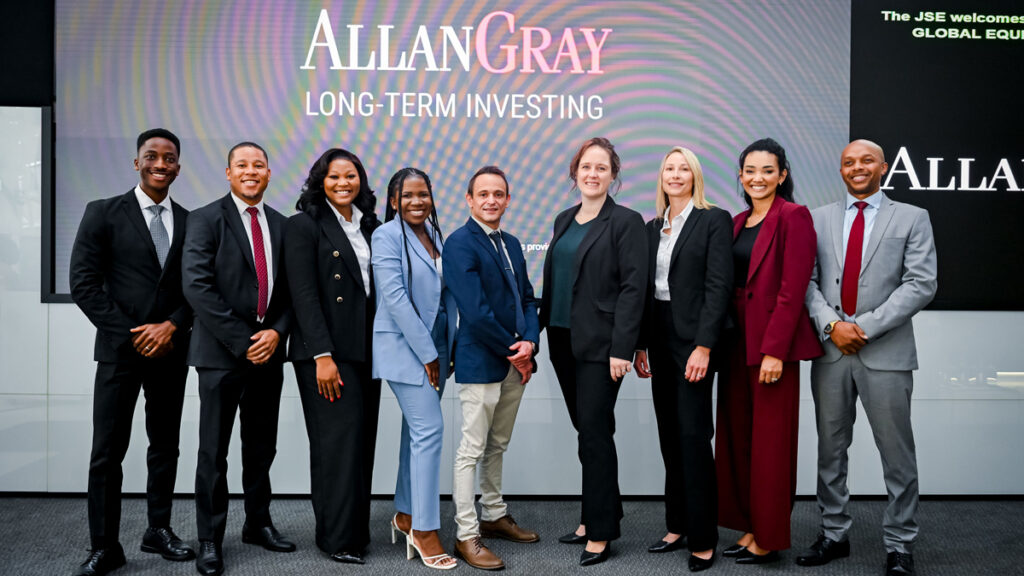
Allan Gray has made its debut on the JSE by listing two actively managed exchange-traded funds (AMETFs), the Allan Gray-Orbis Global Equity Feeder AMETF and the Orbis Global Balanced Feeder AMETF.
This gives South African investors an easier way to gain offshore exposure through Allan Gray’s actively managed portfolios, which began trading on the exchange on 11 December 2025.
The prominent asset manager said these funds will also be available to existing Allan Gray clients through its own investment platform in 2026.
Shaun Duddy, head of Retail Product Development at Allan Gray, says that the move reflects the firm’s commitment to giving investors more choice in accessing global opportunities.
“Accessibility is an important part of our value proposition to clients. We are therefore pleased to offer investors yet another way to gain offshore exposure,” Duddy said.
Duddy also explained that these funds give them the opportunity to benefit from the expertise of our offshore partner, Orbis, who shares Allan Gray’s investment philosophy and approach.
The listings create a third avenue for investors to access the Allan Gray-Orbis rand-denominated offshore feeder strategies.
Investors also have the option of investing in the unlisted co-named versions of the feeder funds via the Allan Gray Local Investment Platform, and the original unlisted Allan Gray-Orbis feeder funds via the firm’s life and retirement fund products.
The Allan Gray-Orbis Global Equity Feeder AMETF is designed for investors seeking long-term capital growth, with a minimum investment horizon of five years, through an actively managed portfolio of global shares.
It invests in the Orbis Global Equity Fund, which follows a value-driven, “bottom-up” research approach. It aims to outperform its benchmark – the MSCI World Index – over time, without taking on additional risk.
The Allan Gray-Orbis Global Balanced Feeder AMETF aims to deliver long-term real returns through a multi-asset portfolio and is ideally suited to investors with a minimum investment horizon of between three and five years.
It invests in the Orbis SICAV Global Balanced Fund, which uses the same value-driven, “bottom-up” research approach as the Orbis Global Equity Fund.
The portfolio flexibly allocates between equities, fixed income and commodity-linked instruments, with typical net equity exposure ranging between 40% and 75%.
It aims to outperform its benchmark, comprising 60% the MSCI World Index (with net dividends reinvested) and 40% the J.P. Morgan Global Government Bond Index, balancing investment returns and risk of loss.
Questions of high fees
Since the announcement of the listing of Allan Gray’s first AMETFs on the JSE, there has been some criticism regarding the elevated fees the funds charge.
Analyst Karin Richards noted that the Allan Gray-Orbis Global Equity Feeder Fund carries with it an uncapped 25% performance fee.
She pointed out that the current total expense ratio for the fund is 3.45%, in comparison to the Satrix MSCI World index-tracking fund, which charges 0.25%.
In a statement, Allan Gray said the Orbis funds charge a performance-based fee which has a unique structure, aimed at creating alignment between Orbis and clients invested in the funds.
An often unappreciated aspect of the structure is that performance fees can be refunded during times of underperformance. Performance has been strong, which is currently reflected in the fee.
“Performance fee structures, when well designed, reward managers for doing well, and penalise them for delivering poor outcomes,” Duddy said.
“The current fees for the two ETFs reflect the very strong performance achieved for investors over the past 12 months compared to index-based, passive alternatives.”
Investors may be wondering if they will pay this fee for the next 12 months. “The short answer is only if Orbis outperforms at the same level,” Duddy said.
“When the fund outperforms the benchmark, the fee is not immediately paid over to the manager. It is held in a reserve, which is subsequently refunded to the fund’s net asset value if the fund subsequently underperforms.”
“This ensures that performance fees are only paid if this performance is sustained and helps ensure that fees charged reflect the value added since inception.”
Duddy went on to explain some of the advantages of ETFs, including AMETFs, which include their ease of access and liquidity.
These instruments can be traded intraday on the JSE, and they are not subject to South Africa’s exchange control limits.
This means South African individuals, companies, trusts and partnerships, as well as non-residents, can invest in the newly listed Allan Gray-Orbis AMETFs without restriction, aiding their diversification ambitions.
“South Africa represents less than 0.5% of global equity markets. Diversifying offshore, therefore, remains an important part of any well-constructed investment strategy. Our AMETFs give investors an additional avenue to fulfil their offshore investment goals,” Duddy said.






Comments