No R10 coin for South Africa


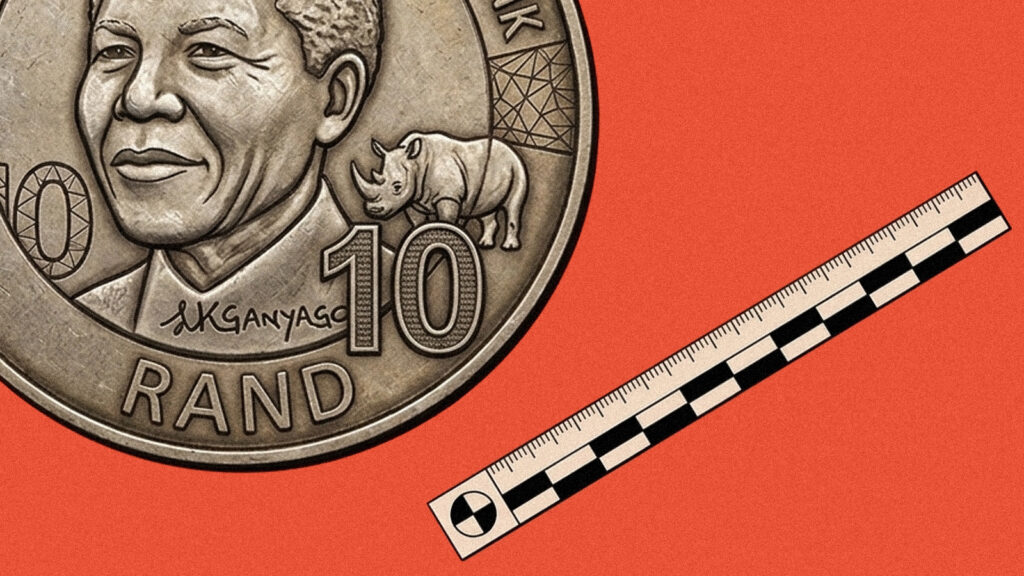
The Reserve Bank is not considering issuing a R10 coin in South Africa, since the R10 banknote is still widely used.
However, the central bank told Daily Investor that it considers the country’s denomination mix on an ongoing basis and considers the current mix appropriate.
South Africa has not introduced a new or higher currency value denomination since 1994.
The last major new physical denomination added to the local currency system was the R200 banknote, introduced in 1994 shortly before the democratic elections.
While not a new denomination, South Africa also stopped the production of 1- and 2-cent coins in 2002, and ceased production of 5-cent coins in 2012.
This was due to the coins’ high production costs, with it costing the South African Mint more to make the coins than they were worth.
However, these coins remain legal tender in South Africa, meaning banks and stores can accept them despite production having ceased.
Since South Africa’s physical currency denomination mix has not changed in 32 years, Daily Investor asked the Reserve Bank whether it would consider issuing a higher-value coin.
“The SARB considers the denomination mix on an ongoing basis,” it said in response to Daily Investor’s questions.
“The R10 banknote is still widely used, and the SARB considers the current denomination mix appropriate.”
South Africa remains a highly cash-dependent country, though it is slowly moving more towards digital transactions.
The Reserve Bank has been a proponent of this shift due to the high costs and safety considerations associated with cash usage.
The central bank’s Cost of Cash Study, concluded in November 2025, revealed that the annual cost of cash amounts to R90 billion.
This encapsulates direct and indirect costs, which are almost equally split: direct costs account for R43.5 billion (49%), while indirect costs total about R46.1 billion (51%).
Countries and their currencies

Countries worldwide routinely update their currency mixes to align with changing economic conditions.
Since inflation steadily erodes the purchasing power of a currency, it eventually becomes necessary to discontinue, update, or introduce new denominations.
A country’s specific currency mix, therefore, depends heavily on that particular country’s inflation rate, the purchasing power of its currency, and its usage rates of physical currency.
For example, the United States, which has historically had far lower inflation than South Africa, has a wider range of paper notes.
The US Mint manufactures standard circulating denominations like the nickel (5¢), dime (10¢), and quarter (25¢).
In terms of paper notes, the United States issues $1, $2, $5, $10, $20, $50, and $100 denominations.
The United States’ denomination mix contrasts with South Africa’s, where the most valuable paper note is R200, with the lowest being R10. Similarly, the highest-value coin in South Africa is R5.
This makes sense given how much weaker South Africa’s currency, the rand, is compared to the United States dollar, with the exchange rate standing at R15.98 per US dollar.
In addition, the average annual CPI inflation rate in the United States has been 2.55% over the past three decades.
This is far higher than in South Africa, where CPI inflation has averaged between 5.5% and 6% per year over the same 30-year period.
However, this is not to say that South Africa’s denomination mix is an outlier, particularly among its emerging market peers.
The highest denomination paper note ever recorded belonged to Zimbabwe, which issued a ZIM$100 trillion note during its severe hyperinflation period in 2008.
The lowest denomination currency by face value and fractional designation ever issued was from Uzbekistan.
Through no longer legal tender, the Central Asian country once issued a tiyin, which is equal to 1/100 of a sum, Uzbekistan’s currency.
The Central Bank of Uzbekistan introduced its permanent currency system in 1994, and printed banknotes for the sum and minted coins for the fractional tiyin denominations.
Uzbekistan issued coins in denominations of 1, 3, 5, 10, 20, and 50 tiyin. These coins were in circulation until 1 March 2020.
Now, the country uses coins in denominations of 50, 100, 200, 500, and 1,000 sum.






Comments