South Africa’s richest city in a debt spiral


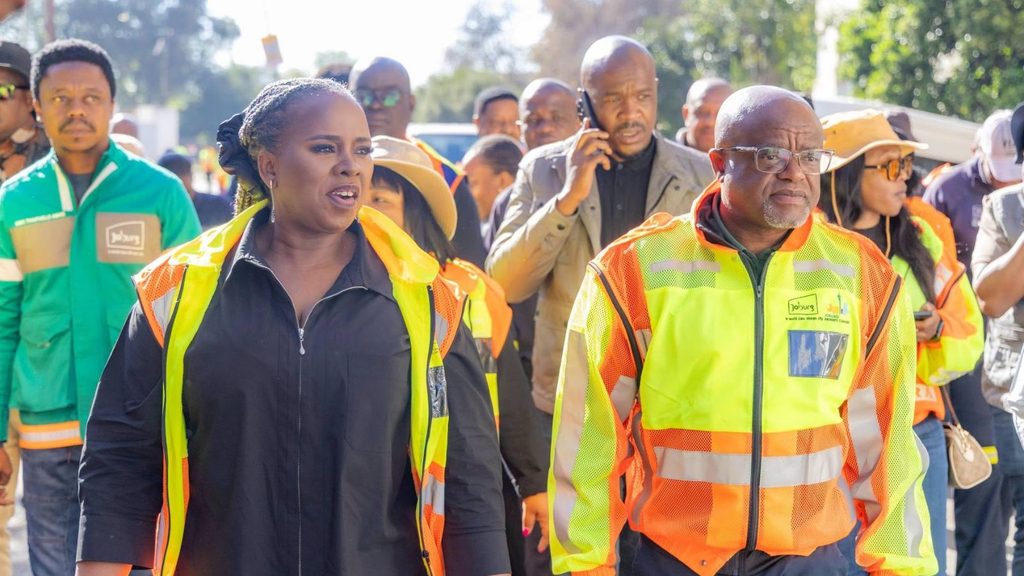
The City of Johannesburg is stuck in a “debt doom loop,” because its failure to collect outstanding obligations has forced it to raise tariffs to the point where fewer and fewer customers are willing or able to pay for services, a new study has found.
South Africa’s biggest city has accumulated R72 billion in unpaid bills, up from R15 billion a decade ago, the Centre for Development and Enterprise said in a report published Tuesday.
That, the research organisation said, is the root cause of collapsing infrastructure.
“The city has become dangerously disconnected from financial reality,” said Ann Bernstein, the CDE’s executive director.
“It bills residents and businesses, records those bills as revenue and spends on the assumption that the money will arrive. Increasingly, it doesn’t.”
The CDE described the situation as “a structural governance failure that constitutes a fundamental obstacle to delivering municipal services.”
The report is the latest indictment on the economic management of the city, which accounts for 16% of South Africa’s economy, houses 70% of its corporate headquarters, and, despite its challenges, remains Africa’s most important financial centre.
Late or non-payment of bills to utilities such as the power provider Eskom and the regional water supplier Rand Water is threatening the viability of state utilities, according to the CDE.
“Johannesburg is not a small town whose failure can be contained,” it said. “Johannesburg’s financial crisis is not just a local governance issue. It is a national economic risk.”
The CDE study shows the city’s economy is growing at a far slower pace than its expenditure.
In the decade through 2025, the city’s working-age population grew by more than 767,000 to 4.2 million, while it only added 30,000 jobs.
Just 1.98 million of its residents are employed.
Employee-related costs rose more than 9% a year to 20.7 billion rand over the same period, while annual expenditure on infrastructure fell to as low as 6 billion rand, from 10.5 billion rand.
“This is what municipal decline looks like in financial form,” the CDE said. “The city looks after its own employees first, so salaries are paid.
Beyond that, it struggles to do what it is supposed to.”
Johannesburg has already been censured by the National Treasury, which temporarily withdrew state funding earlier this year due to the state of its finances.
In an Aug. 24 radio interview, Johannesburg Mayor Dada Morero said its finances were improving.
The city last week paid Eskom 5.26 billion rand in overdue power bills.
The municipality is run by a coalition led by Morero’s African National Congress.
With local government elections scheduled for November, opinion polls show the ANC trailing its biggest rival, the Democratic Alliance.




Comments