South Africa’s rand waiting for the tide to turn


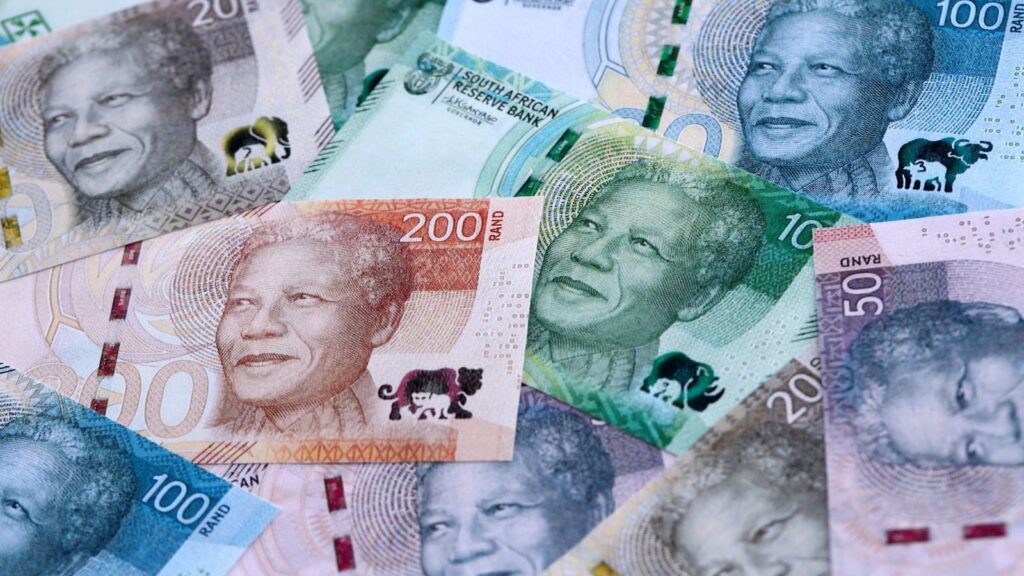
South Africa’s rand and other emerging market currencies are expected to be far less volatile in 2027 and 2028.
This is due to the expected outcome of the United States’ mid-term elections on 3 November 2026.
The outcome of this election could lead to a marked change in US foreign policy, curbing presidential powers and therefore reducing volatility in global financial markets.
This is feedback from Investec chief economist Annabel Bishop, who explained that, for the time being, South Africa’s rand remains influenced by US foreign policy.
The rand’s volatility was on full display over the past weekend. The local currency strengthened to R16.09 in the second half of last week, but then rose back to R16.25 on Tuesday, 11 August.
Since Tuesday, the rand has strengthened back to R16.15 per US dollar. Bishop attributed the rand’s strength on Friday, 7 August, to an easing in global risk aversion.
This improved risk appetite was also evident in the Brent crude oil price, which dropped below $90 per barrel last week and has remained there since.
Bishop explained that the United States has had a volatile, disruptive effect on financial markets over the past two years, largely stemming from its foreign policy.
In April 2025, US President Donald Trump announced his ‘Liberation Day’ tariffs, which rattled financial markets globally.
The announcement triggered sharp equity sell-offs and a steep decline in the US dollar. The JSE All-Share Index fell 0.94% on the day.
Since then, any announcement coming from the US has had the potential to unnerve investors worldwide.
In 2026, this effect has only been amplified. Since the outbreak of the US-Iran war at the end of February, investors have kept a close eye on US actions and reacted accordingly.
The effect of this has been wild swings between risk-on and risk-off sentiment in global markets, which has made the already volatile rand even more so.
However, Bishop believes this volatility could be significantly reduced in 2027 and 2028, depending on the outcome of the US mid-term elections in November 2026.
Less volatility for the rand and the impact of interest rates

Americans are set to vote in the US mid-term elections on 3 November 2026, and a disruptive outcome is currently expected.
The mid-term elections determine whether the Republican or Democratic party controls the House of Representatives and the Senate.
Bishop explained that the Middle East War and its resulting oil shock are expected to reflect badly on Trump and the Republican Party at the elections.
“Two-thirds of voters are dissatisfied with the Republicans’ performance, while Trump’s approval is at 33%, as dissatisfaction stems from the cost of living,” she said. The Democratic Party, in contrast, show a 20% lead in likelihood of voting.
“Seats are voted on in Congress, determining presidential powers for the remaining two years of the president’s term,” Bishop explained.
“When Congress and the President are of the same party, legislation can be passed easily, and the President’s agenda carried out.”
Therefore, if the mid-term elections do not go in the Republicans’ favour, there may be a curb on US foreign policy.
This, Bishop explained, will reduce the volatility that has impacted global financial markets, including emerging market currencies such as the rand.
Another factor that could work in the rand’s favour is that interest rate expectations for the United States and South Africa are diverging.
Bishop said a 25-basis-point interest rate hike remains fully factored in for December in South Africa.
In contrast, the 25-basis-point hike expected in the United States by December continues to be gradually priced out, with projections now considering a 20-basis-point increase.
“While interest rate hikes in South Africa tend to strengthen the rand with immediate effect and weaken the rand if they do not occur as expected, US rate hikes weaken the rand,” Bishop explained.
If the United States opts not to hike rates again this year, or does so to a smaller extent than South Africa, the rand will likely benefit.
Bishop’s predictions for the US dollar-rand exchange rate over the next two years can be seen in the table below.
Annabel Bishop’s exchange rate forecasts
| Quarter | USD/ZAR Rate |
| Q1.26 | 16.35 |
| Q2.26 | 16.49 |
| Q3.26 | 16.30 |
| Q4.26 | 15.90 |
| Q1.27 | 15.70 |
| Q2.27 | 15.75 |
| Q3.27 | 16.05 |
| Q4.27 | 15.75 |
| Q1.28 | 15.75 |
| Q2.28 | 15.85 |
| Q3.28 | 15.95 |
| Q4.28 | 15.85 |






Comments