Inside the ANC decision that saved South Africa


The ANC’s appointment of Trevor Manuel as South Africa’s Finance Minister in 1996 has been credited with saving the country from financial ruin.
Manuel managed to arrest the surging growth in government debt, stabilise the economy, and implement key reforms to boost growth to levels the country has not seen since.
Under Manuel’s tenure from 1996 to 2009, the country averaged annual economic growth of just over 3%, with the economy creating over 300,000 new jobs a year – more than triple the current level of job creation.
At its peak in the mid-2000s, Manuel’s economic policy saw South Africa reach economic growth levels of close to 5%, with around 500,000 jobs created per annum.
However, the most crucial element of Manuel’s tenure was the ability to grow the economy at this rate without a corresponding surge in government debt. Almost all the growth came from the private sector.
In fact, government debt as a share of GDP declined during Manuel’s stint as Finance Minister to 26%. Today, the state’s debt sits at over 76% of GDP.
When Manuel became Finance Minister, South Africa appeared to be heading towards bankruptcy. The economy had barely gotten out of a three-year recession, the rand was plummeting, and the government was effectively running out of money.
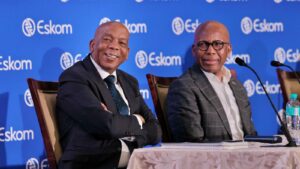
“When I became Finance Minister in 1996, President [Nelson] Mandela asked me what keeps me up at night,” Manuel told delegates at the Africa In the World Festival.
“I said to him, ‘The fear that by 1998, debt-servicing costs would be higher than what we are spending on anything else.’”
Manuel feared this because money spent on debt servicing is effectively “dead money” that does not fund service delivery, drive economic growth, or improve the lives of ordinary people.
“Mandela turned to me and said, ‘Okay, I am not an economist, let me try and understand what you are saying,’” Manuel recalled.
“‘You are saying that the money has already been spent and the interest costs on what has already been spent are more than what we can spend on education?’”
Manuel duly affirmed Mandela’s understanding, confirming that debt-servicing costs are effectively payments made with current revenue to cover past spending.
“Mandela understood this clearly, saying to me, ‘We are spending more on yesterday than tomorrow.’ It is fundamentally an important issue,” Manuel said.
“What is happening on the African continent right now, in almost every country, we are spending more on debt-servicing than we are on education and healthcare.”
“So, it is this yesterday being more important than tomorrow for our countries.”
Manuel as Finance Minister

The issue of spending more on yesterday than on the future was precisely the problem Manuel was tasked with solving as South Africa’s Finance Minister.
South Africa’s economy in the 1990s was fragile, with it suffering a three-year recession in the build-up to the 1994 elections due to elevated political uncertainty.
In the aftermath of 1994, the government under Mandela was handed a balance sheet that was very weak, with a surging debt burden making it impossible for the state to spend its way out of trouble.
This surging debt also threatened to bankrupt the country and force it to go to international institutions such as the International Monetary Fund and the World Bank for funding.
“Then the ANC did something brilliant. They appointed Trevor Manuel as Finance Minister. I don’t think he knew he was brilliant, but he ended up there and did remarkable things for this country,” Stanlib chief economist Kevin Lings said.
South Africa avoided bankruptcy, arrested its decline, and the economy began to grow with far greater private participation than before.
“The economy took off. It took a couple of years to gain momentum, but then it did really well. In 2008, South Africa’s ten-year average annual growth rate was 4%,” Lings said.
“We have achieved it. It is not impossible. We have hit 4% GDP growth, and the economy has created more than 500,000 jobs a year, with government debt being reduced to 26% of GDP.”
South Africa’s credit rating steadily improved to an A rating from Moody’s, and foreign investment flooded into the country.
While some point to the commodity boom and the additional growth and tax revenue this provided as the reasons for the recovery, Lings explained that these benefits could only become a reality because of how Manuel used the money from the boom.
“Manuel, because of that growth, was collecting lots of tax revenue and generating budget surpluses. What did he do with the extra money? He paid down the country’s debt. He put us in a really good position,” Lings said.
“We were reducing our debt burden and accelerating economic growth. Besides all the other benefits of employment and growing revenue, this was exceptional for South Africa.”
Manuel was pivotal in shifting the ANC’s economic policy towards the market-friendly Growth, Employment, and Redistribution policy.
This symbolised a shift away from the state-centric economic policy of prior years and a clear break from the ANC’s collectivist-leaning tendencies.
Manuel faced immense criticism from labour unions because of his market-friendly policies, which focused on cutting state spending to reduce the budget deficit to 3%, capping the growth of the public sector wage bill, and eliminating tariffs as far as possible.
Economic growth surged to an average annual rate of 4.1% during the Mbeki administration. Under Manuel, the government recorded its first-ever budget surplus in the 2006/2007 financial year, and debt declined as a share of GDP to 26%.
Manuel, who was long regarded as a pragmatist, said in 2013 that he still had little technical knowledge of economics.
“But, I knew that if I set this thing up where people can come with the numbers, and I ask the questions based on life experience and understanding and broad political objectives, then it will work,” he said.


Comments