The strange time when South African companies borrowed money to put it in the bank


During the Covid-19 pandemic, a strange phenomenon occurred within South African corporates, with many borrowing money to deposit it with a bank.
Companies took credit and placed it on deposit to ensure their liquidity would not dry up during the initial pandemic shock and the lockdowns that followed.
This is indicative of just how conservative South African corporates are, with many of them sitting on immense piles of cash as a buffer against external shocks.
It also shows that despite the country’s corporate sector having relatively little debt, it is unwilling to deploy cash heavily in the local economy.
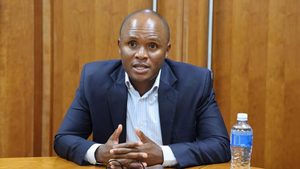
This is feedback from Stanlib chief economist Kevin Lings, who outlined the conservative nature of South African corporates in a recent research note.
Lings explained that one thing that unites South African corporates is a conservative approach to money management, which has become entrenched in the country’s corporate DNA.
“Big corporations have a CFO, a treasury team, and people responsible not just for accounting but for managing the company’s financial requirements,” Lings explained.
“Much of that comes down to cash flow, managing money coming in and money going out, keeping reserves for imports, salaries and unforeseen expenses.”
The idea of “just in case” money is deeply embedded in South African corporates, and the CFO wants to know that if something unexpected happens, they can respond immediately.
Corporates are very wary of being at the mercy of a bank’s bureaucracy, waiting for credit approval. They want to have cash ready to capitalise on opportunities or absorb a shock.
This is both a positive and a negative with regard to the South African economy. It is very good that corporations are well-run with strong balance sheets.
“You wouldn’t want the opposite, weak balance sheets and failing companies. Our corporations are strong, financially disciplined and well-managed. That’s a foundation to build on,” Lings said.
However, these balance sheets also show that much of the cash within South African corporates is sitting idle when it could be allocated more productively and drive faster growth.
“Their focus is on financial soundness, ensuring the balance sheet is strong, and the business looks good to shareholders,” Lings said.
That focus has undeniable benefits – low leverage, stable earnings and well-managed risk. But it also has consequences.
“If you’re an accountant by training, your strength is financial management. While your balance sheet may look great, it’s important to consider whether there is a pipeline of new ideas as well,” he said.
The Covid-19 test

When the Covid-19 pandemic struck South Africa in 2020, the conservative cash management of South African corporates was on full display.
Lings explained that the pandemic offered a revealing glimpse into this mindset, with many companies having plenty of cash on hand and low debt when Covid hit.
Something odd happened when the seriousness of the pandemic became clear, with corporate credit beginning to rise strongly.
Lings investigated and discovered that companies were not borrowing cash to spend. They were borrowing to save. They took credit and placed it on deposit.
“They didn’t know what Covid-19 would bring, whether banks would close, whether liquidity would dry up,” Lings said.
“Their instinct was to build an even bigger buffer. That’s not a bad thing – it shows prudence. But it also reveals how deep the cautious mentality runs.”
Beyond conservatism, there’s a simple economic explanation relating to flat demand due to a stagnant economy that is growing at around one per cent.
“Businesses have enough machinery, enough people, enough capacity to meet current demand. There’s no incentive to expand if your aeroplanes aren’t full, so to speak,” Lings said.
He gave the example of an airline, saying if every flight is full, one eventually buys another plane as more demand can be met.
But if one’s planes are only 70% full, one doesn’t need to place new orders, and the same applies to South African businesses – they don’t see the need.
However, infrastructure bottlenecks exacerbate the issue as there is simply not enough logistics capacity to export South African minerals.
Companies in this regard are effectively limited by the capacity of the country’s railways and ports, not by a lack of cash to invest or production.
“Take manganese mining. Producers can only export as much as Transnet’s rail line can carry. Even if they invest in new equipment and mine more, they can’t get it to the port,” Lings said.
“So they wait. If the government expands capacity, then they’ll invest. Until then, it’s pointless.”





Comments