Eskom must get its house in order


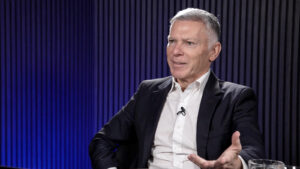
Eskom chairman Mteto Nyati said the utility must “get its house in order” if it wants to compete with new entrants in South Africa’s expanding electricity market.
He said the utility welcomes competition, provided it is on an even playing field, but must focus on bringing costs down if it wishes to remain competitive.
Nyati’s comments were made in the latest instalment of PSG’s Think Big Series, where the chairman outlined Eskom’s impressive progress in improving the utility’s performance.
Eskom has improved generation and kept load-shedding at bay for over four months, as the utility’s Generation Recovery Plan has seen it make significant strides.
Now, Nyati said Eskom is focusing its efforts on driving down the cost of electricity in South Africa.
He explained that the key to achieving this goal is integrating more independent power producers (IPPs) into the country’s electricity market.
This will increase competition in the market and lower prices for South Africans as Eskom is forced to compete with other producers as opposed to the monopoly it previously enjoyed.
“We need to be integrating more and more IPPs that have been signed at a lower cost, and that is what we are doing,” he said.
“There’s this whole notion in South Africa that IPPs are costing us a fortune. No, that is not true. We should actually be encouraging such a huge competition with Eskom.”
“Eskom needs to get its house in order to match the price of IPPs, which is exactly where you want to be. You want to have that competition that drives down the cost.”
Nyati explained that this is why Eskom has turned its focus to decreasing its costs to produce electricity.
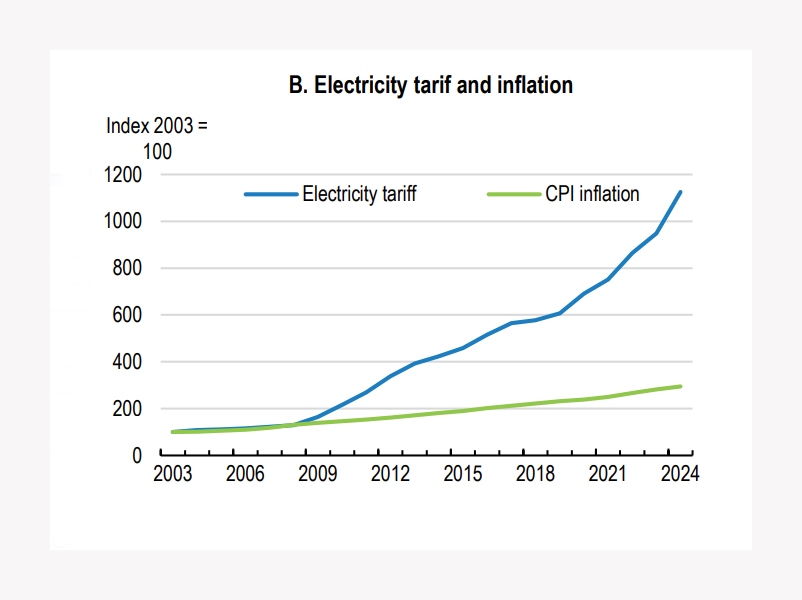
South Africa’s electricity prices have risen by 190% in the past decade, significantly outpacing inflation and placing immense financial pressure on households and companies.
The graph below shows how South Africa’s electricity prices have risen compared to inflation since 2003.
Lower electricity price increases on the cards
Eskom is notorious for its above-inflation tariff hikes, as the utility’s monopoly over the generation market has allowed it to increase prices substantially.
For the 2025/26 year, Eskom proposed increasing electricity prices by 36.15%. However, the National Energy Regulator of South Africa (NERSA) rejected this proposal and approved a lower increase of 12.74%.
While lower, this increase is still significantly higher than inflation and played a large role in allowing the utility to return to profitability in its 2025 financial year.
Eskom reported a profit of R16 billion for the year ended March 2025, a notable swing from the R55 billion loss recorded in 2024.
This profit growth was largely driven by electricity tariff increases, which rose by 12.74%, while sales volumes only grew by 3.5%.
However, it should be noted that Eskom also managed to reduce its primary energy costs in 2025, with these costs down 14% to R150.2 billion.
In its latest results presentation, Eskom said it plans to contain tariff increases through cost optimisation and correctly structured tariffs based on a long-term tariff path.
Nyati told PSG that Eskom has set up a core programme, the Cost Optimisation and Revenue Enhancement Initiative, to help it achieve this goal. This programme aims to result in R112 billion in cost savings for Eskom over a five-year period.
“That is the agenda that is going to be helping us to get energy to be affordable in this country,” he said.
“Renewables, together with the productivity drive within Eskom – those two things will help us to drive down the cost of electricity in our country.”
Nyati added that South Africa has seen the “peak” in Eskom’s electricity tariff increases, adding that, going forward, the country should not see tariff increases above CPI inflation.
“They need to be single digits, very much in line with everything else in society,” he said. “We are done with energy security. The next drive is energy affordability. That is what we are focusing on.”