The company that raised R100 million by selling car subscriptions starting from R6,000 per month



FutureRent is a rent-to-buy car subscription service that raised R100 million in its first funding round.
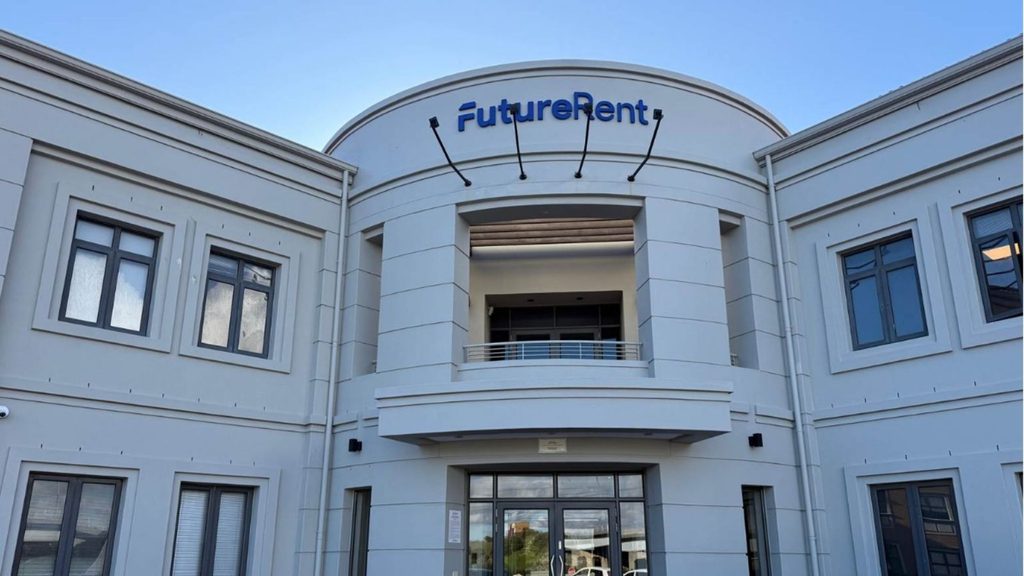
Headquartered in Cape Town and founded in 2022, FutureRent operates an all-inclusive vehicle subscription service that allows customers without credit or who have been blacklisted to purchase a car.
FutureRent’s rent-to-buy business model comes as car ownership is becoming increasingly unaffordable for many South Africans.
The company was founded by Luke Henwood, a South African businessman who questioned why drivers should be stuck with long-term car loans that outlast the appeal and reliability of their vehicles.
“FutureRent is about shifting from debt-driven ownership to flexible, all-inclusive vehicle access,” the company’s website states.
“We offer monthly subscriptions that bundle insurance, roadside assistance, servicing and tracking in one transparent fee. No hidden costs. No surprises.”
“Our platform gives individuals and entrepreneurs the confidence to move forward, whether they’re starting fresh, scaling up, or simply refusing to be tied down.”
FutureRent held its first funding round in June 2025, which saw the company secure R100 million from a German family office.
The company said this deal would bring 450 new vehicles to its fleet, marking FutureRent’s most significant expansion to date.
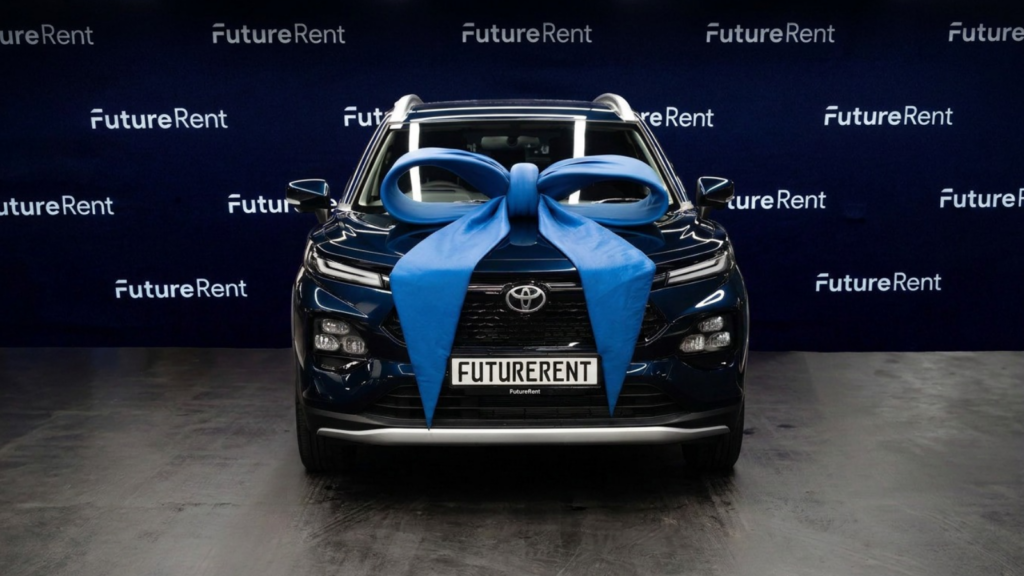
The company also recently secured a facility from Kinto South Africa, Toyota’s mobility and financial services arm, which added more Toyota vehicles to its subscription fleet.
FutureRent customers can apply online for the car they want, receive approval within 24 hours, inspect the car in person, sign the final contract, and start driving the vehicle as soon as the approval process is complete.
This model differs from a traditional vehicle loan because the buyer is not the title holder. Instead, FutureRent retains title ownership during the subscription term.
Therefore, depending on the plan a FutureRent customer has, they can drive the vehicle for a specified period, then return it, swap models, or acquire ownership at the end of the term.
FutureRent currently offers six cars on its online marketplace, starting from R6,000 per month for a 2026 Tata Tiago 1.2 XM.
This R6,000-per-month price, paid over 36 months, is in addition to a R17,000 initiation fee. The monthly price includes warranty, services, and roadside assistance.
An additional R1,000 per month is charged for insurance, and R200 for tracking services.
The highest monthly price listed on FutureRent’s online marketplace is R7,799 for a 2026 Toyota Starlet Cross 1.5L XR. This vehicle has a R27,000 initiation fee.
Car affordability in South Africa
South African consumers have been under increasing pressure in recent years, particularly from high debt repayments.
This pressure has become worse in 2026 as the conflict in the Middle East has driven up the prices of essentials such as fuel and food.
UJ Economics Professor Peter Baur told Newzroom Afrika that local consumers are increasingly finding themselves in a cycle of “dis-savings”.
Baur defined this as household income failing to cover basic costs, forcing consumers to rely on high-interest loans.
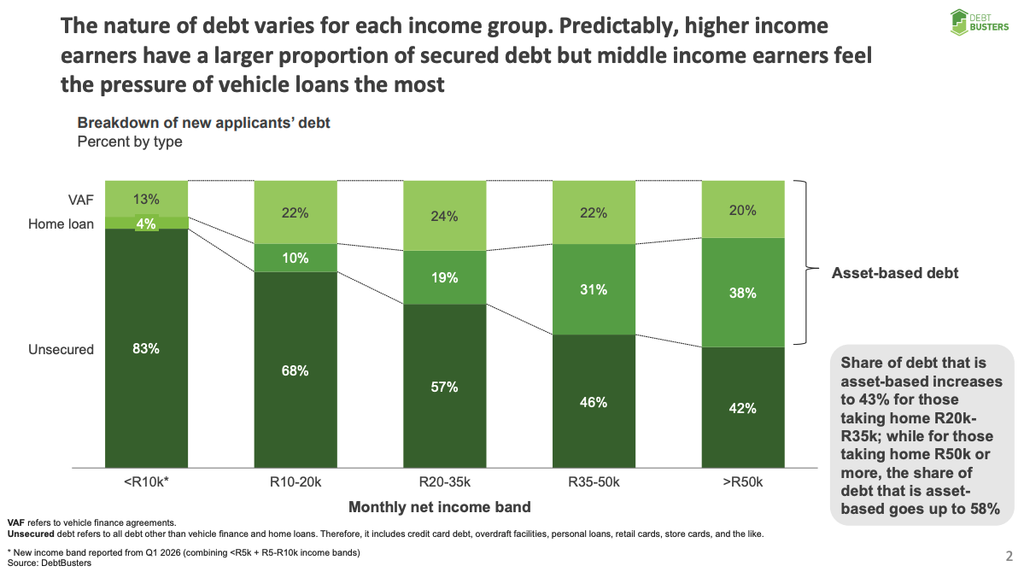
DebtBusters’ Debt Index for the first quarter of 2026 showed that the average unsecured credit rate is now 17.9% per annum, having eased in line with Reserve Bank interest rate reductions.
However, DebtBusters pointed out that the median is 20.3%, indicating the range of interest rates consumers are charged on unsecured debt.
The company found that the average interest rate for vehicle finance is 13.6% per annum.
“Higher-income earners have a larger proportion of secured debt, but middle-income earners feel the pressure of vehicle loans the most,” DebtBusters executive head Benay Sager said.
However, it is not only the price of vehicles that puts consumers under pressure, but also the rising cost of car maintenance and servicing.
Statistics South Africa recently revealed a 6.6% year-on-year decline in real workshop income, indicating that local motorists are struggling to manage their vehicle maintenance.
At current prices, workshop sales grew 0.6% year-on-year in June 2026. Once inflation is stripped away, workshop income fell by 6.6% to R1.97 billion.
This implies that workshops are charging more, meaning consumers are spending more. However, workshops are also serving fewer customers each month.
Despite these rising cost pressures, Naamsa’s new vehicle sales data for August revealed that passenger vehicle sales are up 13.5% year-on-year in 2026 to date.
FutureRent








Comments