It is becoming impossible to do business in South Africa


Running a business in South Africa is becoming increasingly difficult as companies contend with a sluggish economy, mounting regulatory requirements, skills shortages, and the failures of state institutions.
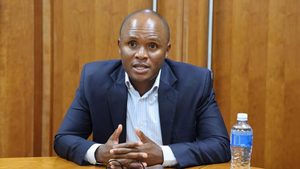
This is according to Efficient Group chief economist Dawie Roodt, who told Daily Investor that the challenges facing businesses have become so entrenched that they now pose a significant barrier to economic growth.
“It is extremely difficult to do business in South Africa because, apart from the state that is highly inefficient, corrupt, and incompetent, they are supposed to support business, but they don’t,” Roodt said.
He specifically referenced local authorities and state-owned enterprises (SOEs) for their failure, to a large extent, to support local businesses.
“The state is a major obstacle to economic growth in the country and to the very heavy tax burden that goes with that,” Roodt said.
His comments come at a time when concerns are growing about the increasing compliance burden facing South African businesses.
Research from Sabinet recently showed how the country’s regulatory environment has expanded significantly over the past two decades.
Labour legislation, environmental compliance requirements, procurement rules, financial reporting obligations, and sector-specific regulations have all added layers of complexity for businesses.
At the same time, regulations are constantly changing as legislation is amended and municipalities introduce new by-laws and requirements.
For companies operating across multiple municipalities, keeping track of these changes has become increasingly difficult.
The challenge is not unique to South Africa. According to PwC’s 2025 Global Compliance Survey, 85% of businesses worldwide reported that compliance requirements had become more complex over the past three years.
However, Roodt believes South African businesses face a particularly difficult operating environment because compliance requirements are compounded by failures in public infrastructure and government administration.
“We have a lot of legislation making it difficult. Labour legislation and all sorts of other things that we need to comply with make it very difficult to do business in South Africa,” he said.
Small businesses are hit the hardest in South Africa

The burdens facing companies in South Africa are often felt most acutely by smaller businesses, Roodt explained.
Large corporations typically have dedicated compliance departments, legal teams and the financial resources to absorb additional costs.
They also have the resources to safeguard their operations from harm caused by failing SOEs, such as Eskom’s unreliable electricity supply or Rand Water’s regular water disruptions.
Notably, South Africa also has the highest crime index in Africa and ranks as the fifth most dangerous country globally, according to Statista.
Larger corporations can safeguard their operations through large security teams, technological measures, and comprehensive insurance.
Small businesses, in contrast, often lack those resources and must navigate increasingly complex regulations while simultaneously dealing with operational challenges.
“Business in South Africa is no joke,” Roodt said. “It’s very difficult, especially for smaller businesses.”
“They don’t have the kind of deep pockets that big businesses have. They can’t necessarily get their own security, or their own solar panels and things like that.”
The government’s proposed Business Licensing Bill is intended to address some of these concerns by creating a unified national licensing framework and a centralised digital platform for applications.
President Cyril Ramaphosa has acknowledged that small businesses face “a multitude of regulations, by-laws, licensing requirements, and bureaucratic hurdles”.
He assured that the final legislation should make it easier, not harder, to start and run a business in South Africa.
However, critics have warned that the draft Bill could have the opposite effect if it introduces additional licensing requirements and bureaucracy.
Sluggish economic growth and skills shortages

The challenges facing businesses extend beyond regulation. South Africa’s economy has struggled to generate meaningful growth for more than a decade, limiting opportunities for businesses to expand.
“The economy is not growing, and that is what businesses need,” Roodt said. “You need a growing economy if you want to grow your business.”
In the first quarter of 2026, South Africa’s real gross domestic product (GDP) increased modestly by 0.5%, according to the latest figures released by Statistics South Africa (Stats SA). This marked the sixth quarter of consecutive growth.
While this is optimistic, the full effects of the Iran war are not reflected in this number. Stats SA warned that this is likely to impact the second quarter’s GDP growth figure, a disappointing outlook for those who had expected greater growth in 2026.
Weak economic growth also relates to another challenge Roodt identified – the country’s skills shortage.
According to Stats SA’s latest General Household Survey, 47.1% of adults aged 20 and older – approximately 18.9 million people – do not have a matric qualification.
While educational outcomes have improved significantly over the past two decades, employers continue to struggle to find workers with the skills required by modern businesses.
“The quality of labour in South Africa is not up to scratch because of weak skills development systems and the education system that we have in the country,” Roodt said.
Education experts have similarly warned that large numbers of young South Africans remain disconnected from both education and employment opportunities, despite improvements in literacy and school participation rates.
For Roodt, the country’s economic problems are well understood. The challenge is not about identifying solutions, but rather about implementing them. “We all know what the economic problems are, and we can fix them,” he said.
“I can give you a list of things to do to fix the economic problems, but the reality is that this government is unlikely to implement any of these things because, politically, it’s not popular.”
As a result, he argued that South Africa’s economic difficulties are ultimately rooted in politics rather than economics.
“Actually, what we’ve got is a political problem in South Africa,” he said. “So long as we have the current government with the current set of policies, the economy will continue to perform as it has for many years, and we will continue to get poorer.”

Comments