End of an era for the 105-year-old South African company behind Jungle Oats and Energade


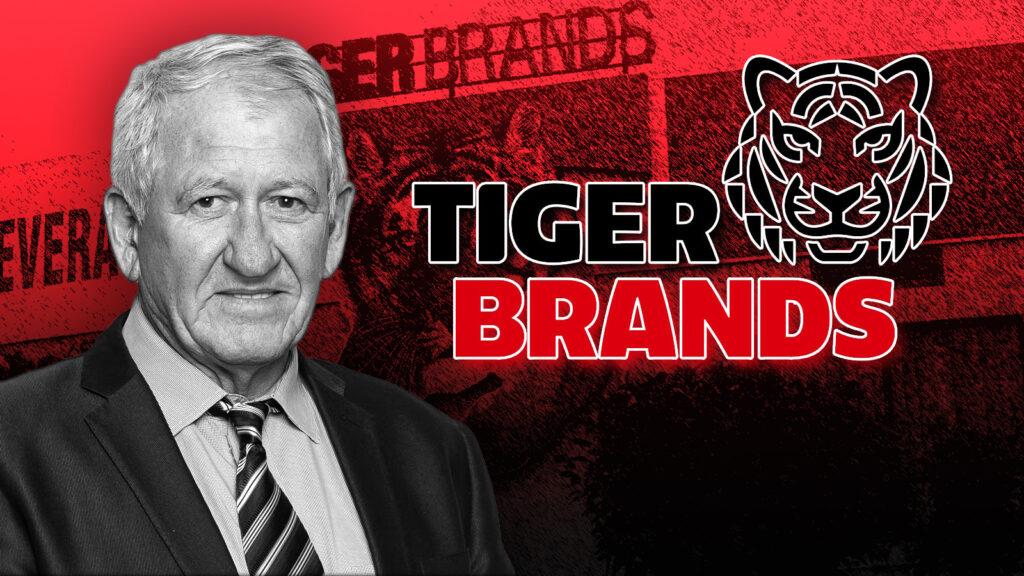
Tiger Brands announced that it has entered into an agreement for the sale of the iconic Beacon brand and all its associated equipment.
Under the Beacon brand, Tiger Brands manufactured staples such as Wonder Bars, TV Bars, and Nosh bars. The company will maintain ownership of these brands.
Beacon and Tiger are among the oldest companies in South Africa, being founded just a decade apart. Tiger was founded in 1921 as an oats mill, while Beacon was formed in 1931 after the Durban Confectionery and Spice Works was bought.
While these two companies are among the oldest in the country, their partnership was only cemented in 1999 when Tiger took control of Beacon to add to its portfolio of brands.
This proved to be lucrative, with Tiger Brands successfully leveraging its scale to drive efficiencies at Beacon and looked to expand its chocolate business into Africa.
However, the chocolate industry was one identified by new CEO Tjaart Kurger as an area where Tiger Brands lacked a competitive advantage that could be leveraged.
The company has been effectively outcompeted by global giants such as Mondelez and Nestle, who could use significant economies of scale to win market share.
In its interim results for the six months ended 31 March 2026, Tiger Brands revealed that it entered into an agreement in May 2026 to sell Beacon.
This includes the equipment used to make chocolate slabs, Easter eggs and assortments.
However, Tiger Brands did make it clear that it would not be selling all of its brands, with it retaining ownership of Nosh, TV Bar, Wonder Bar, Black Cat chocolate, and the Jungle energy bar.
The sale of Beacon is part of Kruger’s refocusing of Tiger Brands on areas where it has a competitive advantage, such as milling and baking, grains, and culinary products.
These segments are where many of its iconic brands, such as Jungle, Albany, and All Gold, are housed, generating most of the company’s revenue and profit.
In the six-month period to the end of March 2026, Tiger Brands disposed of its Randfontein operations for R282 million as it continued to optimise its portfolio.
Tiger Brands has also received offers to sell its King Foods business, which it considers non-core. However, none of these offers has met the company’s value realisation hurdles.
The company is also currently finalising the sale of its Chococam business in Cameroon, which it announced on 26 February 2026. It expects the sale to be completed by the end of the current financial year.
All of these actions to optimise Tiger Brands’ product portfolio have benefitted shareholders immensely and given the company cash to reinvest into areas where it has a clear advantage.
Since the announcement of the strategy in the 2024 financial year, Tiger Brands has returned R9.2 billion to shareholders through share buybacks and special dividends.
Tiger Brands’ financial performance

Tiger Brands’ topline growth remains constrained by South Africa’s stagnant economy, with revenue inching up by 1.3% to R17.9 billion. This was on the back of volume growth of 4.5% year-on-year.
However, the company’s bottom line continues to improve markedly amid the portfolio optimisation programme and enhanced efficiencies at its operations.
This translated into 26.1% rise in group operating income to R2.1 billion, with the grains segment nearly doubling its income year-on-year.
The company’s return on equity surged to 26.3% compared to 16.3% a year earlier, with return on invested capital rising to 24.9%.
These metrics are generally considered a good proxy for how well a company’s management team is using shareholder capital to generate value.
Since becoming CEO in November 2023, Kruger has focused on improving the efficiency of the business by overhauling its management structure, portfolio, and key operations.
The most significant of these changes has been the shift to a federated operating model to make executives closer to the operations on the ground.
This decentralised decision-making to improve speed of execution, with Kruger noting that it enabled the company to remove an entire layer of management.
It also created six separate business units, with each fully accountable for its own profit and loss. Each unit has a managing director reporting directly to Kruger.
This also enabled the company to slim down its head office footprint and headcount, with managers being moved directly to factories and operations.
The head office now provides what Tiger Brands calls “enabling functions”, such as legal, corporate affairs, marketing, strategy, and human resources.
This overhaul has been coupled with the portfolio optimisation to drive efficiencies by reducing costs and complexity.
Tiger Brands has invested significantly in this regard to improve its procurement system, increase innovation and automation, and develop new, smaller manufacturing sites that are more efficient.
Another pillar of this strategy is to increase the presence of Tiger Brands’ products in the informal market by partnering with spaza shops and traders.
This gives the company a direct route to the client in a fast-growing part of the market.


Comments