From failed businesses to founding one of South Africa’s biggest coffee companies


Stephan Bredell went from starting failed businesses to founding one of South Africa’s biggest and fastest-growing coffee companies, Platō, with his brother, Petrus.
With over 130 locations, Platō is one of South Africa’s most successful brands today, but before there was a coffee empire, there were numerous business failures, deep debt, and a single coffee container.
From a young age, Bredell has had a flair for entrepreneurship. He was only around grade 10 when he started his first business venture – importing random items from Alibaba to his home in Rustenburg and reselling them.
Coming out of university, Bredell was keen to pursue his own business ideas. However, it took a while before he started something that was truly successful.
“There’s probably eight big business failures that nobody knows about,” Bredell explained on The Inside Show.
Bredell had tried his hand at everything, from crypto and website design to running a Chesanyama franchise and dabbling with a sunglass brand.
One of his biggest business ventures was a consultancy startup, Liteswitch, which provided companies with products and services to help them reduce their electricity usage.
The company was set up to help businesses benefit from Eskom’s energy efficiency rebates under its integrated demand management (IDM) programme.
This programme, which Eskom launched in October 2011, aimed to reduce electricity demand in South Africa to help avoid load-shedding.
Liteswitch was founded soon after, in early 2012. As managing director, Bredell flew to China himself to buy the necessary energy-saving equipment, including LED bulbs and heat pumps.
The company facilitated over 150 projects for major customers, including ArcellorMittal, Toyota, Renault, Caxton, and UTI.
However, the company’s death knell came in October 2013 when Eskom paused all its IDM programmes because these rebates had led to substantial shortfalls in electricity revenue.
The coffee shop idea
A month after Liteswitch shut down in January 2015, Bredell took on a different role at King Price Insurance, where he generated ideas to enhance the work environment, culture, marketing and design.
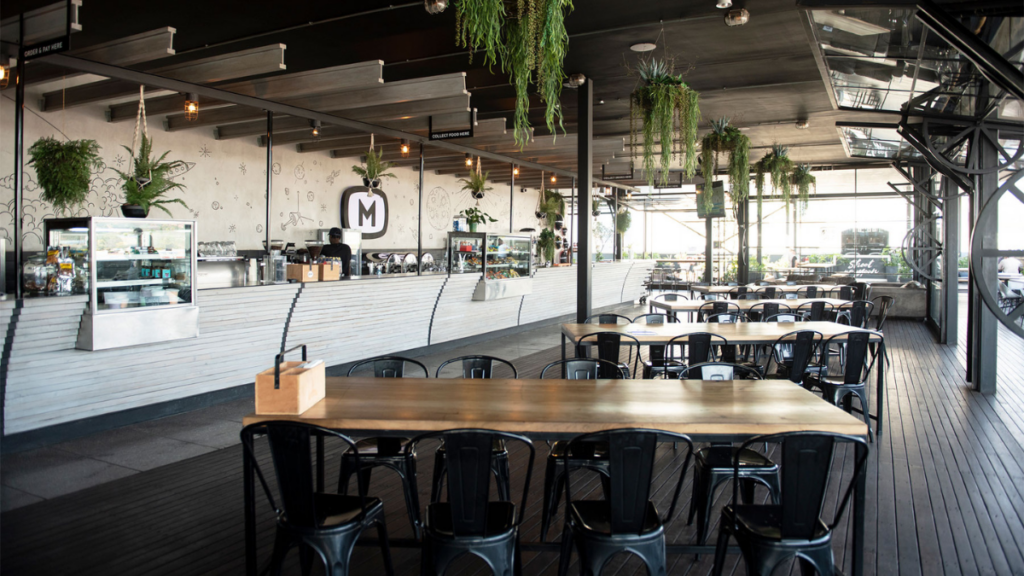
At one point, King Price decided they wanted to open a canteen on the fourth floor of their building in Waterkloof Glen.
Bredell, however, proposed opening a proper cafe, since there were no real sky bars in Pretoria at the time. This concept, which they called Moonshot Cafe, soon took off, with hundreds of cups of coffee being sold every day.
Since drinks are typically high-profit, low-waste items for restaurants, Bredell developed the idea of opening his own coffee shop. “There’s something here,” he said.
“Imagine you strip away the cheese and the chicken and all the waiters, and you just do proper coffee at office corporate parks and your schools and universities. That was the initial idea.”
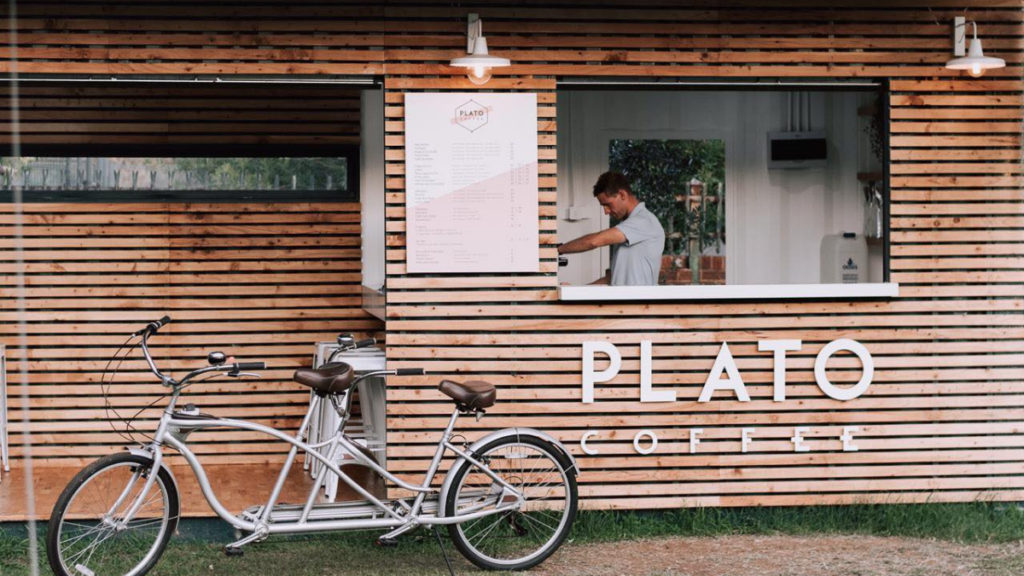
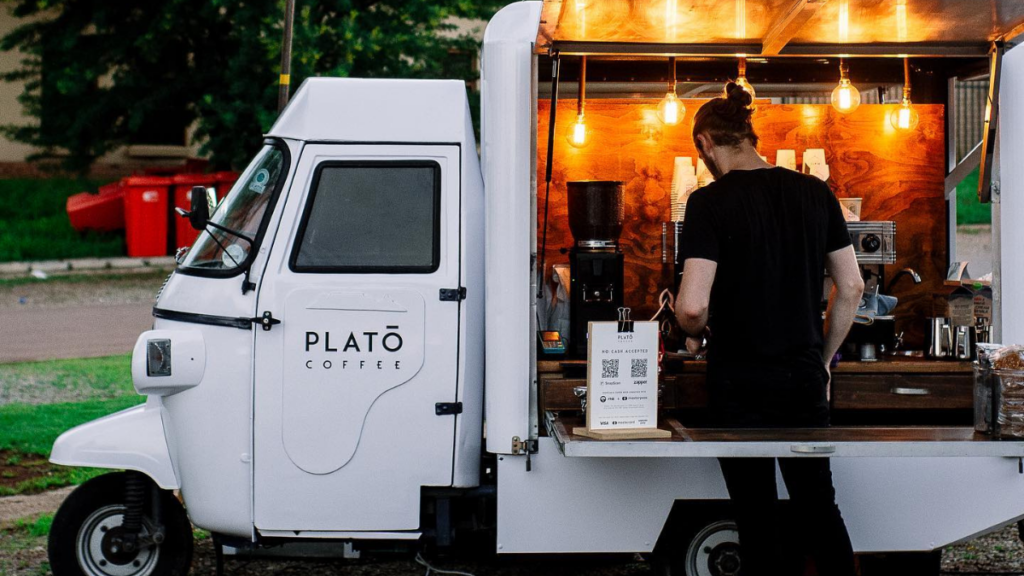
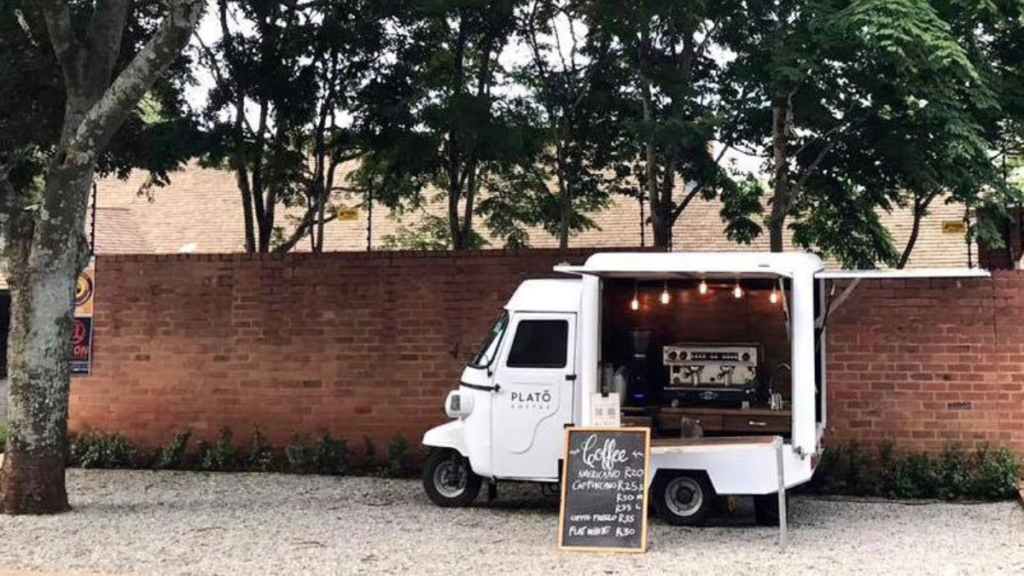
At first, Bredell took inspiration from the Swedish brand Wheelys Café, which operates using mobile bicycle cafes. He even bought his own tricycle.
However, he soon realised that the idea didn’t translate to South Africa, since the country doesn’t have much of a walking and cycling culture.
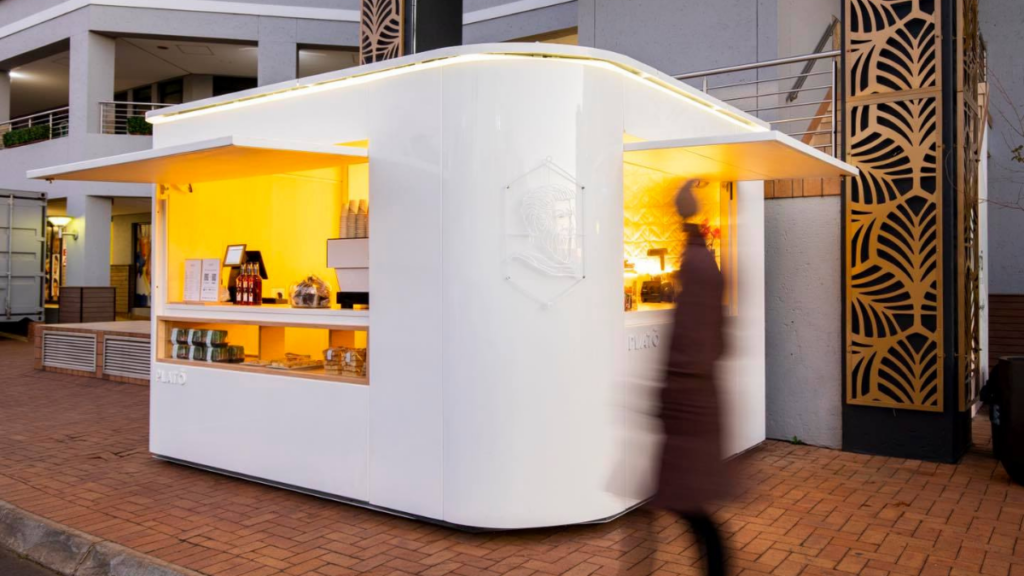
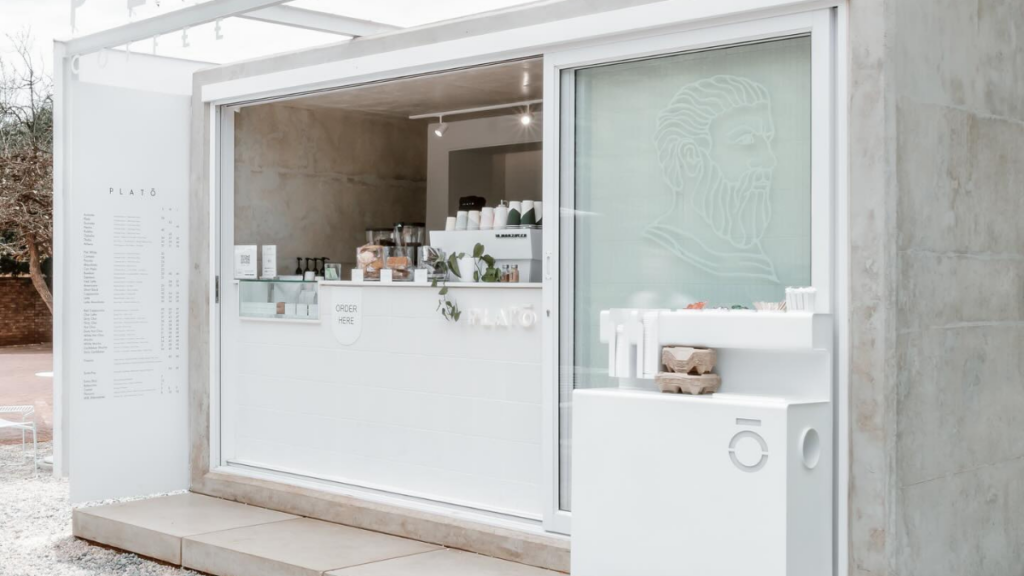
Around mid-2018, he switched to the idea of opening coffee containers instead, though it soon became clear that he could not get this concept off the ground while keeping his corporate job.
That was when he decided to approach his brother, Petrus, and present him with his idea for a coffee shop – Platō.
At the time, his plan was to open 200 coffee shops at universities and office parks, thinking that each would make a net profit of around R10,000 a month, which they would split.
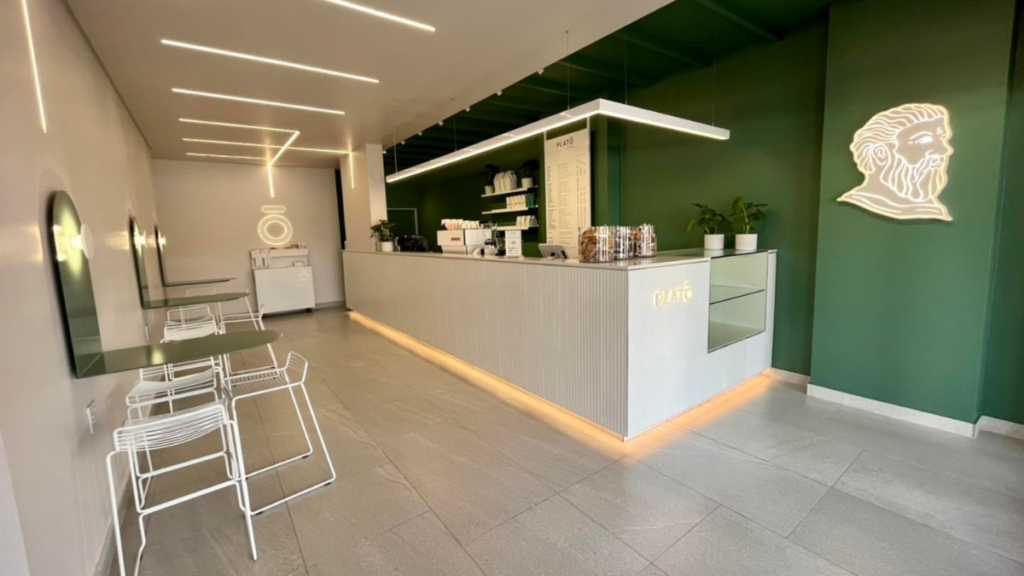
The idea for Platō’s aesthetic was based on the fact that many coffee shops at the time had a dark, moody atmosphere, which was popularised by Truth Coffee’s steampunk design.
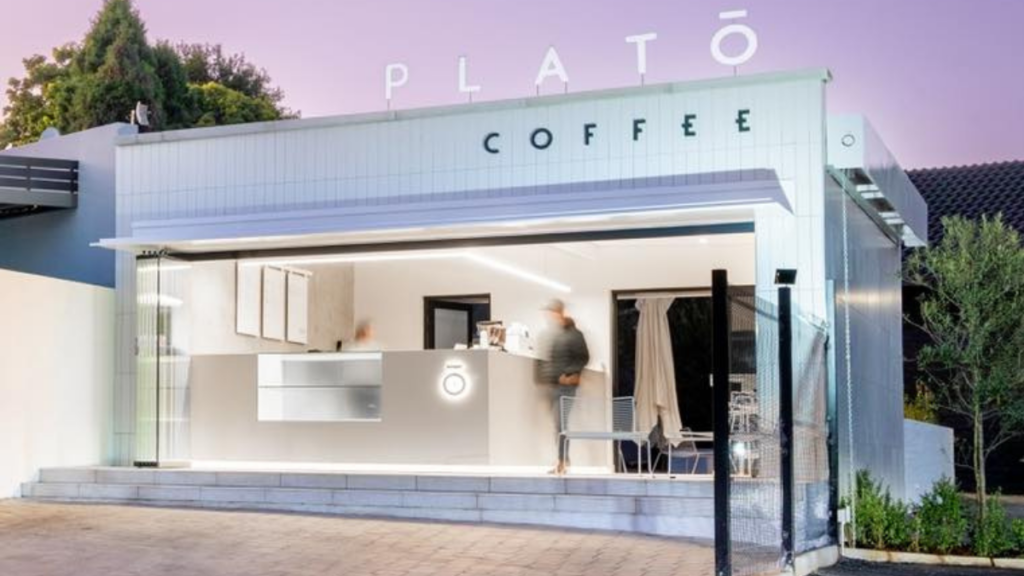
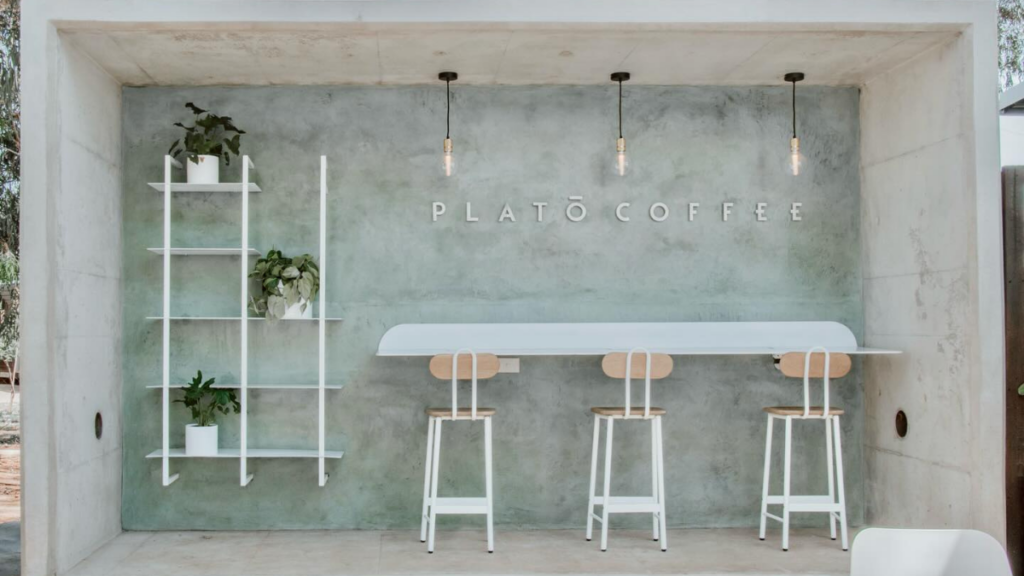
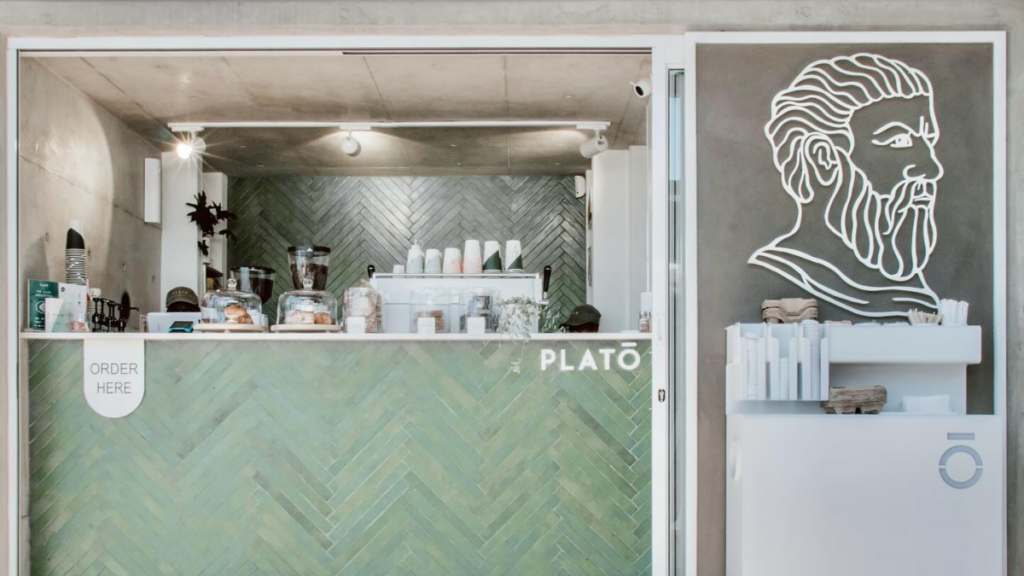
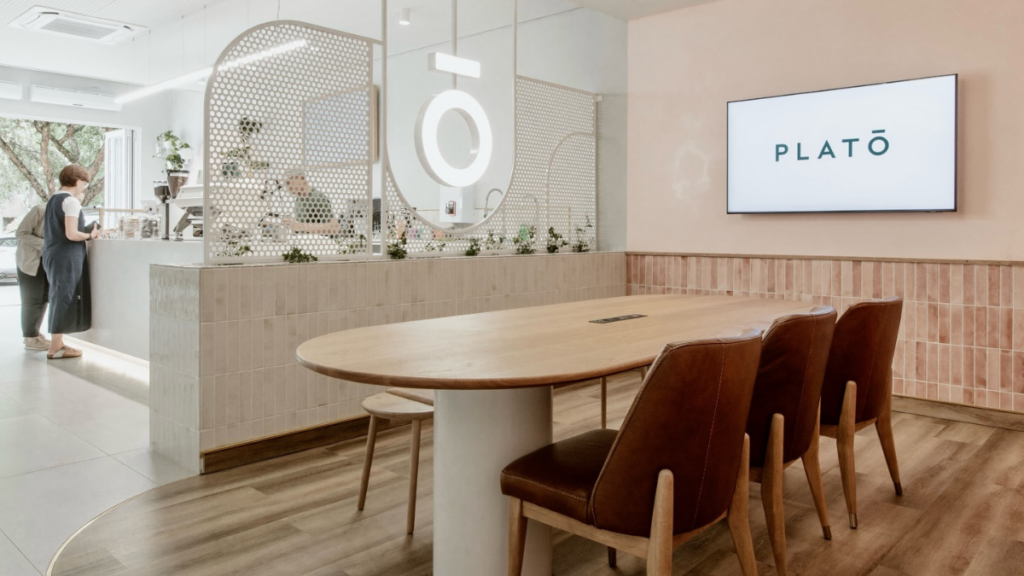
Bredell wanted Platō to go in the complete opposite direction, with a bright, white, clean design.
He also wanted the shop to cater to both serious coffee drinkers and those who enjoyed their beverages with cream and syrups, since he felt that many “proper” coffee shops were quite exclusionary.
Opening the first Platō
Although Bredell had a clear idea of what he wanted the branding to be, there were many challenges in getting the concept off the ground.
This includes financing the operation. “I was in debt,” Bredell said. “I was struggling to get out of it. So, I couldn’t really borrow more money.”
Instead of buying everything up front, they decided to start by renting everything, from the coffee machine to the container.
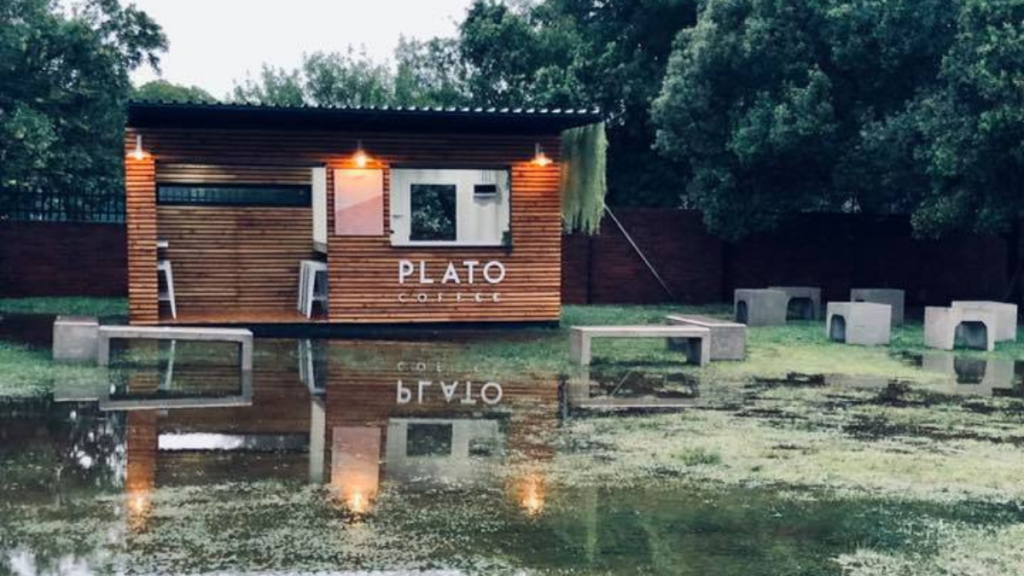
This idea worked, and on 7 December 2019, they opened the first Platō Coffee at the Concentration Camp Memorial Site in the Irene Security Village.
However, the challenges didn’t stop after they launched Platō. Since they didn’t have a generator, they had to close the shop whenever there was load-shedding.
Opening when they did also meant that they were only in business for a few months when the Covid-19 pandemic hit. However, this actually gave them a surprising opportunity.
“Because it was a container, we rented space from Tshwane, so we had an informal traders license,” he explained.
Under level 5 lockdown, they had to close along with all the other businesses in South Africa. However, under level 4 lockdown, informal traders were allowed to open, while coffee shops were not.
“So, we could open, and that was crazy. We were literally now the only coffee shop open in Pretoria.”
From a container shop to a coffee empire
At first, growth was slow, with the two brothers opening only one new coffee shop in 2020. In 2021, though, momentum picked up rapidly, with the opening of six new stores.
By the end of this year, two things were clear – coffee shops didn’t only make a R10,000 monthly net profit, and it was time to franchise.
The franchisee model allowed Platō to expand much more quickly. It also allowed the brand to operate in remote areas of the country where brands like Starbucks have no presence.
Since many of the franchisees are locals themselves, they are able to maintain both high standards and a strong sense of community.
In the last few years, Platō’s success has snowballed. In 2025, the group opened 52 new stores across the country.
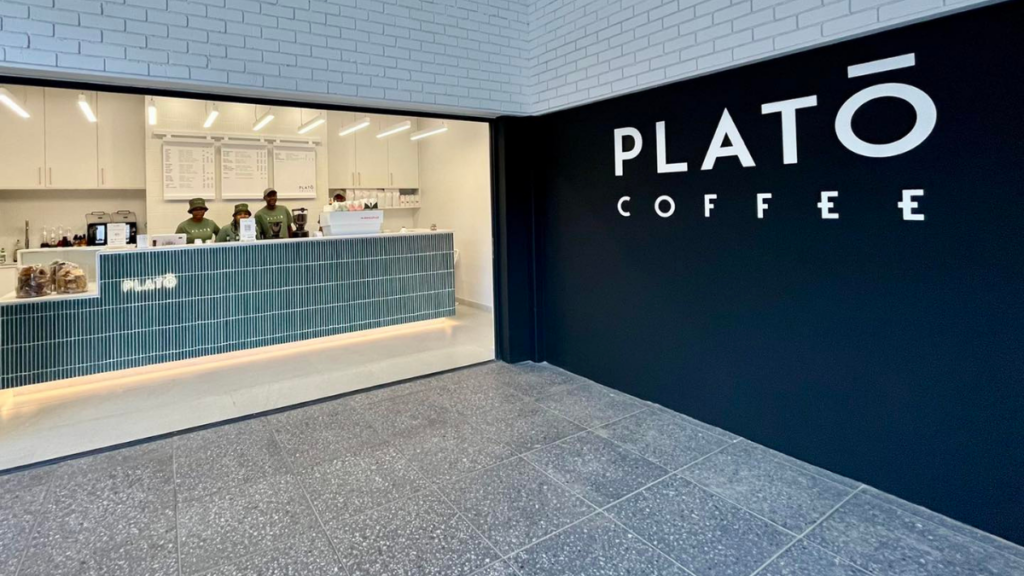
The brand now has around 700 staff members and over 130 stores in South Africa, making it one of the country’s biggest and fastest-growing coffee companies. Platō also now operates its own roastery and training academy.
In November 2025, Platō opened its first store outside of South Africa, in Harare, Zimbabwe. Now, it is getting ready to open its first store in London in April 2026.
Platō’s momentum is only accelerating. Bredell explained that, in 2026, they are expecting to open between 70 and 80 new stores.
“People often think Plato is an overnight success, but I know better. What looks like momentum today was built on years of blood noses, heartaches, tough lessons, and many failures, long before the model finally clicked,” he said.
“Plato isn’t just a 6-year story – it’s closer to a 20-year journey of learning, refining, testing and staying in the game long enough when things didn’t make sense.”
Platō









Comments