UK banking giant eyes South African entry


Revolut is busy evaluating an entrance into the South African banking market, with the company saying it believes it can offer a unique value proposition to customers in the country in the future.
Founded in 2015 by Nikolay Storonsky and Vlad Yatsenko, Revolut has grown rapidly to offer services in over 48 countries around the world.
Often termed a ‘neobank’, Revolut offers free and subscription-based digital banking services through its mobile app.
Features include domestic and international bank transfers, debit and credit cards, stock and crypto trading, as well as traditional savings accounts and loans.
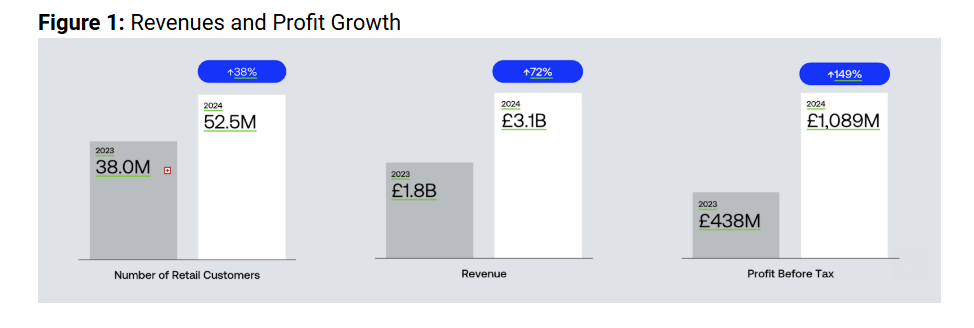
Revolut is the most valuable private tech company in Europe, last being valued at $45 billion in August 2024, and has 52.5 million retail customers globally.
Rumours have circulated that the company is planning a listing on the Nasdaq exchange, with politicians in the United Kingdom pushing for a listing on the London Stock Exchange.
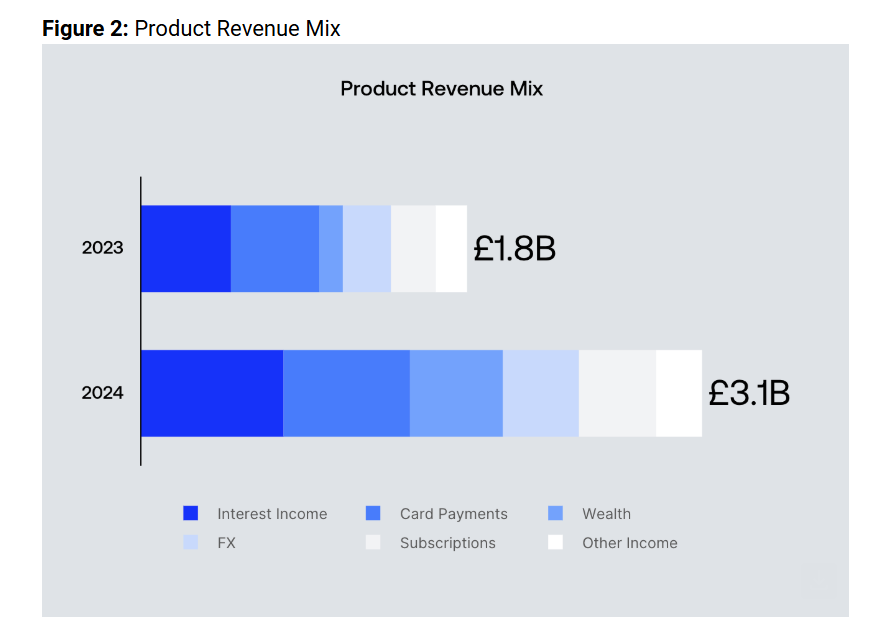
The company’s annual results for the 2024 financial year revealed strong growth across the board, with revenue growing by 72% to $4 billion.
Crucially, this was driven by increased product utilisation and not just increased customer numbers, with card payments up 43% to $887 million and subscription turnover of $541 million.
Revolut’s relatively new Wealth division shot the lights out, growing its revenue by 298% year-on-year to $647 million.
This strong revenue performance flowed down to its bottom line, with the company reporting record profitability. Net profit rose to $1 billion, more than doubling year-on-year.
The company continues to grow rapidly, setting a new record for customer acquisition in 2024 with 15 million new customers joining the platform globally.
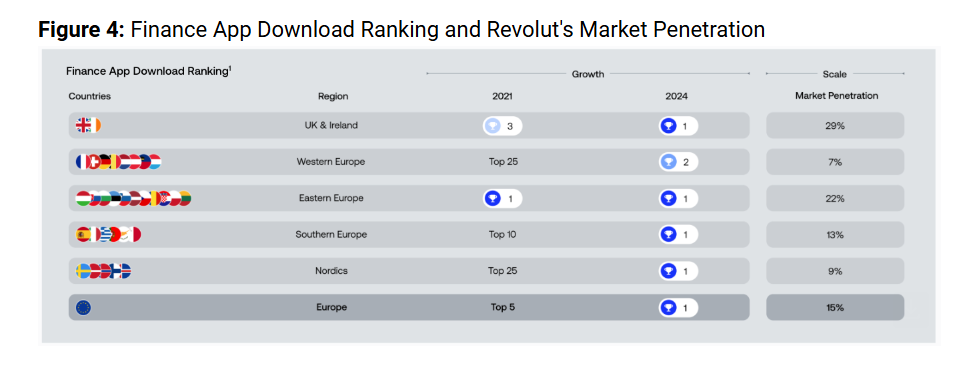
Despite significant scale, Revolut’s market penetration remains around 15% of the adult population in key markets, signalling a substantial opportunity for continued growth.
However, the company is not content with merely growing within its existing market, with Revolut planning to launch its bank in Mexico in 2025.
It is also currently securing over 10 licences across the globe to operate in new markets, such as Brazil and India, and further opportunities in the Americas and Asia.
As part of this, there have been rumours that Revolut would launch in South Africa to make an entrance into Africa’s rapidly growing financial services sector through its most developed economy.
A Revolut spokesperson told Daily Investor that the bank continues to explore opportunities for growth in new markets as part of its mission to bring its app to customers around the world.
“South Africa is a market we are evaluating, and one we see as attractive, with the potential to offer a unique value proposition to customers in the future,” the spokesperson said.
“However, we are quite early in the process and have no further updates to share at this stage.”
The graphs below show Revolut’s tremendous growth in the past financial year.
Fierce competition
Revolut will face stiff competition if it enters South Africa’s financial services sector, which has traditionally been dominated by the Big Four banks of Absa, Standard Bank, FirstRand, and Nedbank.
In recent years, this has become the so-called ‘Big Five’, with Capitec joining the ranks as one of the country’s largest financial institutions.
According to Reserve Bank data, these five banks dominate the industry, making up close to 90% of deposits, loans, and advances.
They have also proven to be relatively fast movers when it comes to innovation and pivoting to digital-first offerings through mobile apps and online banking.
This has been spurred by new competition from digital-only banks such as Discovery Bank and TymeBank, and newer offerings set to come from Old Mutual in 2025.
Discovery Bank and TymeBank have been tremendously successful, accumulating over one million clients and making billions in revenue.
These are set to be Revolut’s biggest competitors due to their digital-only offerings, which have a similar business model to the UK giant.
Discovery Bank, in particular, offers a similar proposition to Revolut, with it being the only full-service digital bank in South Africa.
The bank has steadily expanded its offering from just a credit card in 2017 to launching home loans last year. Crucially, it has done this while reaching profitability ahead of target.
In Discovery’s interim results released in March, CEO Adrian Gore revealed that the bank has broken into profitability and requires far less capital from the broader group to operate.
“The bank has been operating at a break-even point over the last six months or so. Now, it has broken into profitability completely. So, it is simply throwing out cash,” Gore told Daily Investor.
For the six months, the bank slashed its loss in half to R145 million and managed to sustain its run rate of over 1,200 daily sales per business day.
Its client base grew by 32% to 1.1 million, with each individual having over two accounts with the bank. Deposits grew 27% to R21.2 billion, while advances shot up 37% to R7.8 billion.
“I mean, basically, the bank shot the lights out,” Gore said.






Comments