South Africans with banking apps on their phones lose R141 million every month to fraud



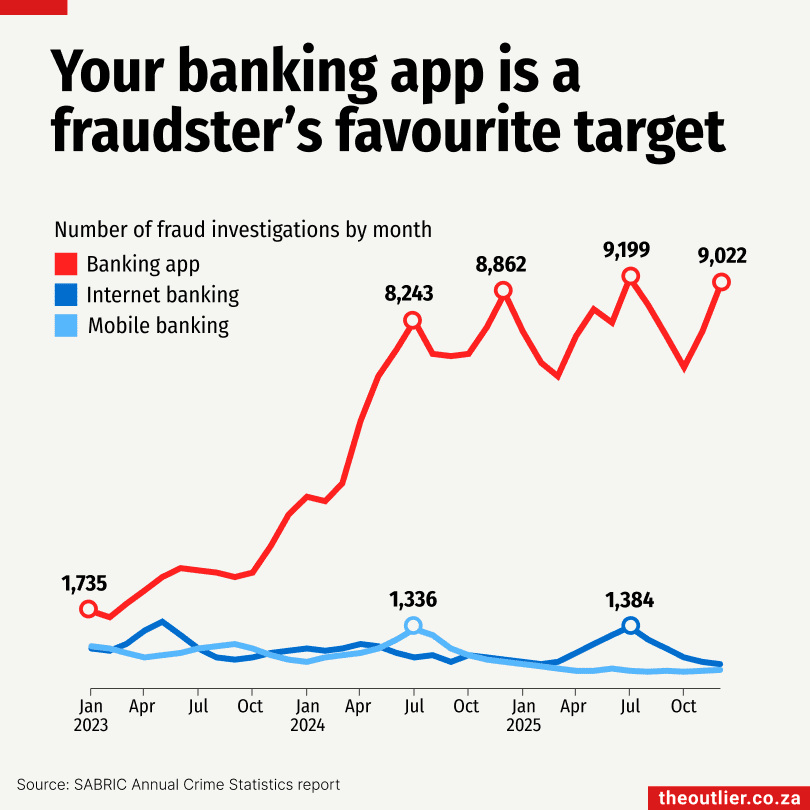
South Africans using banking apps lost R1.7 billion to fraud in 2025, with the average case resulting in losses of R17,389.
This was revealed by the South African Banking Risk Information Centre (SABRIC) in its annual Crime Statistics Report for 2025.
The data collected by SABRIC comes from participating banks, including Absa, FNB, Nedbank, Standard Bank, Capitec, Investec, and Discovery Bank.
This data is collected with the aim of informing how the industry can better protect customers, where vulnerabilities lie, and what tactics criminals are using.
The report showed that banking app fraud has surged in recent years, becoming the largest source of criminal activity.
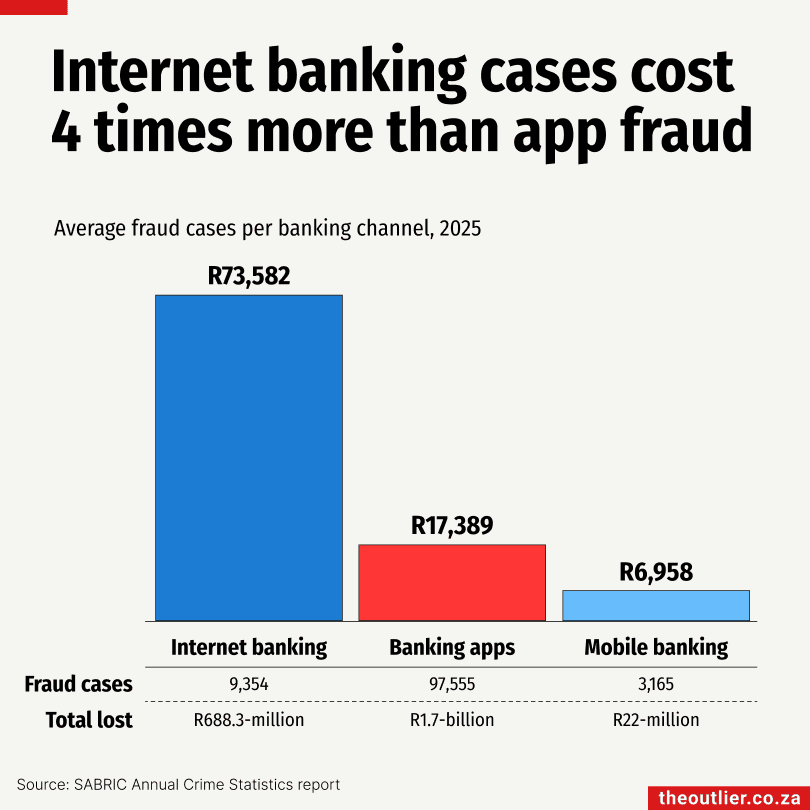
In 2025, banking app fraud was responsible for 97,555 investigations, which equates to 89% of all reported digital banking crime cases.
In contrast, internet banking was only responsible for 9,354 cases and losses of R688.3 million.
SABRIC explained that this does not mean that banking apps or systems are compromised, weak, or hacked by criminal actors.
Instead, the data show that the app is the final transaction channel through which financial institutions execute and track fraud.
The institution said the majority of cases were due to deception or social engineering, where criminals compromise or manipulate customer trust.
Typically, criminals impersonate trustworthy individuals to deceive customers into providing personal information or transferring money to their bank accounts.
SABRIC said fraud almost always begins outside of the banking platform, with criminals initiating contact by impersonating trusted organisations.
Once the customer is deceived, the banking app is used to add beneficiaries, approve payments, or move funds between accounts.
It said that artificial intelligence is increasingly being used by fraudsters to create highly realistic messages, phishing emails, and clone voices.
Internet banking can be costly
While banking app fraud accounts for the highest number of claims, internet banking fraud is far more costly for those involved.
On average, internet banking fraud results in losses of R73,582 – three times greater than the average amount lost in banking app fraud.
This kind of fraud is far less common, however, given the friction in accessing internet banking and the difficulty criminals face in creating urgency.
As a result, internet banking fraud only accounted for 9,354 claim investigations in 2025. This is 9% of all digital banking crime cases.
What makes internet banking fraud more lucrative is the larger one-off payments that are made via these platforms.
SABRIC pointed to supplier payments and business transactions as particular targets for criminals using this channel.
This kind of fraud relies heavily on exploiting business communications and financial administration processes rather than system-level hacks.
Criminals rely on fraudulent beneficiary changes, false payment instructions, and compromised business communications to redirect legitimate funds.
As such, fraudsters regularly intercept or mimic official channels, using email, WhatsApp or phone calls to deliver false instructions.
SABRIC advised that any unusual or unexpected payment instructions received via email, WhatsApp, or phone must be independently verified through an official channel before any funds are transferred.
Mobile banking had both the cheapest fraud losses and the smallest number of cases, 2.9% of the total, with an average loss per case of R6,958. Mobile banking recorded the highest number of SIM swap-related incidents.
“Criminals may use a compromised cellphone number to intercept alerts or verification messages and attempt to access banking services,” SABRIC said.






Comments