One of South Africa’s top banks lost R22 billion in 2026


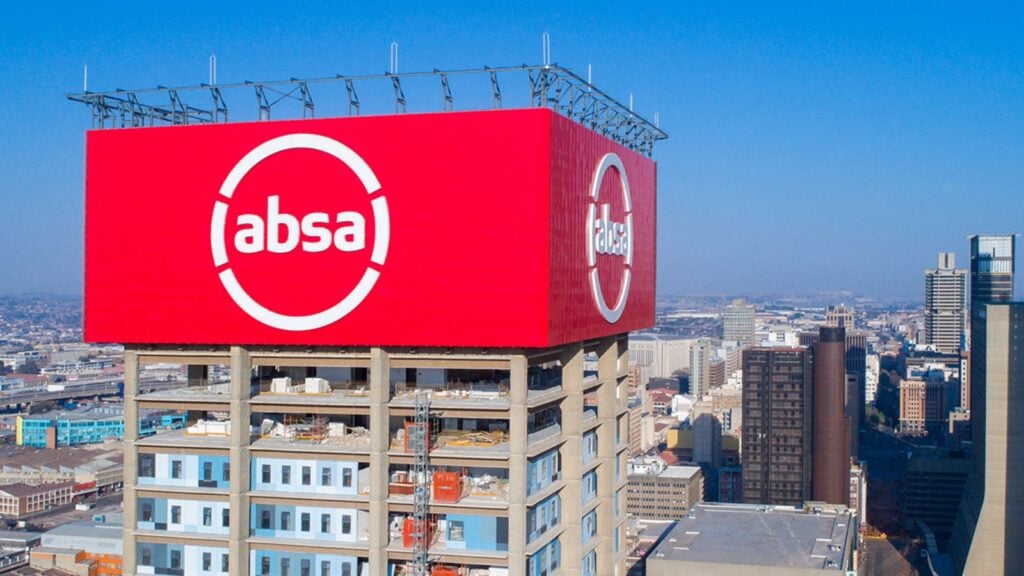
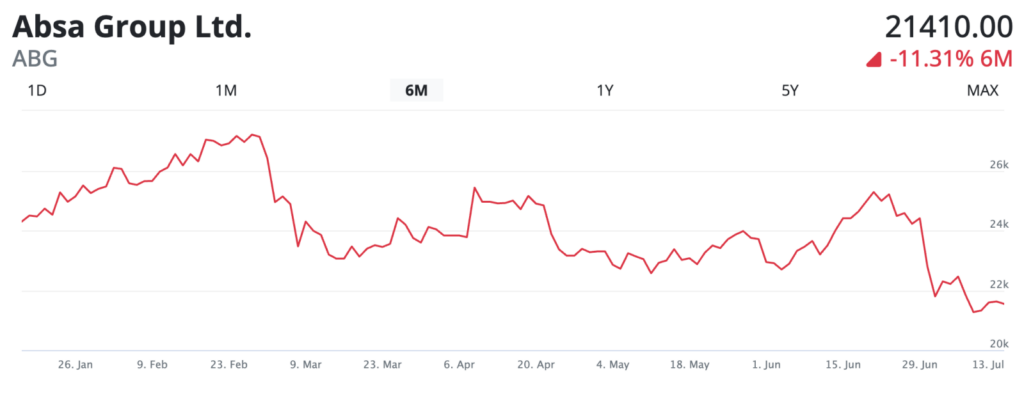
Absa’s share price has fallen more than 11% since the beginning of 2026, taking with it more than R22 billion of the company’s market value.
Absa started the year off strong with a market capitalisation of R214 billion, an almost 21% increase from where it sat towards the end of 2024.
This was largely due to the appointment of Kenny Fihla as Group CEO in June 2025. A former Standard Bank exec, Fihla is tasked with restoring Absa’s stability after six years of frequent leadership changes.
Two months after Fihla’s induction, Absa reported positive financial results, with its headline earnings rising 17% year-on-year during the first half of 2025, up to R11.9 billion.
Investor confidence in the bank quickly grew on the back of these two factors, with its share price rising by 20% over the next four months.
While Absa managed to carry that momentum into the new year, this soon came to a halt with the beginning of the conflict in the Middle East on 28 February 2026.
The outbreak of the war between the United States and Iran led to a decline in the share prices of numerous major banks across South Africa.
But while its competitors have mostly regained their lost value over the last few months, Absa’s share price has continued to deteriorate.
More than R14 billion in market capitalisation was lost in a single day when Absa’s share price dropped by over 6% on Tuesday, 30 June 2026.
This was mostly attributed to the release of an underwhelming trading update, in which Absa said its revenue was expected to only grow by low-to-mid single digits.
Additionally, the bank downgraded its return-on-equity forecast to 15%, down from its previous target of 16% to 17%.
Many investors feared this as a sign that Absa was returning to its pre-Fihla period, where the company’s executives frequently overpromised and underdelivered.
Absa’s turnaround will take time
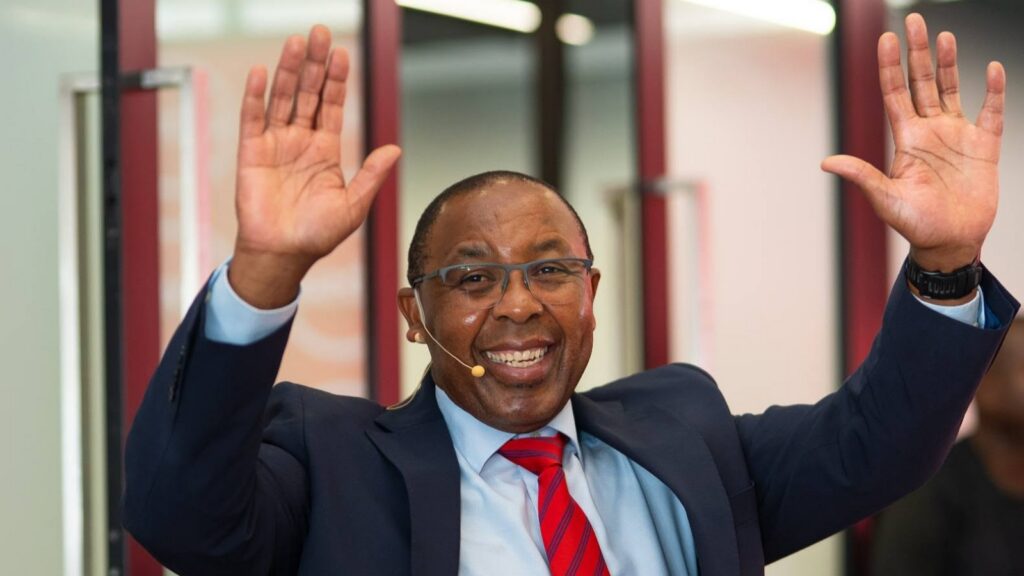
While many investors saw Fihla’s appointment as Group CEO as a sign of positive change for Absa, some believe this change has not come quickly enough.
Sanlam senior wealth manager Nick Kunze told BusinessDayTV that while Fihla’s turnaround strategy for Absa seemed strong on paper, its execution has so far left something to be desired.
Kunze commended Fihla’s efforts to build a strong team comprised of banking sector veterans, but said the company is not moving fast enough for its shareholders.
“Talking and then execution in how you roll it out is quite difficult,” Kunze said. “You need to manage the market’s expectations. Markets have very little patience.”
“When you come out saying your return-on-equity is going to be 16% to 17%, and you come in with 14.8%, markets punish you because they’re priced for you to roll out and execute.”
One of the main ambitions of Fihla’s strategy is to transform Absa into a pan-African banking giant, with expansion plans for commodity-rich nations like Tanzania, Uganda, and Zambia.
Kunze said this plan had likely been modelled off one of Absa’s biggest competitors, Standard Bank, which derives 40% of its income from outside South Africa.
Fihla had been at Standard Bank for over 13 years before coming to Absa, even serving as Deputy Group CEO for the last 11 months of his tenure.
While Kunze said Fihla’s pan-African strategy was well underway, he cautioned that Absa’s shareholders would need to realise that the plan needs more time to execute.
Sharenet portfolio manager Jacobus Brink agreed with this sentiment and said that bringing in new personnel was a significant departure from Absa’s previous strategies.
“I think Kenny has clearly recognised that to deliver on his pan-African and digital growth ambitions, he needed some fresh external blood to close some of the key capability gaps,” Brink said.
“Most of the calls to change leadership weren’t just about shuffling the deck. I think it was about bringing in deep, proven fintech and telecom experience specifically.”
Brink specifically pointed to the appointment of Sitoyo Lopokoiyit, the former managing director of M-PESA Africa, the company behind the Kenyan mobile money platform M-PESA.
Absa’s share price over the last six months






Comments