South Africa’s rand takes a hit after interest rate decision


South Africa’s rand weakened after policymakers, in a split decision, left interest rates unchanged at their final meeting of the year and warned they could resume hikes if inflationary pressures intensify.
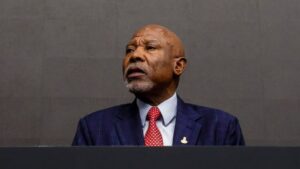
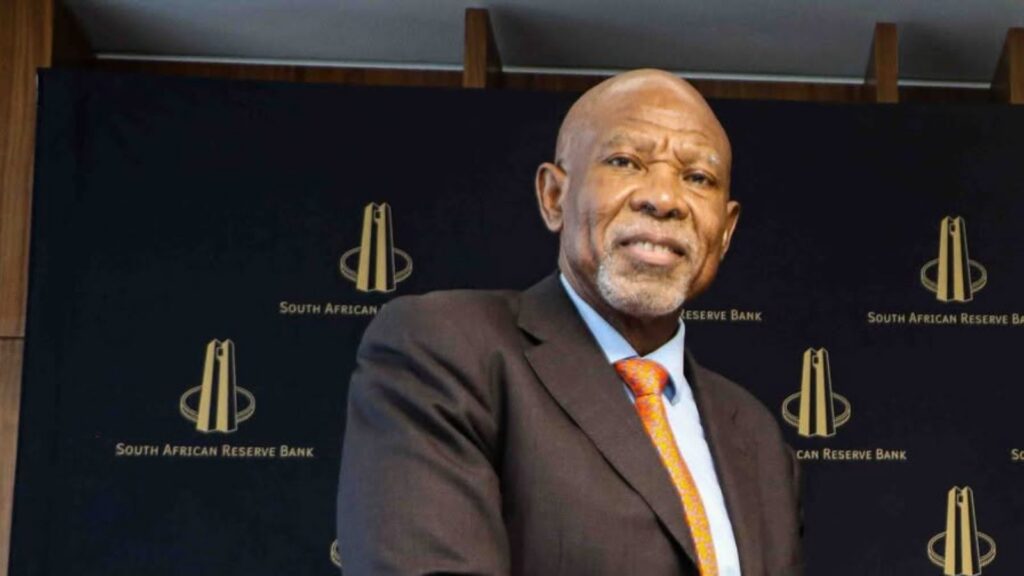
The seven-member monetary policy committee maintained the benchmark policy rate at 7.25%, Governor Lesetja Kganyago told reporters in Pretoria on Thursday.
All but one of 20 economists in a Bloomberg survey predicted the decision.
“After two policy adjustments this year, and with a moderately restrictive policy stance, we decided to pause for now,” Kganyago said.
“We are mindful of risks, and will not hesitate to raise rates if needed, to return inflation to target over the policy horizon.”
Following the news, the rand reversed a gain against the dollar, weakening 0.2% to R17.30/USD as of 15:58 in Johannesburg.
The yield on benchmark 10-year government bonds stayed 6 basis points lower on the day at 8.89%. Stocks were steady.
The decision was backed by four MPC members while three favoured a quarter-point increase.
The split merely indicates that “the only disagreement among us is the pace at which we move policy in order to rein in inflation,” Kganyago said.
Keeping rates steady will give policymakers time to assess the impact of their two quarter-point hikes this year in bringing inflation back to their 3% goal.
It will also allow them to digest the implications for the rand of expected Federal Reserve tightening and lower gold prices, against the backdrop of oil’s retreat and recent fuel-relief measures.
Still, Simon Quijano-Evans, head of strategy at Micro Hive in London, warned the decision could leave the rand open to any negative spillover from the dollar, US Treasury yields, and oil and gold prices.
“The next official rate meeting is a long way away on 28 January,” he said.
Kganyago warned that there are various risks to inflation that may overlap, including the trend toward higher global interest rates, a stronger dollar, fuel prices and the threat posed by the El Niño weather pattern.
The central bank now sees inflation averaging 4.3% this year, compared with 4.4% previously, after price pressures quickened to 5.2% in October.
It also sees inflation averaging 4% in 2027, the same as at its last MPC meeting, before returning to target by the third quarter of 2028.
“We’d characterise the decision as a cautious hold rather than the end of the tightening debate,” Lauren van Biljon, senior portfolio manager at Allspring Global Investments, said.
“Sticky domestic services inflation and the less supportive external environment suggest it’s too early to rule out additional – albeit limited – tightening in the first quarter.”
The central bank also said it is concerned that core inflation, a measure of underlying price pressures, is trending upward.
The MPC examined various adverse economic scenarios. In the first one, it assumed oil would peak at $130 a barrel.
In this scenario, limited refinery margins keep inflation above 5% next year and economic growth around 1%, which could lead to two hikes.
In another scenario, it looked at higher bond yields globally and what an increase in risk premiums would mean for nations such as South Africa and the weaker rand. The outcomes would be similar to the other scenario.
Login or register for unlimited free access.