R94.04 billion flooded out of South Africa’s biggest private asset manager


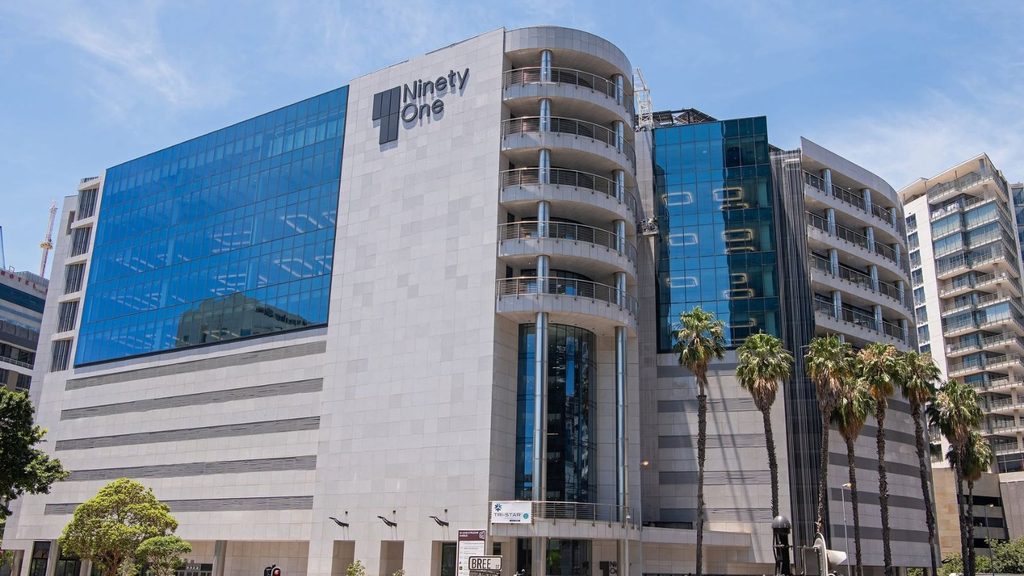
Ninety One suffered new outflows of £4.2 billion (R94.04 billion) in the first half of its 2027 financial year.
Despite these outflows, Ninety One’s assets under management (AUM) still rose 19% to £181.4 billion (R4.06 trillion).
CEO Hendrik du Toit called the outflows “disappointing” and said it went against the firm’s expectations. Ninety One saw net inflows of £4.3 billion (R96.26 billion) in the prior period.
This was revealed in Ninety One’s results for the six months through September 2026, released on Monday, 16 November.
The asset manager reported that its AUM grew 19%, while its average AUM rose 29% to £179.6 billion (R4.02 trillion), driven by positive market and foreign-exchange movements.
However, the group reported that its underlying organic flows were negative, suffering net outflows of £4.2 billion (R94.04 billion).
“Although markets have been challenging, and the flow experience disappointing, we are relentlessly focused on building a future-fit Ninety One in a world of change,” Du Toit said.
The CEO noted that Ninety One saw strong inflows into Asian and emerging-market equities, but these were offset by outflows from global and South African equities, as well as from multi-asset strategies.
“There were two drivers of this – challenged investment performance in two distinct, but important categories,” he said.
“Secondly, positive but slower than anticipated funding in areas where we expected inflows and where performance has been good, for example emerging markets, commodities, and resources.”
The group’s results revealed that Europe was the only client region to record net inflows during the period, with every other major region posting outflows.
This included Asia Pacific, the Americas, Africa, and the United Kingdom.
Ninety One’s average management fee rate also compressed over the six-month period, dropping to 39 basis points from 41.5 last year.
The group reported an 8% drop in its basic earnings per share (EPS) to 8.2 pence (R1.84). However, its adjusted EPS grew 5% to 8.8 pence (R1.97).
The divergence between these two metrics can be attributed to £10.2 million (R228.39 million) of intangible asset amortisation related to Ninety One’s transaction with Sanlam.
“In an uncertain environment, our strategy remains consistent, while our entrepreneurial drive and openness to innovation will create new opportunities,” Du Toit said.
“We are building the active investment manager of the future by pursuing a client-focused, people-centric, technology- and AI-enabled and capital-light business model.”
“We relish the prospect of building a better firm for the benefit of all stakeholders over the long term.”
Login or register for unlimited free access.