The only company of its kind on the JSE went from R1 billion to R28.7 billion in 12 years


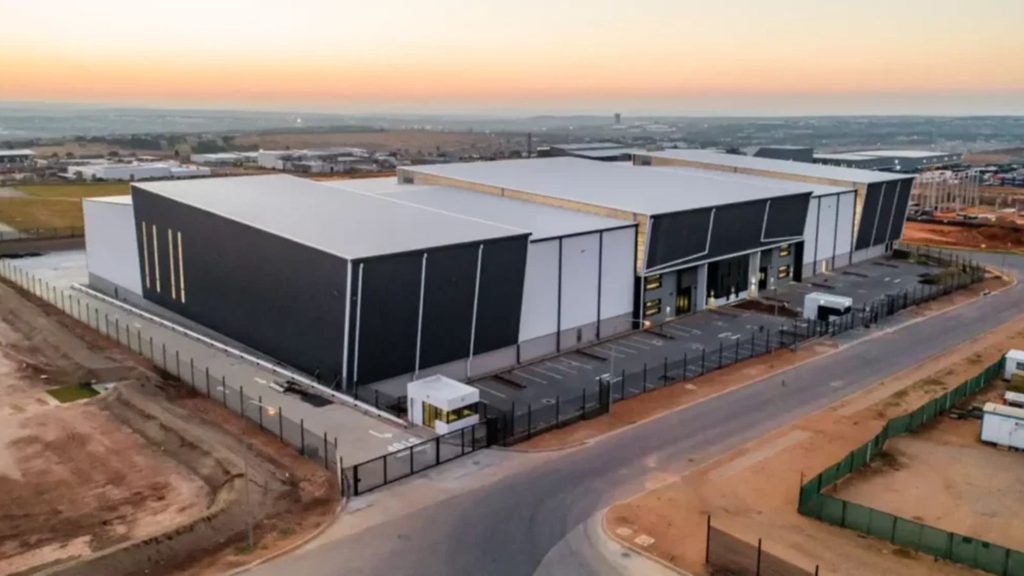
Equites Property Fund’s portfolio has grown from R1 billion at the time of its JSE listing in 2014 to R28.7 billion in 2026.
This has been driven by the company’s focus on logistics real estate, riding the wave of strong growth in e-commerce and long-haul trucking.
To the present day, Equites remains the only specialised logistics real estate investment trust (REIT) on the JSE, offering investors pure exposure to warehousing and distribution infrastructure.
The company was founded in 2013 through the merger of three independent Western Cape-based industrial property developers.
This merger created a property investor that had a portfolio worth R1 billion, which led to its listing on the JSE in June 2014.
Listing on the JSE gave Equites significant capital to deploy to grow its portfolio, and it snapped up Intaprop in 2015 for R1.9 billion.
Equites not only grew through acquisitions but also demonstrated strong organic growth by developing warehouses and distribution centres for large South African retailers.
One of its early flagship projects was the development of a 26,000 m² distribution warehouse for The Foschini Group (TFG) in Midrand. This was completed in 2016 for R150 million.
Equites does not find itself in this kind of position by accident, having bought land parcels along major industrial corridors and nodes.
This gives it land in key areas where retailers and distributors are looking to grow, enabling it to build quickly once tenants are secured.
This also hints at another key aspect of how Equites is run: the company focuses on pre-let developments rather than building warehouses in the hope that demand arrives.
Tenants are secured prior to development and typically own a portion of the property, significantly reducing Equites’ risk and ensuring it can maintain a high-quality client base.
This is coupled with Equites’ clever deal-making around sale-and-leaseback transactions.
In these transactions, Equites buys existing logistics properties from large companies and leases them back.
This creates liquidity for the company and reduces its spending on maintenance costs, while Equites gets a property with tenants already secured.
The upshot of this strategy and the demand for logistics infrastructure in South Africa is Equites having a near-zero vacancy rate across its properties.
Its developments are also extremely high-margin compared to peers, with new developments locking in at yields of 8% to 9.5% per annum.
Between 97.2% and 98.7% of total revenue is derived from A-grade multinationals, large listed corporates, and government counterparties.
Shoprite Checkers alone accounts for 22% of the company’s revenue, with DSV Solutions making up another 16%. Other large tenants include TFG, Digistics, DHL, and PepsiCo.
Equites’ UK round-trip
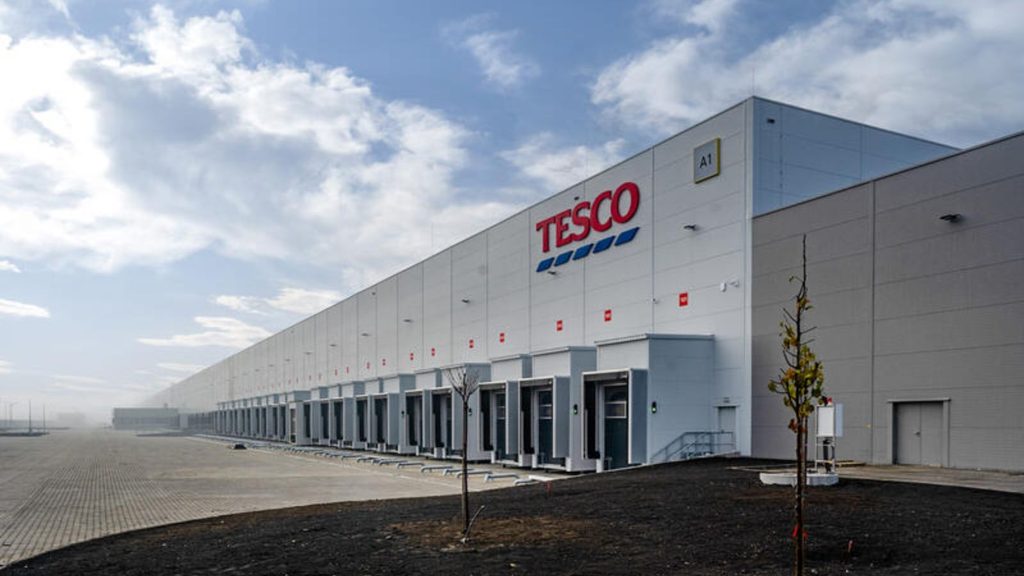
It has not all been smooth sailing for Equites, with the company busy unwinding its expansion into the United Kingdom.
Equites began buying up property assets in the United Kingdom almost immediately after listing on the JSE.
The company saw the same dynamics at play in the UK as in its home market, with demand for logistics infrastructure surging.
This expansion would also diversify its earnings into stronger currencies, reduce its reliance on South Africa, and enable it to capture faster growth internationally.
However, while this strategy sounded good on paper, the reality turned out very differently.
The mismanagement of UK state finances and the inflationary impact of Covid-19 lockdowns made this plan unviable.
Equites’ retreat began in 2022, when surging UK interest rates eliminated the spread that made its portfolio profitable. This also undermined the value of the properties themselves.
While it is commonplace for rent to be adjusted annually in South Africa, in the United Kingdom it is typically reviewed every 5 years.
This meant that Equites could not adjust its rental agreements to mitigate the rise in inflation and the fall in property values.
The high cost of capital in the United Kingdom and the inability to escalate rent annually meant that investment in the region no longer met Equites’ return threshold.
This kicked off a phased exit from the United Kingdom, with Equites selling individual assets and now moving on to the disposal of entire portfolios.
In the first half of its 2027 financial year, the company disposed of its Aviva Portfolio, which saw five UK properties sold for £200.5 million (R4.39 billion).
This transaction generated £95 million (R2 billion) in cash for Equites, which it said will be deployed in South Africa.
The company said this sale was a significant milestone toward fully withdrawing from the UK market.
Now, Equites has three assets left in the United Kingdom, which are expected to be sold before the end of 2028.
The company plans to deploy the capital generated from these sales into South African assets, which offer attractive returns.
However, the scale of the sales means that Equites cannot do this at the click of a button, as it has to hold some capital in the UK while it identifies worthwhile investments in South Africa.