Petrol and diesel price relief, new social grant, and SARS’ billions – expert predictions for South Africa’s mini-budget


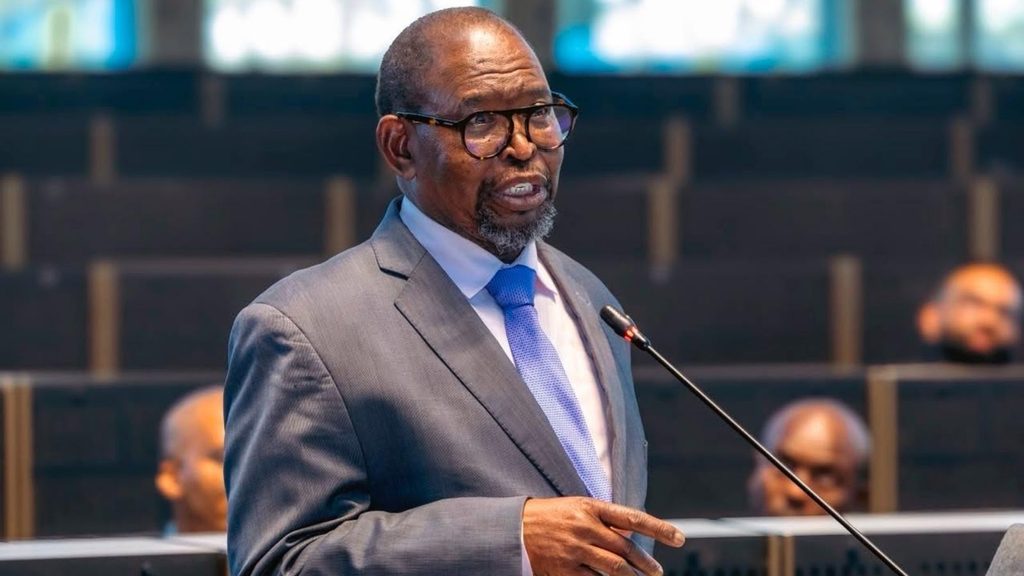
Experts expect Finance Minister Enoch Godongwana to announce a revenue overrun, a larger primary budget surplus, and a formal fiscal anchor when he presents South Africa’s mini-budget.
Godongwana will present the Medium-Term Budget Policy Statement (MTBPS), also called the “mini-budget”, on Wednesday, 21 October.
The MTBPS serves as a check-in on the projections made in the February Budget, allowing the National Treasury to update its plans ahead of next year’s budget.
The 2026 MTBPS comes at a time when South Africa finds itself torn between improving local fundamentals and navigating a volatile global macroeconomic environment.
This means that, despite experts expecting a healthier fiscus, South Africa’s economic growth remains under pressure from global developments.
Daily Investor has compiled the pre-MTBPS commentary from four financial and economic experts to see what South Africans can expect from the mini-budget.
All four experts expect Godongwana to announce higher-than-expected tax revenue, driven by gains in corporate income and other taxes.
This revenue overrun will most likely lead to South Africa’s primary budget surplus also growing ahead of February projections, supporting debt stabilisation.
Despite this, all four warned that the Treasury will remain cautious and maintain its commitment to fiscal credibility.
This means avoiding broad-based tax increases or unfunded spending. It could also mean no more fuel price relief for consumers amid record-high petrol and diesel prices.
One change the experts do expect is details about adopting a formal fiscal anchor, something the Treasury has discussed since 2024.
For this anchor, the experts will be looking for a credible framework that links fiscal sustainability to measurable debt and deficit targets.
This, they said, would be key to improving investor confidence in South Africa.
Below are the predictions from four finance and economic experts on what to expect from South Africa’s mini-budget on 21 October.
Investec treasury economist Tertia Jacobs

Investec’s treasury economist and fixed income specialist, Tertia Jacobs, said she expects the National Treasury to reaffirm its commitment to fiscal discipline.
It will do so by focusing on reducing the budget deficit, strengthening the primary surplus, and managing government debt.
Jacobs pointed out that South Africa’s economic outlook has weakened since the February Budget due to higher energy prices, elevated interest rates, and subdued investment.
“We forecast South Africa’s GDP growth at 1.0% in 2026, below Treasury’s previous estimate of 1.6%,” she said.
Jacobs expects the fiscal anchor to be a central feature of MTBPS, saying it could boost confidence in the government’s fiscal management.
“However, its effectiveness will depend on achieving a sustained primary surplus sufficient to reduce government debt and lower debt-service costs,” she added.
While Jacobs did not say that further fuel price relief is off the table, she noted that it would present a trade-off between short-term consumer support and maintaining fiscal discipline.
“The MTBPS may clarify the cost of current fuel-levy reductions and outline the government’s approach to additional relief,” she said.
Another point Jacobs is watching out for in the MTBPS is infrastructure investment and structural reforms, especially in rail and logistics.
She described these reforms as essential for enhancing the economy’s growth potential, though she noted that significant benefits will take time to materialise.
KPMG corporate tax partner Itumeleng Nkadimeng

KPMG’s Itumeleng Nkadimeng said this MTBPS comes at a delicate time for South Africa.
“Growth is weak, the global environment is uncertain, and spending pressures at home are building. Yet, there are some reasons for cautious optimism,” she said.
She noted that the government is expected to benefit from higher tax revenue, aided by better SARS collections and higher personal income, value-added, and corporate income tax.
The larger corporate income tax stems from commodity windfalls experienced in the mining sector.
“This will give Treasury some breathing room and should allow the overall budget balance to look a little healthier than what was projected earlier this year,” she said.
As in previous years, Nkadimeng does not expect broad-based tax hikes or indications in that direction.
Instead, she expects that the government will focus on SARS tightening enforcement, modernising its VAT systems, and improving administration.
“Simply put, it’s collecting existing taxes more efficiently rather than raising new ones,” she explained.
Like Jacobs, Nkadimeng also believes the fiscal anchor will be an important feature in 2026’s MTBPS.
She expects the Treasury to outline a framework to keep debt and deficits on a sustainable path while maintaining support for an environment conducive to broadening the tax base.
Another important feature Nkadimeng will look out for in the MTBPS is infrastructure investment.
“If project implementation improves, the spend should support business activity and ultimately help lift tax revenues, reinforcing the budget’s positive momentum, even in a low-growth environment,” she said.
Anchor Capital economist Lerato Ntuli

Anchor Capital economist Lerato Ntuli outlined several priorities on her “wish list” for the MTBPS.
Firstly, Ntuli said the MTBPS is expected to revise South Africa’s economic growth, inflation, and interest rate forecasts.
“It should distinguish clearly between improvements in debt and deficit ratios resulting from the rebasing of GDP and those reflecting genuine fiscal consolidation,” she said.
Along with this, Ntuli also expects to hear about a new fiscal anchor, sayind it should set out the principles underpinning the framework and explain whether these translate into measurable debt or expenditure targets.
Should Godongwana announce a successor to South Africa’s social relief of distress (SRD) grant, Ntuli said it should be targeted and sustainably funded.
She said any replacement of the SRD grant should be fully costed and supported by identified funding sources.
“Where possible, assistance should be linked to employment, training and skills-development programmes to encourage labour market participation,” she said.
Similarly, if the Treasury announces further fuel price relief for consumers, Ntuli said it must be temporary, targeted, and fully funded.
“Temporary supply shocks should not lead to permanent increases in expenditure or weaken the fiscal position,” she said.
Another interesting point Ntuli raised was that the Treasury should improve transparency around its contingent liabilities and state-owned entities.
“Investors need updated assessments of the fiscal risks associated with entities such as Transnet, SANRAL, Denel, the Land Bank, and the Road Accident Fund,” she said.
Ntuli also pointed out that, despite increased spending, South Africa’s fixed investment rate remains well below the level required to meaningfully lift economic growth.
“Over time, the composition of spending should shift towards investment that expands the economy’s productive capacity, rather than allowing consumption expenditure to crowd it out,” she said.
Ntuli summarised her wish list as: “The MTBPS should use the current revenue outperformance to strengthen the public finances rather than create room for unfunded spending commitments.”
“It should also improve transparency around fiscal risks, accelerate structural reforms that raise potential growth, and ensure that any new expenditure commitments are fully funded and fiscally sustainable.”
PSG Financial Services chief economist Johann Els
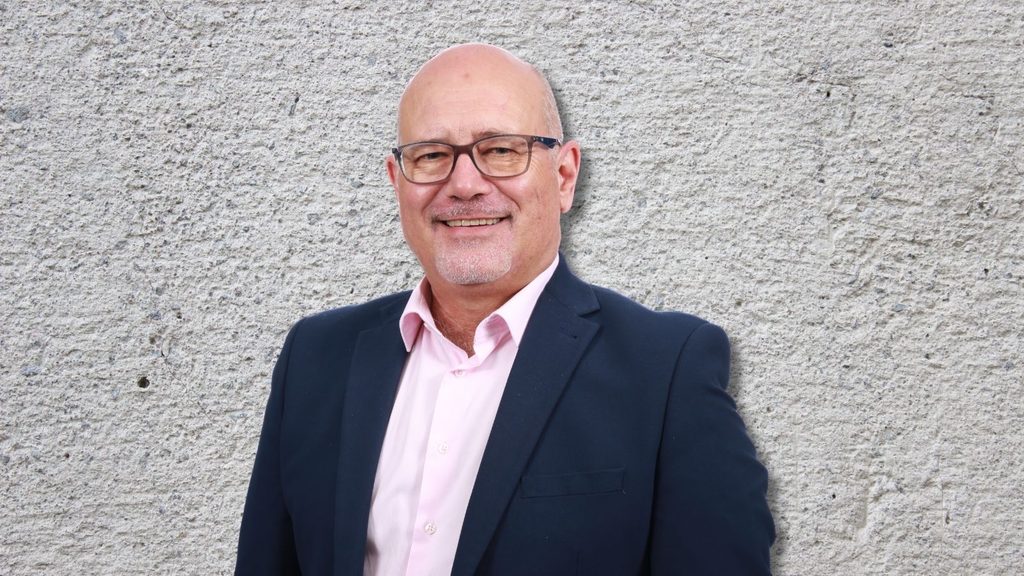
PSG Financial Services chief economist Johann Els expects the Treasury’s budget overrun to reach R50 billion or more.
This, he said, should see the budget deficit narrow to 3.5% of GDP, smaller than the 4% projected in February.
It will also see the primary budget surplus be larger than expected, at around 1.9%, compared to 1.4% in the February budget.
“This would help put government debt on a more sustainable path,” Els said, though he added that the better numbers are unlikely to be fully sustained.
“The economic backdrop remains difficult, growth is weak, and some of the revenue boost reflects higher commodity prices,” he said.
Therefore, Els expects the Treasury to remain cautious about how much of the current improvement it carries into future years.
“This is understandable, given the uncertain economic outlook and pressure for more government spending,” he said.
“There is also uncertainty around a potential further fuel levy relief, but the April to June relief already cost R17 billion.”
Nevertheless, Els said the “bigger picture” for South Africa is encouraging, with the country making progress on policy and structural reforms.
“Combined with improving fiscal discipline, this is helping to cement the path towards a lower debt-to-GDP ratio,” he said.




Comments